The Man Who Saw Humanity From Two Billion Years Away
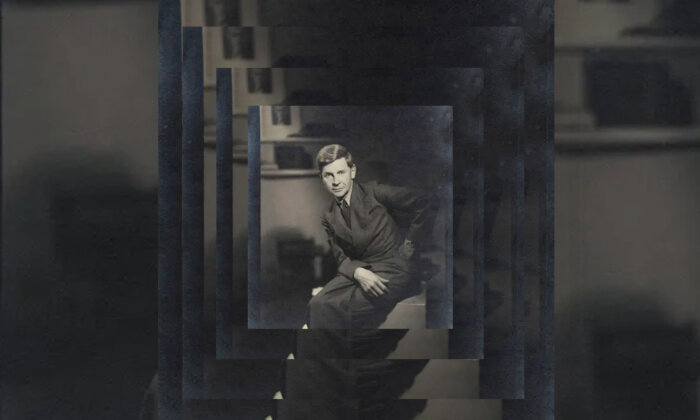
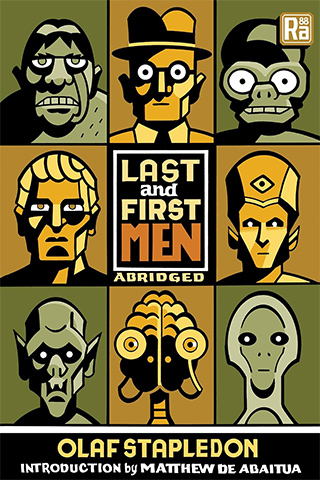
Olaf Stapledon published his first epic cosmic novel, “Last and First Men: A Story of the Near and Far Future,” in 1930. It is a speculative history of humanity’s evolution told from the vantage point of one of the Last Men, the people of the 18th era of humanity, 2 billion years in the future.
“Last and First Men” eschews the dramatic conventions of the novel form: There are few significant characters or particularities of place. Instead, the plot is a causal chain of civilizations rising and falling. There is a voice, infused with a distant sense of beauty and tragedy as it considers humanity in the abstract. Stapledon described the novel as “an essay in myth creation.”
In his autobiography, Stapledon relates the “Anglesey vision” that inspired the novel. He was scrambling on an island off the rugged coast of Wales when he came across a colony of seals surrounded by crashing waves. Perhaps the faces of the seals suggested blurred abstractions of human faces. He had “a sudden fantasy of man’s whole future, aeon upon aeon of strange vicissitudes and gallant endeavours in world after world.”
This inspirational moment is an abductive, metaphoric leap. Quite distinct from the plodding extrapolative logic that gives us jet packs, automated cars, and other low-hanging fruit of the imagination, prevalent in the pulp sf writing of the same era and reheated in the corporate imaginations of our contemporary tech executives.
Stapledon’s imagination is profuse. He can be read as a compendium of science fiction ideas: his “Odd John” (1935) with its homo superior and titular telepathic character seeds the ground for Marvel’s X-Men; in “Star Maker” (1937) he describes the stellar structure that Freeman Dyson conceptualized as the Dyson sphere; in “Last and First Men” and its sequel, 1932’s “Last Men in London,” human evolution is driven across millennia to produce telepathy, as in Frank Herbert’s “Dune”; in the age of the Fifth Men, the Moon is destroyed and falls to Earth, raining down destruction and driving further evolution of the species — Neal Stephenson’s masterful pan-generational novel “Seveneves” is powered by the same conceit.
A science fiction author could spend their career turning Stapledon’s speculative paragraphs into novels.
A further astonishing influence, traced by the scholar Dominic Moran, is upon Jorge Luis Borges and his short story “El jardín de los senderos que se bifurcan” (1941), or “The Garden of Forking Paths.” Borges reviewed Stapledon and went on to cite a section of “Star Maker” that anticipates the idea of the multiverse. The “many worlds” theory of quantum mechanics would not be proposed until 1957, nearly 20 years after Stapledon’s speculation of a creature capable of taking many possible courses of action at once, with each choice creating a new dimension in time.
A science fiction author could spend their career turning Stapledon’s speculative paragraphs into novels.
The long future of “Last and First Men” is influenced by the interwar concern with deep time. Doris Lessing observed that surely what was going on in archaeology in the period inspired Stapledon: The early 20th century was marked by the rediscovery of civilizations such as the Olmec mother culture in the Americas, the opening of Tutankhamen’s tomb, and the excavation of the Hittite capital that proved they were a genuine civilization and not solely a Biblical one. Lessing’s own science fiction sequence, “Canopus in Argos: Archives,” first published in 1979, is a similarly eon-spanning future history.
The different generations of Stapledon’s humankind evolve under pressure from cultural and environmental effects. Their advances leave a mark on the Earth, and the Earth violently reacts. This anticipates a key theme of the 21st century, the Anthropocene, the theory that humanity has left evidence of itself in the geological record, thus making our mark in deep time.
To tell a story with such sublime temporality, Stapledon uses his self-described mythic method. As Paul Fussell notes in his landmark “The Great War and Modern Memory,” “After the Great War, the movement was toward myth, towards a revival of the cultic, the mystical, the sacrificial, the prophetic, the sacramental, and the universally significant.”
Universal significance is certainly a concern of Stapledon’s: His letters and articles in the early years of the First World War seek it in his war experience. Stapledon served in the Friends’ Ambulance Unit, a third choice outside of the binary of being a soldier or a conscientious objector. To volunteer, he adapted his car — a roomy grey Lanchester that he learned to drive along the narrow lanes of the Wirral — into an ambulance and drove to the front, signing up in Dunkirk. He was joined by Lewis Fry Richardson, the mathematician who would later find fame for his work on meteorological prediction but at the time was working on an equation to predict the end of the conflict. Their unit was attached to a French infantry division moving from the ruined port town of Nieuport, where the barbed wire straggled down to the North Sea, to a convoy camp in Flanders.
On a warm September night in 1915, Stapledon took a stretcher, a sleeping bag, and a leather rug from the car to sleep under the stars. He lay down and marveled at the Milky Way, at the Pleiades and Jupiter. The distant guns fell silent. He tried to see the stars as they truly are, to comprehend the spatial, temporal, and moral depths of the starfield.
What followed was a reverie of cosmic consciousness that underpins “Last and First Men” and his later masterpiece, “Star Maker.” In the vision, his beloved cousin Agnes sang his name and appeared to him; they soared to the heavens together; planets fell away; the sun diminished to a mere star. He saw all the suns, all the planets, all the living beings. The earth was far away; from space, he could see the trenches and battle lines and the souls of the soldiers. In an instant of cosmic consciousness, he saw the “strange noble beings of other worlds” and “of each one we felt ‘It is I.’”
The Western Front was not only a boundary in space but also in time, a trench beyond which lay the future. “Under the light of the stars, war itself may help a man to a new knowledge of the communion of all men,” wrote Stapledon in his anonymously published 1916 article “Reflections of an Ambulance Orderly,” a sentiment that regards the war — albeit in its early stages — as a precursor to a utopic awareness.
The teleological optimism of the early war is also found in “La vie cosmique” written by Pierre Teilhard de Chardin — French priest, paleontologist, and mystic — while serving as a stretcher bearer in Nieuport in early 1916. He was also attached to a French infantry division; however, as a serving soldier, it is unlikely (but tantalizingly possible) that he and Stapledon crossed paths.
Teilhard de Chardin unifies Christian theology with evolution: “La vie cosmique” is a prayer to a cosmic Christ still in the act of formation. The idea of an evolving God also appears in the religion of Stapledon’s First Men in Patagonia in which “God . . . was the eternal outcome of man’s labour in time.”
When Teilhard de Chardin leaps into battle, he imagines his body as being “like a living cement thrown by God into the stonework of the New City.” My own 2015 science fiction novel “IF THEN” was inspired by these mystical stretcher-bearers, how the war was — initially for them — an apocalyptic proto-science-fictional experience.
By the end of the war, the reality was not a New City but more like the landscape of Paul Nash’s ironically titled painting “We Are Making a New World” (1918): Shelling stripped the landscape of its spatial and temporal specificity, denuding the trees into trunks over which a new sun rises, a devastated landscape so abstract as to be mythic.
The air-conditioned and climate-controlled archive of the University of Liverpool holds the Olaf Stapledon Collection. I opened the folder of correspondence pertaining to “Last and First Men,” thrilled to have contact with these letters of admiration and appreciation for the novel. The quickening temporality of longhand, handwritten egos, their calligraphy bristling with readerly observations, concerns, and the desire to be read.
Few egos of the time bristled as fiercely as that of H. G. Wells. There is a separate folder for the correspondence between Wells and Stapledon that began after Stapledon sent Wells a copy of “Last and First Men,” which was something of a literary sensation.
The letters contain artistic and intergenerational tensions between the two authors, albeit couched in tones of mutual appreciation. Wells was the founding genius of science fiction who’d published “The Time Machine,” “War of the Worlds,” “The Invisible Man,” and “The Island of Dr. Moreau” in the first four years of his career. Stapledon had not read a great deal of his fiction, though Wells’ influence across the early decades of the 20th century — especially on the question of the future — was unignorable.
In his late 40s by the onset of the Great War, too old and grand for the front, Wells served by contributing to a propaganda unit, a who’s who of male literary grandees: Thomas Hardy, J. M. Barrie, G. K. Chesterton, Arnold Bennett, Israel Zangwill, and others. By Christmas 1914, Wells was doing his part, advocating for the war as a necessary stage for the progressive evolution of history: “The defeat of Germany may open the way to disarmament and peace throughout the earth. To those who love peace there can be no other hope in the present conflict than her defeat, the utter discrediting of the German legend.” This rhetoric of civilizational clash was typical of the prevailing tendency to map evolutionary forces onto world history.
In the file, there is a note from Julian Huxley — the eugenicist brother of Aldous Huxley. “The blend of imagination and scientific plausibility,” announces Julian, “is more than Wellsian!” Wells himself, on reading Stapledon’s novel, begs to differ: “Thank you for a very pleasant letter but it is all balls to suggest First and Last Men [sic] (which I found a very exciting book) owes anything to my writings. I wish it did.”
In his handwritten lecture notes on science and fiction, among the most rewarding documents in his archive, Stapledon reminds himself to summarize his aims of fiction: “to create new awareness/significant/opening windows.” The image would return in darker form. When part of a convoy in the war, Stapledon listened to a pianist play Schumann on an out-of-tune borrowed piano. The music “opens a window into another world that he can enter and shut behind himself.” Art gives us access to another dimension, an eternal realm of forms, outside of history and evolution.
The solace of eternity sets Stapledon apart from Wells. He notes a lack in Wells, whom he refers to as “the world’s chief outliner,” a description that strikes this reader as more acerbic than perhaps Stapledon intended. In a letter to Wells dated November 16, 1939, he identifies their differences as follows:
[I]n a horribly sketchy sort of way, I do take into account aspects of experience which you are inclined to underestimate, mainly because in your early days it was necessary to underestimate them, whereas in my early days it became necessary to recover the essence of them without the silly wrappings. After all, great innovators like you are almost bound to do less than justice to the traditional culture.
The aspects of experience and traditional culture that Stapledon is alluding to are spiritual ones. Wells repudiated all such mysticism in the late 19th and early 20th century so as to assert the rationalism of science and evolutionary theory. In his review of Wells’ novel “Star Begetter,” Stapledon explains this point more forcefully: Wells “is too ready to assume that an idealisation of the positivistic, scientific mood, which is mainly a product of the nineteenth century, really can adequately suggest the essence of the truly human adult mentality.”
“Last and First Men” is not progressive. Civilizations rise and fall, the tide of progress advances and retreats, variants upon the theme of humanity strike up and diminish — what endures of humanity is not spirit in the Christian sense so much as, in the philosophy of the Fifth Men, “a work of tragic art.” The Fifth Men regarded the cosmos as an aesthetic unity in four dimensions. Art focuses aspects of the cosmos, making it apprehensible even if its complexity means that it can never be entirely known.
The Western Front was not only a boundary in space but also in time, a trench beyond which lay the future.
Stapledon tries to explain his spirituality in a letter to Wells, dated June 23, 1937: “I can’t help thinking about the universe as a whole, even though philosophically it is futile. So I let it come out as myth, and I find it gives me a sort of emotional stability, much needed in this age of muddles and passions.”
Emotional stability: what we might describe, in today’s idiom, as “some distance.” The summary narrative of his mythic method keeps humanity at arm’s length. What was the source of emotional instability for Stapledon? The conceptual windows that he once passed through and closed behind him were — toward the end of the war — shattered. Seen from afar, he described the war as almost a thing of beauty, the explosions casting up dust and smoke against the evening sky. But when the ambulance unit followed the French through no-man’s-land and into German-occupied France, the war came too close. The war became less meaningful with proximity.
He wrote in his diary on July 15, 1918, “All my windows blown in. Left a man in the ditch for dead & he was only wounded. Ashamed ashamed. Should have stopped, but he seemed too smashed for not dead.”
For his service in the war Stapledon was awarded the Croix de Guerre. It was casually offered to him. He tossed it in a drawer and never bothered mentioning it again. A medal pins a prescribed meaning onto war experience. He rejected this official symbol of closure, enforcing distance between self and experience to prepare for the creation of myth.
Matthew De Abaitua is a senior lecturer in Creative Writing at the University of Essex. His debut science fiction novel “The Red Men” (2007) was shortlisted for the Arthur C. Clarke Award and adapted into a short film, “Dr. Easy.” His science fiction novels “IF THEN” (2015) and “The Destructives” (2016) complete the loose trilogy. This article is adapted from his introduction to the Radium Age edition of “Last and First Men.”