The Forgotten Communications Devices of the French Revolution
In revolutions, it pays to keep an ear to the ground and, what’s more, an eye on the horizon.
On October 30, 1789, an anonymous writer published a short text, accompanied by simple line diagrams, that investigated new ways to transmit the message of the French Revolution to the widest possible audience. Written in the politically tense period between King Louis XVI’s return to Paris and the National Constituent Assembly’s expropriation of church property, this Mémoire presented four inventions that promised to disseminate revolutionary ideas across space and time. As the text explained:
“We must find a machine that allows them to hear the voice of a man of bearing. It’s necessary to find another one that will make visible, in an instant, the result of reflections that limited experience or nervousness prevent them from making. We should also find a means to give the greatest intensity to the voice of an orator in a grand assembly, because often, as they are poorly heard, their words are misinterpreted.”
The author of these words was prescient; faltering voices, as well as strident ones, came to play a significant narrative role in the French Revolution, from Robespierre’s famously quiet oratory to the muffling of the king’s final speech on the scaffold just before his execution in 1793. Error, misapprehension, or confusion could be deadly. Rapid and unambiguous communication of ideas and information was vital.
Consequently, the first device proposed in this pamphlet was the porte-voix du peuple, a serpent-like trumpet that amplified the speaker’s voice and could address large crowds. There were precedents here: Ignace Chappe, who later helped develop the optical telegraph with his brother, Claude, once described a similar instrument — a copper trumpet presented to Charles II of England in 1670. (Claude’s earliest telegraphic experiments in 1790 involved beating casserole pans to transmit a code based on precisely synchronized clocks, but the limitations of human hearing and interference from other sounds quickly made this method impractical.)
The second invention from the Mémoire was visual in character. Called a tableau populaire, it consisted of paired wooden drums mounted on spindles and placed high on a prominent building. Between these turning cylinders stretched a screen of transparent canvas, manipulated by a winch. Perhaps to downplay its strangeness, the author compared this spectacle to more relatable scenarios, such as the division of skeins of yarn on louvered drums, often sold by French craftsmen who made objects from ivory, bone, or wood.
Error, misapprehension, or confusion could be deadly.
Overnight, it seemed, the French Revolution had transformed the implications of mass communication methods, but the language with which to comprehend them had not yet caught up, harking back to familiar forms of artisanal knowledge.
Clear lines can be drawn between the tableau populaire and devices that followed closely on its heels, such as the moving panoramas of the 19th century, which similarly set a world of information in motion. Yet from our historical vantage point, the tableau populaire seems closer to the mechanisms of cinema. It was, at the most basic level, a filmic apparatus, albeit one grounded in the materiality of the printed word. Organized in cartons next to the device, like a giant typesetter’s table, were letters and punctuation marks, each around eight inches high. When the time came, female operators were to pin these figures to a sheet of canvas pre-marked with lines, then attach the canvas to the rotating screen. The advantages of this system were both corporeal and medium-specific; by relieving strain on an orator’s voice, it obviated the need for printed bulletins thrown from windows.
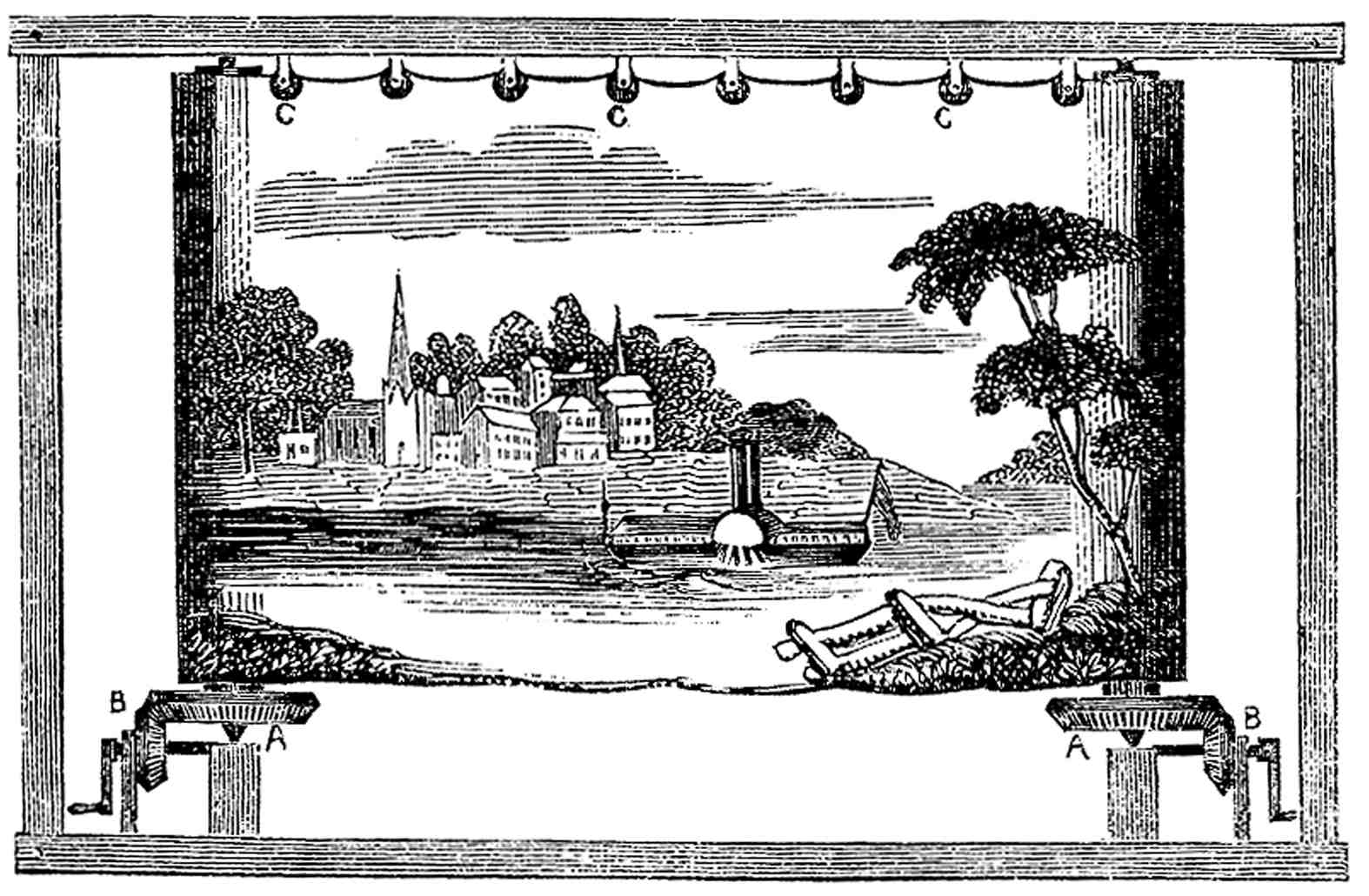
The diagram in the Mémoire conveys the all-caps tone envisioned for its messages: “Wait, we are going to reveal the black aristocratic plot.” The device was not limited to daytime use; it could be illuminated by lanterns behind the screen. A parabolic mirror projected its paranoid communiqués far into the night sky.
Another invention proposed in the Mémoire recognized the shortcomings that accompanied the successful elimination of the body in the previous two apparatuses, and they were reproduced alongside one another with some minor changes in journalist Louis-Marie Prudhomme’s newspaper Révolutions de Paris. Both the porte-voix du peuple and the tableau populaire had obscured the facial movements, gestures, and affective nuances necessary to move the people.
The siège orale mobile, on the other hand, allowed a speaker to reach his required audience with minimal effort (the below image makes clear that the orator was imagined as male), while returning to the scene of communication, the everyday pleasures of one human semaphoring to another. This movable stage comprised a giant parabolic screen that bounced the speaker’s voice outward through a latticed floor. Considerations of distance were crucial. The audience had to be placed at least 118 feet from the reflective surface to prevent the spoken words from being drowned out by their echo.
In art critic Jonathan Crary’s influential account, the early 19th century witnessed a profound epistemic shift, with optical experience and a disciplining of spectatorship taking precedence over an earlier sensorium in which sound, smell, and vision had competed for attention: The devices from the Mémoire, which combine different modes of address, seem to hang on the cusp of these worlds.
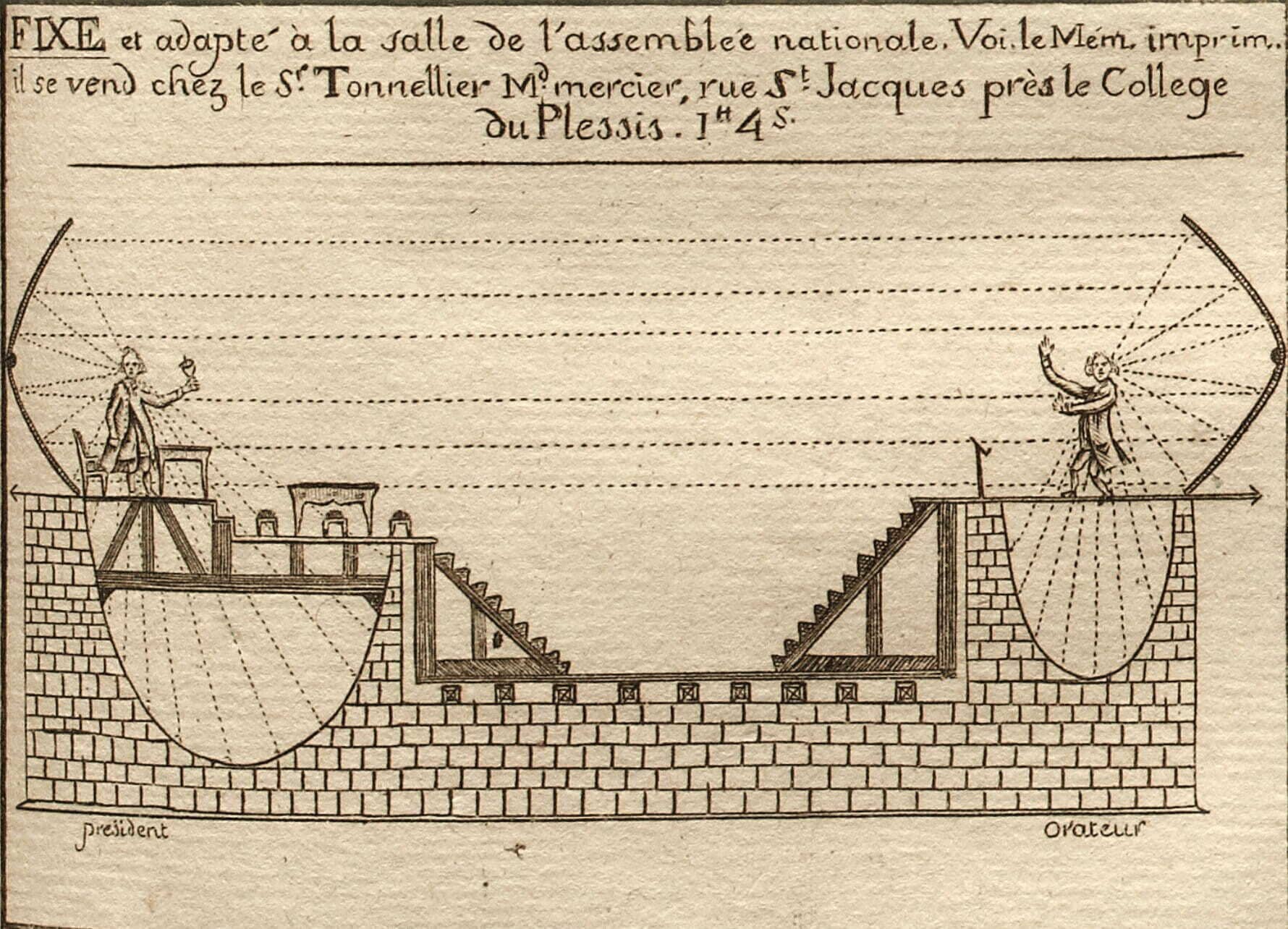
The siège orale fixe was intended for use at the heart of government, in the meeting hall of the National Assembly, which had not, at the time of writing, been constructed yet in Paris. Situated on either side of the oval chamber, sound mirrors would allow the speaker and the president to converse privately and publicly: They could be heard by the whole Assembly without raising their voices. The image representing this project envisions the words of both orators as dotted lines of pristine information, traversing the empty space of the hall.
In the years following the French Revolution, making visible such ostensibly invisible content became a matter of increasing consequence. Seeing communication processes in action, as well as hearing them, was necessary in a political culture in which transparency came to be prized above other virtues. It was also a source of anxiety, desire, and speculation when the meaning of signals could not be understood by those who saw them passing back and forth.
The prototypes of the Mémoire did not appear in a vacuum; they emerged alongside devices that were outside or adjacent to state communications technology.
For instance, the télélogue, or “speaking cylinder” — created by the obscure inventor known as Citoyen Belprey — was an updated version of the tableau populaire. Having developed the device for use by deaf people, Belprey suggested it might also transmit messages to vast crowds on the Champ de Mars, or indeed to an entire city.
Consider another example that followed in the Revolution’s wake: In 1816, Parisian doctor René Laennec was walking in the courtyard of the Louvre when he spotted two children signaling to each other by scratching one end of a long piece of wood, the amplified sound of which could be picked up by putting one’s ear to the other end. Laennec recalled this passing encounter some months later, when treating a woman with heart disease. Inspired by the children, he rolled up a piece of paper to listen to her heart. He later repurposed this same concept with a wooden tube, which became the first stethoscope.
Amplification, compression, and diagnosis here were aural in nature, but they might be visual, too. As the Mémoire made clear, sound and gesture offered different but overlapping ways of coding a signal. And it is notable that the origin story of Laennec’s auscultation device took place at the Louvre, which, shortly before, had been the site of Paris’s most prominent machine: the Chappe brothers’ telegraph. By then, telegraphy was the most eloquent expression of a broader cultural imperative toward clear communication.
Few communication devices embodied precision and limpidity like the optical telegraph. The device used a semaphoric code in which its arms were arranged in specific positions, each corresponding to a letter or symbol, to convey messages over great distances. Operators in towers would identify these visual signals and relay them to one another.
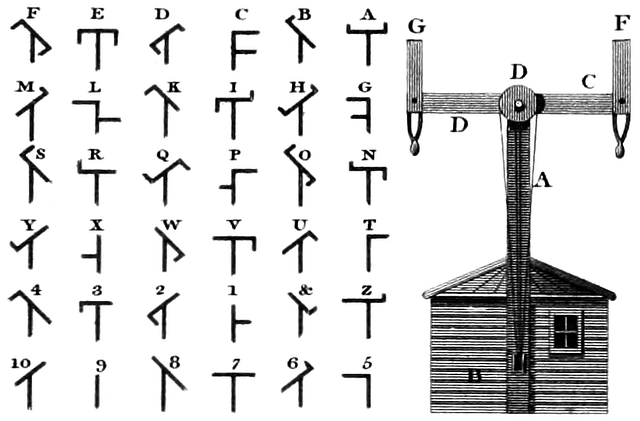
Abstracted, this system bore much in common with the “reformed” sign language recommended for the deaf. In fact, at the time the telegraph took hold, an uncluttered, transparent sign language was being proposed as a realistic alternative to speech altogether. It would be a revolutionary form of communication between individuals — deaf and hearing — that promised to eliminate contingent meaning (as evident in regional accents, patois, or slang). Such an investment in sign language, with a grand political purpose, shaped the context in which telegraphy, too, emerged.
As one contemporary commentator put it, “the discovery of the telegraph isn’t just an ingenious speculation; its results leave no uncertainty in the literal transmission of the different characters appropriate to the language of signs.” The neologism under which the system labored — “far writing”— testified to the same desire for economical expression.
Overnight, it seemed, the French Revolution had transformed the implications of mass communication.
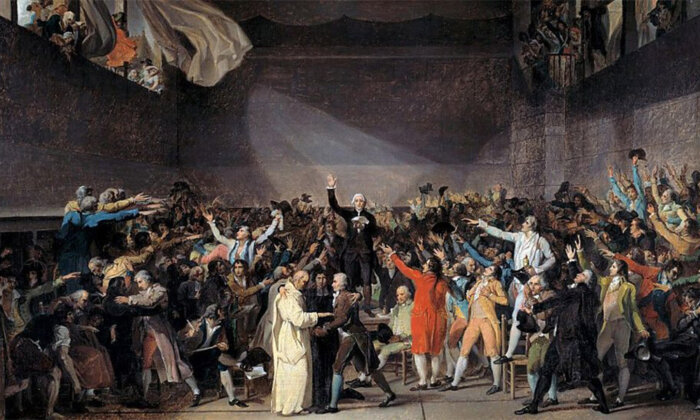
Glancing sideways, we can discern a shadow of the siège orale fixe in the contemporaneous work of the most illustrious painter of the period Jacques-Louis David: His “The Tennis Court Oath” — its figures organized in a concave arrangement to mirror the semicircular seating plan of the National Assembly, providing a model of emulation for France’s legislators — might be thought a two-dimensional manifestation of the siège orale fixe’s parabolic mirror. Collapsing the auditory into the visible, the curvilinear arrangement of representatives of the Third Estate in “The Tennis Court Oath” was, like the inventions proposed in the Mémoire, a means of transmission, and like them, it drew on theatrical precedents.) They speak an oath, but they semaphore it, too.
The similarity did not end there. For neither David’s painting nor the devices described in the Mémoire were completed. The production of the painting could not keep pace with the accelerating events and the evolving reputations of those depicted. As the founding director of the Musée de la Révolution, Philippe Bordes, writes, “David was faced with an unavoidable dilemma: He could finish his painting and ignore the course of the Revolution or abandon it and somehow catch up with the Revolution.”
Revolutionary representation was always both charging ahead and lagging behind the times. Equally, the amplifiers, screens, and sound reflectors of the Mémoire belonged to an early phase of the Revolution, when reaching an audience took precedence over the message’s content, a clarity soon muddied by the contingent matter of politics.
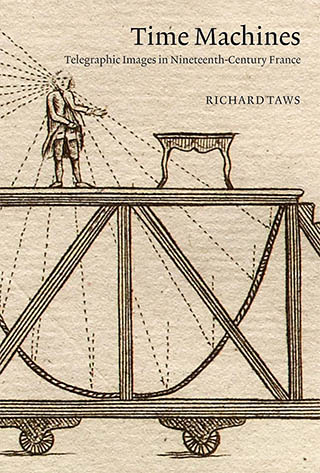
Richard Taws is Professor of History of Art and Visual Culture at University College London. He is the author of “The Politics of the Provisional” (Penn State University Press) and “Time Machines,” from which this article is adapted.