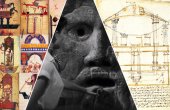
Artificial servants, autonomous killing machines, surveillance systems, and sex robots have been part of the human imagination for thousands of years.
E.R. Truitt | Nov 24, 2021
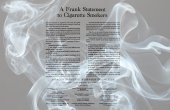
“When you’re shining a light on something, almost everything else remains in the dark. And sometimes that darkness is deliberately kept dark.”
Peter Galison and Robert Proctor | Nov 9, 2021
The prostate-specific antigen test is one of the most lauded tests for prostate cancer. It’s also controversial and fraught with uncertainty.
Ericka Johnson | Nov 3, 2021
“The spoken language is our most important diagnostic and therapeutic tool, and we must be as precise in its use as is a surgeon with a scalpel.”
Eric Cassell | Oct 28, 2021
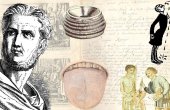
Frank Gonzalez-Crussi, author of “The Body Fantastic,” on the evolving perceptions of spit, from curative agent to expression of disdain.
Frank Gonzalez-Crussi | Oct 26, 2021
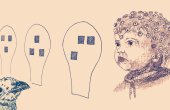
Why do baby chicks prefer a self-propelled moving object to an inanimate one, and a face over a nonface-like object?
Giorgio Vallortigara | Oct 22, 2021
“Cyberspace” was once celebrated as a public, non-tracked space that afforded users freedom of anonymity. How did individual tracking of users come to dominate the web as a market practice?
Tanya Kant | Oct 8, 2021
We may sometimes behave like computers, but more often, we are creative, irrational, and not always too bright.
Herbert L. Roitblat | Oct 4, 2021
Attempts to scientifically “rationalize” policy, based on the belief that science is purified of politics, may be damaging democracy.
Taylor Dotson | Sep 29, 2021
A series of botanical encounters in the rainforest, excerpted from Francis Hallé’s book “Atlas of Poetic Botany.”
Francis Hallé | Sep 15, 2021