Can the Classroom Ever Be Automated?
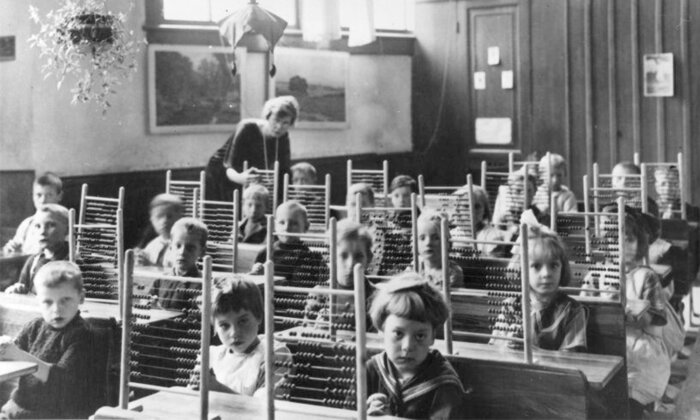
When entrepreneurs talk about innovation in education, their ideas tend to orbit around two seductive promises: automation and personalization. They claim that new technologies — such as tablets, adaptive learning, and classroom management software — will relieve teachers of administrative drudgery while allowing students to learn independently. But as Audrey Watters argues, this vision of the automated, individualized classroom is not new at all; in fact, it is an age-old fantasy, repackaged again and again for successive generations.
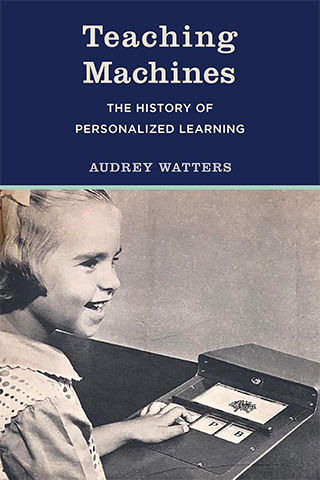
In her book “Teaching Machines,” Watters chronicles the little-known history of the 20th-century classroom devices that gave the book its title: machines designed to automate instruction, deliver instant feedback, and let students move through lessons on their own. The earliest version was developed in 1924 by psychologist Sidney L. Pressey, whose “Automatic Teacher” presented students with multiple-choice questions and recorded their answers. The promise of Pressey’s device, however, was derailed by the Great Depression. Three decades later, the famed psychologist B. F. Skinner developed a teaching machine of his own, shaped by his controversial theories of behaviorism — the idea that human learning can be molded through external repetition and reinforcement. But in the end, Skinner’s invention failed to survive the machinery of corporate bureaucracy and a broader culture wary of mechanizing the classroom.
For Watters, the rise and fall of the teaching machine was not just a curious chapter of educational history; it was an early expression of a dream that still shapes the classroom today. In the interview below, edited for length and clarity, the author unpacks how Skinnerian logic still lingers in today’s classrooms and what it means to resist an AI-dominated future that tech companies insist is inevitable. “Educators want students to understand what it means to have agency over their own learning. We want them to develop curiosity,” she says. “To say that the future is already written is antithetical to that.”
I want to start with the beginning of the book, where you critique Sal Khan’s video on the history of education, in which he claims that the American school system has been technologically static since the late 1800s. In your book, you call his version of history “woefully inadequate — offensively so.” Why do today’s ed tech reformers keep repeating this myth?
Audrey: It’s really interesting, particularly as time passes, that we can sort of see how this argument keeps getting trotted out. In my book, I argue that we’ve had a century of “teaching machines.” In fact, we’ve had computers in the classroom for decades. So, this idea that schools haven’t adapted to the new technology is, to me, sort of shocking. Yet people are still making this argument and selling a history of schools and a vision for their future, as though schools have remained largely unchanged. Khan’s famous TED talk — which first introduced him to the public imagination — was like, “Let’s use video in education,” as though movies, film, and television hadn’t been part of education for quite some time. It feels as though there’s a sort of strange amnesia that sets in when we talk about technology and the present state of the classroom experience.
Would you say old ideas are being repackaged in an endless loop?
Audrey: Such a strange loop. It feels like we are living through another Sputnik era of the ’50s and ’60s, where there was this huge injection of federal investment and public interest in getting schools in line. Otherwise, the thinking went, we were going to fall behind technologically and militarily, and fall prey to the threat of communism.
There’s a sort of strange amnesia that sets in when we talk about technology and the present state of the classroom experience.
Today, it feels like we’re hearing some of that same rhetoric, but, of course, it’s not the Soviet Union — it’s China. In fact, when Deepseek’s R1 model was announced last January, I think it was Mark Andreessen who called it “AI’s Sputnik moment.” I thought to myself, How fascinating that we are still in this Cold War fantasy. So much of it is wrapped up in science fiction. You hear a lot of the powerful tech leaders today spout these stories that are very much sort of classic-era science fiction from the ’50s and ’60s — you know, traveling to Mars. It’s a very old vision that is now being repackaged again as a new vision. Robot teachers were in “The Jetsons,” and now, we’re supposed to be excited that robot teachers are the future once more.
In reading the book, I was struck by how slow-moving and cautious the companies Pressey and Skinner worked with — IBM, Harcourt Brace, Rheem, and others — could be as they tried to bring their teaching machines to market. It made me wonder how different the ed-tech landscape is today, when venture-backed startups often seem encouraged to do the opposite: “move fast and break things.”
Audrey: Yeah. I think that the career of Sidney Pressey — bless his heart — was both perfectly timed and terribly timed. He’s often credited with developing the first teaching machine, but before that, he was quite successful in developing standardized tests and books that would help school administrators adopt standardized testing. He was an educational psychologist in the early 20th century, when there was a real explosion of interest in educational psychology, particularly in standardized testing.
When it came time for his teaching machine, he thought, Heck, we could just automate this. That was sort of his vision: where we could automate the grading of standardized tests, we could also automate their administration, and then we could actually use this machine to teach. But it was poorly timed with the Great Depression. So I think people rightly decided not to invest in a machine; they were going to invest in people. It was definitely not a time to push the argument you hear today that everyone’s job is going to go away.
Skinner, who later developed his own teaching machine, was incredibly famous. But his work came before Sputnik. So he was unable to convince manufacturers that educational technology would be particularly lucrative. He was very, very committed to his own version of radical behaviorism, and nobody else could quite get the science. There were other teaching machines, and several of his students were able to be a lot more successful than he was financially, because I think they were much less beholden to sort of the capital “S” science than Skinner was.
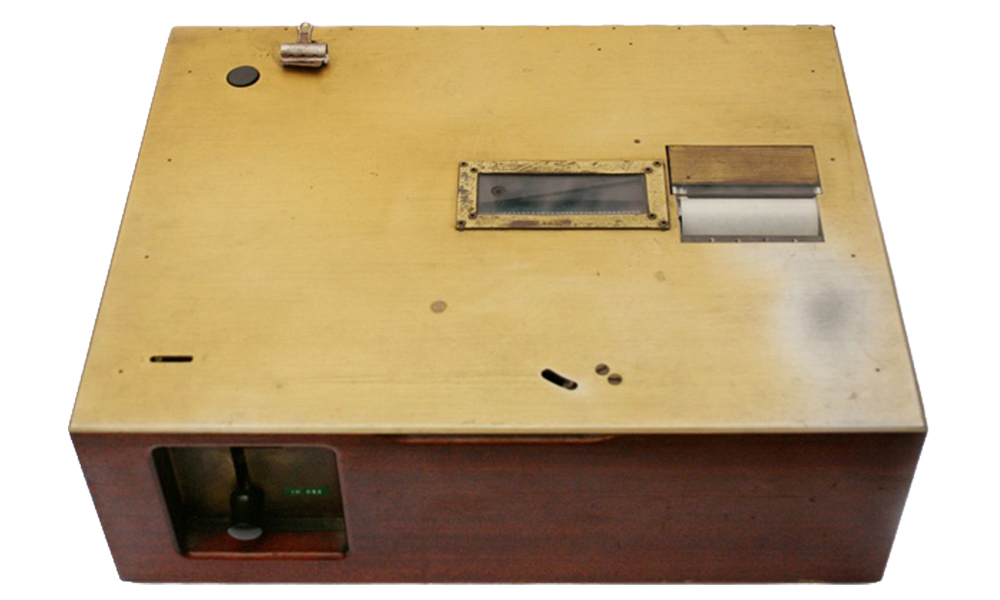
But both of these men, both Pressey and Skinner, were, I think, scientists who were a little bit entrepreneurial as opposed to, I think, what we might have more of today, which is entrepreneurs who might be a little bit technical.
The book’s thread on behaviorism is fascinating. Toward the end, it seems people kind of turned on the theory, arguing that it was a tool for authoritarianism. What did they understand about behaviorist technology that we might have forgotten? Is there an equivalent critique that’s mobilizing against AI and social media today?
Audrey: That’s a great question. To me, one of the things that’s really interesting is that if you ask academics what happened to behaviorism, they’ll say that better science won, right? They’ll say, “Oh, we don’t use behaviorism anymore; we’ve moved on to cognitive science or neuroscience.” Several articles by Noam Chomsky are often pointed to as nails in the coffin for Skinner’s work. Chomsky said it would lead as easily to fascism as anything else. But what I also think changed the field of psychology was Stanley Kubrick’s “A Clockwork Orange.”
It was a popular representation of behavioral conditioning. And Skinner might have been like, “That’s not what I do.” But in people’s imagination, Skinner’s ideas of behavioral engineering came to be seen as explicitly manipulative — and in ways that were contrary to human freedom.
At the time, there was a lot of political activity, which made people deeply suspicious of control mechanisms that might fall into the hands of powerful governments or corporations. And I just think that there was a real pushback, a popular groundswell outside any kind of academic conversation that made behaviorism tainted behaviorism as politically problematic.
Educators want students to understand what it means to have agency over their own learning.
That’s the influence of popular culture. The role of these cultural stories is often far more powerful than any kind of argument that appears in Nature. I’m not saying that the actual science is irrelevant or unimportant. But for most people, ideas come from more visceral cultural stories. And I think that is an uphill battle for artificial intelligence.
Yeah. I mean, from Spielberg’s “AI” to Alex Garland’s “Ex Machina” to —
Audrey: “Terminator.” These are not happy stories of humans thriving.
Do you feel that, over the last three to four years, as AI has seeped into everyday life, regular people have warmed up to it?
Audrey: I’m not sure that we have. I think that people who work in and around tech are inundated with a different kind of messaging about inevitability. But I think many people still feel very suspicious of it. It’s exciting for a brief time, and I talk about this in my book as well; we still see it with new technologies in the classroom today. The first students who were given these teaching machines were like, “Wow, this is cool. This is amazing.” And then after three weeks, they’re like, “Wow, this sucks.”
I think that’s often people’s experience with these new technologies. It was very cool the first time you could sort of generate a cartoon avatar of yourself. But now, for most people, it doesn’t seem particularly exciting.
Meanwhile, the embrace of apocalyptic rhetoric by much of the tech industry leadership feeds into people’s fear that AI will take away all the jobs. It’s not really a message that I would’ve run with if I wanted people to adopt my tool.
You have this really good quote about that by MIT’s Joseph Weizenbaum: “The myth of technological and political and social inevitability is a powerful tranquilizer of the conscience…Its service is to remove responsibility from the shoulders of everyone who truly believes it.” That has so much resonance for the way that entrepreneurs talk about AI right now. Do you feel like the history of education gives us a reason to do that, or a model by which to do so?
Audrey: I think that this idea of inevitability is incredibly powerful, and I’m always worried about these stories because they shut down our agency, our ability to make decisions. I think that’s particularly debilitating for students. Educators want students to understand what it means to have agency over their own learning. They want them to develop curiosity. They want them to feel that what they gain in the classroom — “knowledge,” “skills,” or whatever language we choose — can give their lives meaning and direction. To say that the future is already written is antithetical to that.
I think of the recent scenes we’ve seen in the last couple of weeks of college graduates booing at the mention of AI during their graduation ceremonies. These are students whom we’ve spent the last couple of years wringing our hands about how much they’re using AI to sort of cheat their way through college. These aren’t students who have assiduously avoided technology for the past four years in an ivory tower, disconnected from the world technologically. But what they are opposed to — what they’re booing at — is this lack of control over their futures. They’re booing at this narrative, which seems to say that there are no jobs and there’s nothing you can do about it. You’ve got to suck it up. The future belongs to the machine.
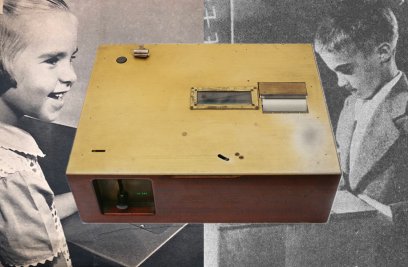
It goes back to that refusal of Skinner’s vision that came in the 1970s, which is like, “Man, we don’t want to be engineered.” In his book, “Beyond Freedom and Dignity” (1971), Skinner was basically like, “There’s no such thing as freedom.” And I just don’t think that that’s a message that people are interested in hearing, particularly college graduates.
If you’re old enough, you can remember what pre-AI college education felt like. But for the kids that are going into college — or going into high school — not only with the tools to use AI, but are being potentially encouraged to do so by educators, do you worry that an entire way of critical inequity is being thrown out?
Audrey: I think about this: I was listening to a podcast recently that discussed how no one alive today remembers life before cars.
I think about the way in which we just make a lot of assumptions about the built world. It’s not natural that we handed over all of this public space to cars, that we arrange our lives, our work, our home, our leisure, our shopping, everything around a vehicle that we sit alone often for hours and hours. We’ve arranged the economy around a bunch of extractive technologies for the car. And I think we can also consider what it will look like when no one alive remembers life before the internet. Similarly, we’ve spent a lot of time rearranging our lives around things that aren’t natural or inevitable.
It doesn’t have to be that way. And I worry that we, in making these decisions, and again, it’s a pretty heavy-handed analogy, but in handing over, handing over the infrastructure of our lives to vehicles, to the internet, that we’re losing literal space. We’re losing space for our bodies, for other ways of being, other ways of thinking, other intelligences, other modes of connecting with one another. It’s wrong to think that there’s only one way and that only one way is the way of the road, the way of the car, the way of the internet, and the way of AI, etc.
I don’t think AI is “thinking,” but even if we think of air quotes around computational thinking, that’s just sort of one tiny way in which you can imagine cognition, and everything starts to bend its way then towards the kinds of problems and solutions that look like things computers can do. We’ve seen that happen in the classroom in both obvious and sort of insidious ways. For example, we’ve handed over so much space to the productivity suite of tools that, suddenly, assignments all come in one of four flavors: There’s a document kind of assignment, a spreadsheet kind of assignment, a PowerPoint kind of assignment, and now the podcast kind of assignment.
Teaching machines, at least for Skinner and Pressey, largely failed commercially. But programmed instruction — small steps with immediate feedback — was absorbed into textbooks, corporate training, military instruction, etc. How does that relate to what you’re saying now? You know, the idea that we broaden the aperture to think beyond the programmatic, the computational in education?
You can see this in the history of the multiple-choice test. The multiple choice test is such an unsatisfactory way of getting at understanding. Most things don’t fit neatly into choosing the best answer from four options, but we’ve crunched so much of education into this model that you can grade efficiently.
The original idea behind this model was that it would be objective, so that teachers wouldn’t get too attached to certain students and give them better grades because of their subjective, overemotional, hysterical female ways. So you can see the ways in which learning gets reduced to the point where you can’t even begin to showcase what you understand, think, or want to express, simply because the technology’s ability to let you do so is just so limited. Perhaps the multiple-choice tests and the algorithms have gotten fancier, and the amount of data these computers collect about students has increased. But they’re still operating, I think, with a very poor vision of what learning looks like.
Audrey Watters is a writer on education and technology. She is the creator of the popular blog Hack Education, the newsletter Second Breakfast, and the author of widely read annual reviews of educational technology news and products. Watters is also the author of “Teaching Machines.”