The Trouble With Narrative History
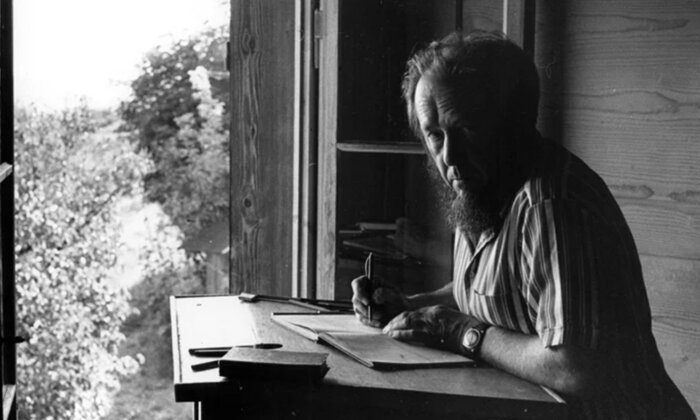
In 1973, Aleksandr Solzhenitsyn published the first of his three-volume narrative history of the Soviet Gulag that also served as an autobiography of his life as an inmate. Solzhenitsyn’s aim in “The Gulag Archipelago” was not only to indict Joseph Stalin, his henchmen, and, before them, Vladimir Lenin for the crime of creating and administering a system that killed one and three-quarters million people. His aim was also to show that the Gulag was an inevitable outcome of the mindset the October Revolution gave rise to.
Naturally, Solzhenitsyn was unable to publish the book in the Soviet Union. In fact, he had to keep the entire project secret for years. (One of those who copied the manuscript hanged herself after revealing its location to the KGB.) Once published in the West, however, “The Gulag Archipelago” was translated into more than 30 languages and became an international bestseller. The worldwide acclaim he received after winning the Nobel Prize in Literature three years earlier — together with the international attention drawn by novels such as “Cancer Ward” and “The First Circle” — meant he couldn’t be jailed again without serious repercussions. Instead, in 1974, Solzhenitsyn was expelled to the West, where he would live for the next 20 years.
That “The Gulag Archipelago” had a major effect on the Soviet Union’s subsequent lifespan is hard to deny. It was evident that the KGB, the Politburo, and Communist Party hierarchy in Moscow thought so. They did everything they could to suppress the circulation of smuggled-in and samizdat (clandestinely copied and circulated) copies of the banned work and to counter its effects, even at great cost to themselves.
But how much was really done to unravel the Soviet Union by Solzhenitsyn’s three-volume narrative history of the Soviet Gulag between its publication and the end of Communism in the Soviet Union? Could the works of one author really dissolve a nation? Some might cite the election of the Polish Pope John Paul II in 1978 as making a greater difference. Others might point to U.S. President Ronald Reagan’s Strategic Defense Initiative (“Star Wars”) or to Soviet leader Mikhail Gorbachev’s policies of glasnost and perestroika.
Ultimately, the trouble with narrative history — which presents history as a chronologically coherent arc of characters, motives, turning points, and consequences — is that it simply can’t resolve these questions either way. There are too many forces operating on the trajectory of human affairs even to be enumerated. As a result, weighing them against one another is a fool’s errand. But what we can’t deny is that “The Gulag Archipelago” had a profound effect on people everywhere and on late 20th-century events.
Could the works of one author really dissolve a nation?
The reason is obvious: It moved people. It had an enormous impact on people’s emotions and motivations. As the volumes appeared in the 1970s, they provoked people to action, to buying and reading them, and to talking, arguing, and writing about them. But they also provoked political activity and significant change in the values, especially among people of the Left, who found themselves surrendering illusions and forsaking commitments that had been among their most cherished.
Great works of narrative history have this emotional impact on us. They often affect our lives more deeply than even the greatest works of historical fiction do. For instance, his previous novels, “Cancer Ward” and “The First Circle,” did not seem to contribute much to the unraveling of the Soviet state, whereas “The Gulag Archipelago” clearly did.
Alas, the same thing can be said of Adolf Hitler’s “Mein Kampf.” It, too, mobilized millions of people to engage in atrocities unrivaled by anything except those ordered by Stalin. Unlike Solzhenitsyn’s “The Gulag Archipelago,” Hitler’s “Mein Kampf” is tough sledding. I suspect hardly anyone, not even the most ardent Nazi, was able to read it all. The book is a farrago of lies about Hitler’s own life, combined with hundreds of pages about history, some of it factual, but most of it just made-up narrative explanations.
There are vast differences between these two works. One is the work of a great writer reflecting decades of careful research, a factual chronicle of profound moral force. The other is the illogical, disconnected scribbling of a madman, a disorganized screed of hateful fiction masquerading as history and implicated in the death of millions. But both changed the world in profound ways because their readers held each work to be true.
Especially since the rise of romantic nationalism in the 19th century, politicians, artists, and historians have employed narrative history to appeal to their followers’ sense of grievance or destiny. Ethnic and religious groups have been mobilized by convenient narratives of mistreatment, discrimination, and even genocidal suppression, only to carry out similar mistreatment, discrimination, and genocidal suppression of other ethnic, linguistic, and religious groups. Two hundred years of such nationalism have made the preservation of “historical memory” into a moral imperative.
In 2016, writer David Rieff observed that this use of narrative history might not be such a good thing. His “In Praise of Forgetting” is a reflection on the contemporary “moral authority” of narrative history:
[M]ost arguments in support of collective memory as a moral and social imperative … seem to take as their point of departure George Santayana’s far too celebrated false injunction, “Those who cannot remember the past are condemned to repeat it.” This is the view that has become the conventional wisdom today, and the conviction that memory is a species of morality now stands as one of the more unassailable pieties of our age…. To remember is to be responsible — to truth, to history, to one’s country, to the traditions of one’s people or gender or sexuality (in this last instance, what is usually meant is a group’s suffering, the history of its oppression).
Rieff’s book identifies some of the motivations of the search for histories that have been made invisible by the hegemony of the West (or men or white people or Christians or straights). Some of the marginalized histories are laudable enough, well-intentioned, and indeed admirable. Some seem indispensable to prevent repeated genocides. Others aim at reconciliation: truth and justice. But too many of these marginalized histories have also inflamed the irredentism and revanchism of the 20th century and continue to do so unabated into the 21st. How much ethnic cleansing — of the Greeks and Armenians by the Turks, of the Hutus by the Tutsis (and vice versa), of the Bosniak Muslims and the Kosovars by the Serbs, of Palestinian Arabs by the Israelis — was justified by such histories? “The crucial point is this,” writes Rieff:
We do not have to deny the value of memory to insist that the historical record (the verifiable one, not the mythopoeic one) does not justify the moral free pass that remembrance is usually accorded today. Collective historical memory and the forms of remembrance that are its most common expression are neither factual, nor proportional, nor stable. To be sure, were the political implications of this largely positive, or failing that, at least largely neutral, then arguing for a more skeptical view of remembrance would be both disrespectful to all those people to whom it provides strength and solace and unnecessary. But is this the case?
The situation is actually much worse than Rieff’s rhetorical question suggests. It’s not just that “collective historical memory” is “neither factual, nor proportional, nor stable.” The same problems arise in the best, most disinterested, archivally scrupulous, primary source–driven historical scholarship. Rather, it’s that if the historical record is anything more than a chronology — that is, when it aims at causal explanation — it always gets them wrong. It fails to explain anything because it attributes causal responsibility for the historical record to factors that contemporary neuroscience reveals to be fictions — convenient ones, but fictions nonetheless.
The causal factors narrative history invokes, such as the beliefs and desires that are supposed to drive human actions, rely on a scientifically unwarranted theory of mind. It‘s one that breeds emotions such as anger, shame, jealousy, retribution, and vengeance, and has wreaked havoc throughout recorded history.
To be fair, it’s worth distinguishing between the theory of mind as a scientific model and “mind reading” as a useful tool, a prosocial ability we share with other primates. The ability to mind-read is a skill hominins deployed face-to-face long before Homo sapiens emerged. It was responsible first for their survival and then for ours, if only by making possible the domestic division of labor, mutual protection, and the teamwork of hunting and gathering. Indeed, in the history of our species, the positive uses of mind reading may, for all we know, far outnumber the harmful uses to which the theory of mind has been put.
But mind reading becomes malevolent when the theory of mind enables it to unleash our hostile emotions against people we don’t even know, people who may even be long dead or far away.
Teleological “thinking” about — or divining purposes in — the past has been narrative history’s bane for as long as it was its raison d’être. Darwin banished purpose from biology just as rigorously for humans as he did for other animals. Academic historians sought with great success to drive teleology out of their discipline, though not for the right reasons. They rejected the notion that history was “going somewhere” simply because they rejected the Christian, Muslim, Marxian, capitalist, racial, patriarchal, and nationalist eschatologies that identified history’s end, goal, or purpose.
But many people, especially those who drag narrative history into politics, didn’t get the message. National narratives have given “meaning” to national history. People mistake the emotions that such narratives foster for understanding. When the broad sweep of a narrative history comes packaged in a story — Manifest Destiny, the White Man’s Burden, “the civilizing mission [la mission civilatrice],” “blood and soil [Blud und Boden]” — it’s hard for anyone to shake it just because of the compelling way in which it’s packaged.
One telltale sign that these master narratives are driven by the same machinery — the same theory of mind we employ in everyday life — lies in the morals they so often draw. Almost every national narrative underwrites a claim of rights or an accusation of responsibility, and these are collective, group rights and collective, group wrongs. But there’s only one way such judgments make sense, and it’s also the only way history in the form of a national narrative can justify them. Only agents acting on motives — good or evil — and beliefs — right or wrong — can be praised or blamed for outcomes. So either it’s the nation as a whole acting in ways the theory of mind informs us about, or it’s individual people who are, thereby defending their nation’s rights, committing their nation’s wrongs against others, or both.
In the 19th century, the first of these two alternatives was seductive. Under the influence of the German philosopher Georg Wilhelm Hegel, nationalist idealists asserted that a “world mind” (from the German Weltgeist) invisibly controlled the course of history, culminating in the emergence of nation-states (especially in Europe). In asserting this, they were only articulating an idea that comes naturally to hyperactive agency detectors like us.
Narrative historians, like other storytellers, will never want for an audience.
But absolute idealism went out of fashion in philosophy, and 20th-century international jurisprudence rejected “collective responsibility” just in time to try individual Nazis at Nuremberg. Still, the personification of the nation, the people, the race, the culture has persisted, thanks largely to demagogues.
If there is meaning in history, if national narratives have significance and a moral for the future, it can only be through the meaning and significance of the acts of the individual people that drive narrative history. But, thanks to the work of researchers like Eric Kandel, John O’Keefe, May-Britt Moser, Edvard Moser, and Rebeca Saxe, neuroscience has revealed that the theory of mind required to find meaning in human actions bears no relation to how the brain actually works. Indeed, the common-sense theory of mind has no basis in the brain’s structure and operation, despite being laid down in human thought by a Darwinian process that made us socially cooperative creatures.
So, what should we rely on to cope with the future if not narrative history? The same resource we employ to cope with the biological, climatological, ecological, agricultural, demographic, and medical future: experimental science. We need only figure out how to apply the empirical tools that, with ever-increasing success, have enabled us to cope with nature to our psychological, social, economic, and political futures.
Stories are for children and for the child in us all. Nothing will ever stop us from loving them, at least not until natural selection radically changes our neurology. Narrative historians, like other storytellers, will never want for an audience. But we will all benefit by recognizing what narrative history at its best and most harmless actually gives us — not knowledge or wisdom, but entertainment, escape, abiding pleasure.
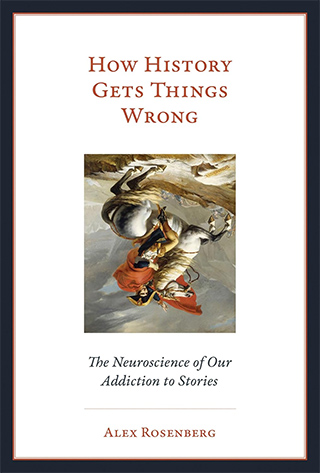
Alex Rosenberg is R. Taylor Cole Distinguished Professor of Philosophy at Duke University, with secondary appointments in the biology and political science departments. He has authored more than a dozen academic books, including “How History Gets Things Wrong,“ from which this article is adapted.