America Is a Deadly Maze for Black Mothers-to-Be
Annette is a married Black woman with a law degree from one of America’s most competitive law schools and an enviable career as a civil rights attorney. She almost died during her pregnancy.
Toward the tail end of her second trimester, Annette’s heart would at times beat terrifyingly fast. When she experienced these symptoms, her providers dismissed her concerns, claiming that her racing pulse was stress-related and that she should try to relax. They never performed any tests that might have helped identify the cause of her symptoms. During this time, Annette also experienced bouts of pain that were so intense that they caused incontinence and vomiting, leaving her writhing on the floor in delirious agony. When she went to the ER, no one ordered a workup that might have helped diagnose the cause of her pain. Instead, Annette, who is medically “overweight,” said, “They told me that I should get a better bra that provides more support for my breasts.”
The day that Annette went into labor — some three months after she first began experiencing heart palpitations — her pulse again began to race. The care team monitoring her performed an EKG, which revealed that, all this time, Annette had been suffering from a pregnancy-induced heart condition that could have been fatal to both her and her baby. Further, about six months after giving birth, she was still experiencing periodic bouts of severe pain. At an ER visit, providers did a blood test and discovered that she had nearly lethal pancreatitis. Doctors saved her life that day by performing an emergency surgery.
Annette’s brush with death might seem like a one-off occurrence — an anomalous parade of errors and mishaps reserved for only the unluckiest among us. But that is not the case. Rather, her experience is very consistent with what the statistics bear out: that in America, pregnancy is dangerous for Black women, regardless of privilege.
Despite the drumbeat of innovation and medical progress in America, the overall rates of maternal deaths in America are increasing. In fact, the U.S. is one of only a few high-income countries in this category. Meanwhile, other high-income nations — which America considers its peers — have reduced their maternal death rates over the years. Thus, relatively speaking, the U.S. is an unsafe place for anyone to give birth.
Yet, as Annette’s story demonstrates, it is particularly perilous for Black Americans. They are more than three times more likely than their white counterparts to die during pregnancy, childbirth, or the postpartum period. Further still, racial disparities in maternal mortality and morbidity increase as one moves up the socioeconomic ladder. Poor Black and white women die from pregnancy-related causes at rates that are closer to one another than the rates at which wealthier Black and white women die. Thus, class privilege actually exposes pregnant Black people to a racial disadvantage that low-income Black people manage to avoid.
Confused? So was I.
“Even if I am casually dressed, then I will casually have on my Yale paraphernalia.”
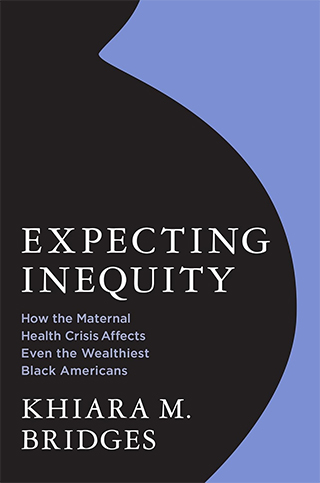
I first encountered the puzzle of the Black maternal health crisis over a decade ago while conducting research at a public hospital in New York City serving some of its most marginalized residents. But I didn’t really begin putting the pieces together until February 2022, for my book “Expecting Inequity.” I spent two years observing an obstetrics clinic at a well-resourced hospital in San Francisco serving wealthy residents. There, I interviewed close to two hundred pregnant or recently postpartum people — 75 of whom were Black — to get a sense of the choices that Black people were making in light of the well-known failures of the nation’s maternal healthcare system. What I discovered surprised me.
Take, for example, Medicaid, which is disproportionately used by people of color. The program is often associated with worse health outcomes than private insurance. However, what I learned is that Medicaid can actually protect low-income Black people from racism by closely dictating the care that providers deliver. So, although Medicaid might reduce patient autonomy, it also limits the kind of provider discretion that nearly allowed Annette to die.
In interviewing class-privileged Black people who are pregnant or desire pregnancy, I found they were generally well-aware of the dire statistics. They knew they were seeking to have babies amid something called a “Black maternal health crisis” and that they were more likely than their white counterparts to be felled on the path to motherhood. So, they adopted strategies to survive.
For instance, several pregnant Black women told me that they refuse to take off their wedding rings when meeting with doctors — even though pregnancy-induced swelling makes wearing them quite uncomfortable. They tolerate the discomfort because they understand that their rings may prevent them from being viewed through the time-worn lens of the “welfare queen” — that poor, unmarried Black lady whose fertility is merely a means of increasing her welfare checks. Class-privileged Black women hope that their marital status will instead invite obstetricians, midwives, and nurses to perceive them as “deserving” of reproduction, leading these providers to give them the same quality healthcare that their white counterparts receive as a matter of course.
In a similar vein, many wealthier Black women who are married to non-Black men told me that they intentionally brought their husbands to their prenatal care appointments as a protective measure. For instance, Annette told me that when she was in labor with her daughter, her requests often fell on unhearing ears. “I was begging for ice for [my dry] mouth, and they weren’t bringing it,” she told me, adding that hospital staff brought ice only after her husband demanded it.
Other class-privileged Black women attempting to survive the Black maternal health crisis told me that they “dress up” for their prenatal care appointments, donning attire that signals that they are not poor. And that doesn’t always mean dressing formally. As one pregnant Black woman told me, “Even if I am casually dressed, then I will casually have on my Yale paraphernalia. I’m wearing sweatpants. But the sweatpants have ‘Yale’ on them.”
In a world where Black Americans already face so much discrimination outside the medical realm, it is unfair that they must also face disadvantage within the system, where their health should be safeguarded. The increased risk of dying or being severely injured during pregnancy is a constant source of stress for Black people, which negatively impacts their health, further increasing their risk. So, how do we stop the cycle?
First, we must recognize that the Black maternal health crisis is a structural problem. It is the result of large-scale forces — like the residential segregation that leads even wealthier Black people to live in neighborhoods plagued by pollution and the “weathering” that literally ages Black people’s bodies faster than their white counterparts’.
Second, we must appreciate that the Black maternal health crisis is a political problem. It is a consequence of a lack of political will to implement the policies that are known to save pregnant people’s lives. For instance, more hospitals should be required to adopt safety bundles, such as those crafted by California’s Maternal Quality Care Collaborative, whose protocols have demonstrably helped providers effectively address various pregnancy-related conditions like hemorrhage and sepsis. Black patients could also be given more options to receive care from Black providers — an intervention that has been demonstrated to improve patient outcomes in a range of contexts.
This nation is failing its citizens during one of the most vulnerable moments of their lives.
Last, we must move beyond the individual-level interventions, such as implicit bias training and cultural competence workshops, that have become popular as quick fixes. Instead, we have to take on the very systems that make pregnancy and the postpartum period deadlier for Black people: the perverse incentives created by the profit motive that underlies the delivery of American healthcare; the dearth of Black obstetricians and midwives in the country; and, quite simply, the everyday anti-Blackness that makes the Black American experience such an incredibly stressful, health-compromising one.
It is manifestly unjust that a country as wealthy as America would leave it to individuals to solve a structural and political problem for themselves. Further, it is an exhausting task for Black people to have to figure out how to escape death during pregnancy and childbirth. As Loren, who was pregnant with her first child when I spoke to her, told me, “I’m so tired of hearing about how much more likely we are to have all of these things. I’m already stressed about doing the best possible job of bringing this life into the world.”
This nation is failing its citizens during one of the most vulnerable moments of their lives. Racial disparities in maternal mortality and morbidity can be eliminated. The Black maternal health crisis is solvable. The question simply is whether the U.S. cares enough to solve it.
Khiara M. Bridges is the Earl Warren Professor of Public Law at UC Berkeley School of Law. Her books include Reproducing Race: An Ethnography of Pregnancy as a Site of Racialization. She is the author of “Expecting Inequity.”