America’s Care Economy Is Broken
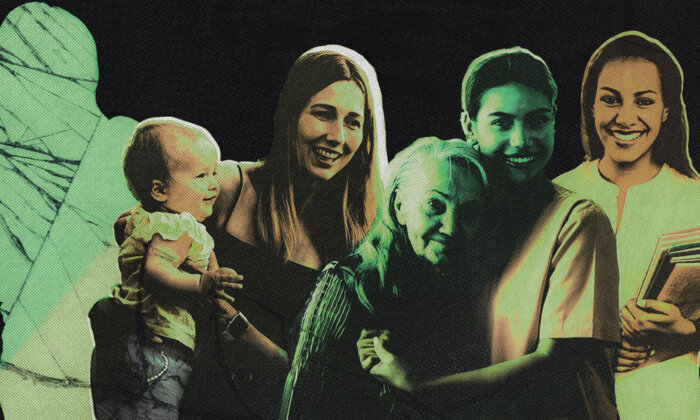
In America, tens of millions of people provide essential care for others, day in and day out, often without anything near adequate recognition or compensation. They are the parents caring for kids and the children caring for their elderly parents and relatives with disabilities “for free.” They are the underpaid legions of teachers, cleaners, nannies, home aides, social workers, midwives, doulas, and hospice volunteers. Without them, life as we know it would grind to a halt.
Together, these groups comprise a vast network of support systems, staffed almost exclusively by women, known as the “care economy.” This economy supplies and maintains the workforce that employers desperately depend on. But due to a long history of disparities, their wages (and, as a result, the country’s GDP) fail to reflect the true value of the care they provide. One might even say that their labor has been effectively donated to the broader American economy — often at great cost to the caregivers themselves.
In recent years, caregivers, unions, activists, scholars, and politicians on the left have advocated that this labor force be recognized and more appropriately compensated for their work. The likelihood of that happening in the U.S. has been minuscule for most of the country’s history, largely because women had few other options. But several ongoing demographic and economic shifts make it more necessary now: declining birth rates and more paid work options for women (reducing the supply of unpaid caretakers) and expanded longevity (increasing the demand for caretaking, as well as other services).
These shifts in basic life patterns are fueling a bottleneck that alters the clout that all workers now wield. These shifts require commensurate changes in our social and economic systems. Their occurrence together has created an unprecedented opportunity to discard decrepit systems and embrace innovation. Disgust with the recent evidence of corruption among those in power and their failure to support basic services for Americans may hasten that embrace.
Developing a nationalized care infrastructure to supply key elements of the care work now provided at home or not at all would have many positive effects for individuals and the economy. They include, among others, the following:
- Ensuring all Americans — young, old and in between — get the care they need (where, formerly, the needs of the many without available family members went unmet).
- Freeing up current unpaid caregivers to work for pay if they’d like, expanding household resources.
- Raising the wages of current paid care workers.
- Documenting through payment the heretofore unbooked value of that care work on the ledger of human production, which adds that value directly to GDP.
- Further growing GDP when the newly employed paid care workers spend their earnings, often in community businesses.
- Democratizing the civic status of people previously excluded, by marking both the carer and cared-for as worthy of compensation and investment, respectively.
- Growing the economy through services, which adds the value of care to the economy without growing waste.
- Building community through care.
The most efficient system for this would, of course, be run nationally, since the federal government, as a major buyer prioritizing the public good over profit, would save significantly on costs. A centralized federal benefits system would mean businesses wouldn’t have to provide so many benefits (or invest so much in HR), while also supplying employers with an expanded labor-force pool. Both businesses and individuals would pay in, but the savings and benefits relative to the current system would be large.
To be sure, the political road to success remains steep. A federal care infrastructure may require nothing short of a constitutional amendment that would add it to the enumerated powers of the federal government. It would need to federally override states’ power to underinvest in some of their people on the basis of race, gender, or class. That’s a heavy lift. But at a time when family formation is happening later and later due to the mounting challenges and costs, a government mandate for a family-support infrastructure would be a gift to all.
So what could a care economy involve — and actually look like?
A care economy would intersect with many spheres of life: health care, affordable elder care, affordable childcare (including afterschool and summer care), food security, affordable housing, solid public education for all, reliable birth control, and paid parental leave. It would also mean increased national investment in ensuring a safe, unpolluted, sustainable environment for coming generations. Such provisions would support and incentivize family formation in our time of declining birth rates, so that people who want kids could feel that having them was affordable and responsible.
It would take a while for us to put in place this full complement of benefits, the likes of which might seem too much to ask for — since it’s certainly much more support than we have now. But recall that most or all are available in various forms in Denmark, France, Spain, Germany, Italy, New Zealand, Australia, Turkey, Iran, and Saudi Arabia. Many are also available in India, Japan, Israel, South Korea, and China, two of which have much bigger populations.
A nationalized infrastructure would involve major investments in construction projects, including childcare and elder centers, to supply key segments of the necessary care work now supplied at home or not at all. While the virtues of good child-care centers are well known, creating a national network of well-staffed elder centers in all communities — where elders could access needed care and other services and also socialize, take classes, and do community service — would be a much-needed innovation. They would serve as community hubs, reduce isolation and opportunities for elder abuse, and begin to address the huge economic, health, and societal transformations introduced by expanded longevity, in communities across America.
Over the long term, funding for both childcare and elder centers would also include caregiver salaries, equipment, and workforce training. Some centers could combine both child and elder elements, allowing connection across generations and including care for kids with special needs and people with disabilities.
If a goal to build such a system were agreed upon, the rollout would have to go in stages, both to train the necessary workforce and to avoid supply chain bottlenecks for building materials as well as personal goods, as more people have wages to spend. Starting up sufficient childcare and eldercare centers to meet national demand would initially involve collaborating with pre-existing centers that choose to join (likely most, given the added support), along with new facilities.
A government mandate for a family-support infrastructure would be a gift to all.
Simultaneously, a parallel model could involve payments to home caregivers or directly to those needing care. These could be part of a universal care allowance, tailored to participants’ individual costs and needs (to provide services similar to those currently offered to many veterans). These funds could go to family members who provide care or to professional home health and personal care aides. This option could be especially appealing for people with disabilities, rural Americans, or workers with unconventional schedules.
Far from plush, such care resources would simply provide a decent minimum to sustain a person across their lifetime. But all would benefit from the expanded contributions of insight, skill, and innovation of fellow citizens no longer mired in debt, worry, and the traumas of poverty; from the improved environment; from the economic growth; from expanded community engagement and dialogue; and from the security of a stable democracy.
Care benefits would be dynamic, subject to changing circumstances. If, for example, a family receives free childcare that enables the caregiver to work, along with any needed training for both parents to advance, soon the family moves into a stronger economic position where they pay more of the sliding-scale cost. If a state that previously refused Medicaid expansion shifts to providing its lifelong health care to all — or even better, if the U.S. moves to a national health service for all — fewer people will become ill, and many with current comorbidities can come to manage them, freeing them up to earn, pay taxes, and participate. If under-resourced schools are brought up to par, the communities in those neighborhoods will produce more skilled workers, less crime spurred by desperation, and more tax revenues to cover school costs.
Of course, not all care could or should be outsourced and paid for. Every moment of our lives involves elements of mutual care — these interactions are the core of our lives as free beings. Mutual care among individuals is a gift, as the term “caregiving” suggests. But when that care serves capital without compensation — when women produce the workforce for employers’ profit at great personal and civic cost — it amounts to wage theft and political suppression. Monetizing some care so that no one is pushed into dependency or excluded from the polity repairs that inequity and grows the economy.
So how are we going to pay for it?
The refrain we will always hear from the right is that a strong social safety network would be “too expensive.” But they never drill down into the details. In reality, the costs — both human and financial — of not providing needed care are much greater.
The simplest way to fund a fully functional care infrastructure, as in most caring nations, would involve a mixture of taxes paid by businesses and individuals. The lack of transparent discourse around taxes in the U.S. (ensured by those who benefit from that lack) has obscured the extent to which low taxes mean low services, and as a result, poor or nonexistent caretaking arrangements. This imposes a great harm upon our economy and society, to the (limited) benefit of the few.
To this end, an expanded corporate tax, along with an expanded simple progressive individual tax, would go a long way. An increased corporate tax would effectively serve as compensation to families for the historically unpaid work of “employee production.” Individual tax rates would also rise to cover a lifetime of care services, which many Americans already pay for out of pocket. On balance, middle- and lower-income citizens would pay out less in this scenario than in the status quo, while the wealthy would pay more but still have plenty.
European countries, for their part, employ a federal value-added tax (in place of the widely varying state-level taxes in the U.S.), which taxes consumption. A VAT is generally viewed as regressive in a U.S. context, since lower-income households would be spending a larger share of their income on taxes. However, in Europe, while it’s still technically a regressive tax, poverty rates are much lower — due, of course, to its robust social support network!
A care economy will soon become a demographic necessity.
Specific tax rates can also be worked out dynamically. For instance, when the corporate tax rate fell in the U.S. in 2017, much of the European Union followed suit to stay competitive, leading some countries to cut benefits. Raising the U.S. corporate rate back to where it was in 2016 would allow it to rise in Europe as well and better fund their social support networks. The details for the U.S. would be ironed out fairly, with reference to the models around the world that operate best.
If, however, responsible tax restructuring still proves difficult in our moment, there are other ways to jumpstart funding for care.
The simplest would be initial government investment through deficit spending. (The U.S. has run a deficit most years since 1970 and all years since 2001 to cover items viewed as “necessities,” including defense spending and tax breaks for the very rich.) In this scenario, as productivity increases through care, the value-multiplier effects in the community and the expanded tax base created by the new workers would recover a large portion of the investment over time. Most likely, after a vigorous debate, some combination of the two — expanded taxes and deficit spending to build infrastructure — would be involved.
However we ultimately decide to fund a care economy, one thing is abundantly clear: It will soon become a demographic necessity. The growing demand for workers to care for a large and longer-living retiree population — combined with fewer young people entering the workforce and fewer immigrant workers — will hamper America’s economy if not addressed.
By providing affordable childcare, the care economy would help many of America’s workers — like the 22 percent of women aged 25 to 54 who are currently on the sidelines, many of them mothers who can’t pay for the care that would enable them to work and earn for their families — enter and stay in the game. Investment in care would likely also lead to more births, by lowering the increasingly exorbitant cost of raising kids, which now makes forming families seem irresponsible to many. A national commitment to lifetime care for current and future Americans could do much to reassure potential parents that their kids will have a chance to thrive.
Given the current division in our nation, there would no doubt be endless hand-wringing about the notion of implementing an economy that pays for historically under- and unpaid work. After all, there are powerful actors who profit from the status quo. But dramatic increases in socialized care will lift all boats — the opposite of what we’ve heard for years. If leaders focused on building a caring democracy that addresses the shifting realities of America’s demography and inequality, that could win many over.
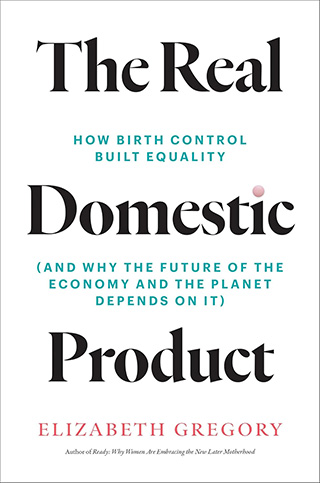
Elizabeth Gregory directs the Institute for Research on Women, Gender & Sexuality at the University of Houston, where she is a professor of English and the Taylor Professor of Gender & Sexuality Studies. She is the author of “Apparition of Splendor” (University of Delaware Press), “Ready” (Basic Books), and “The Real Domestic Product,” from which this article is adapted.