A Southern Waterway Scarred With Secrets
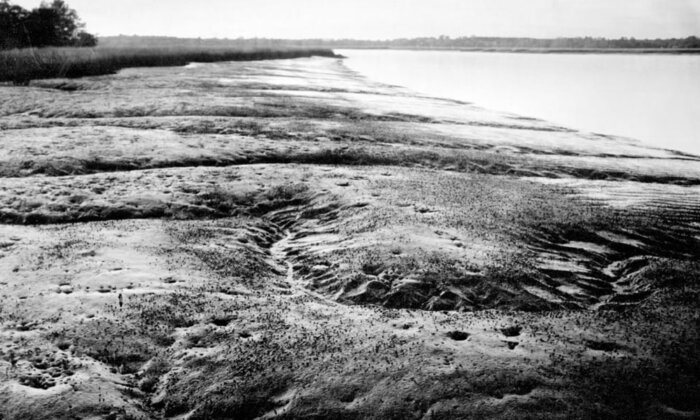
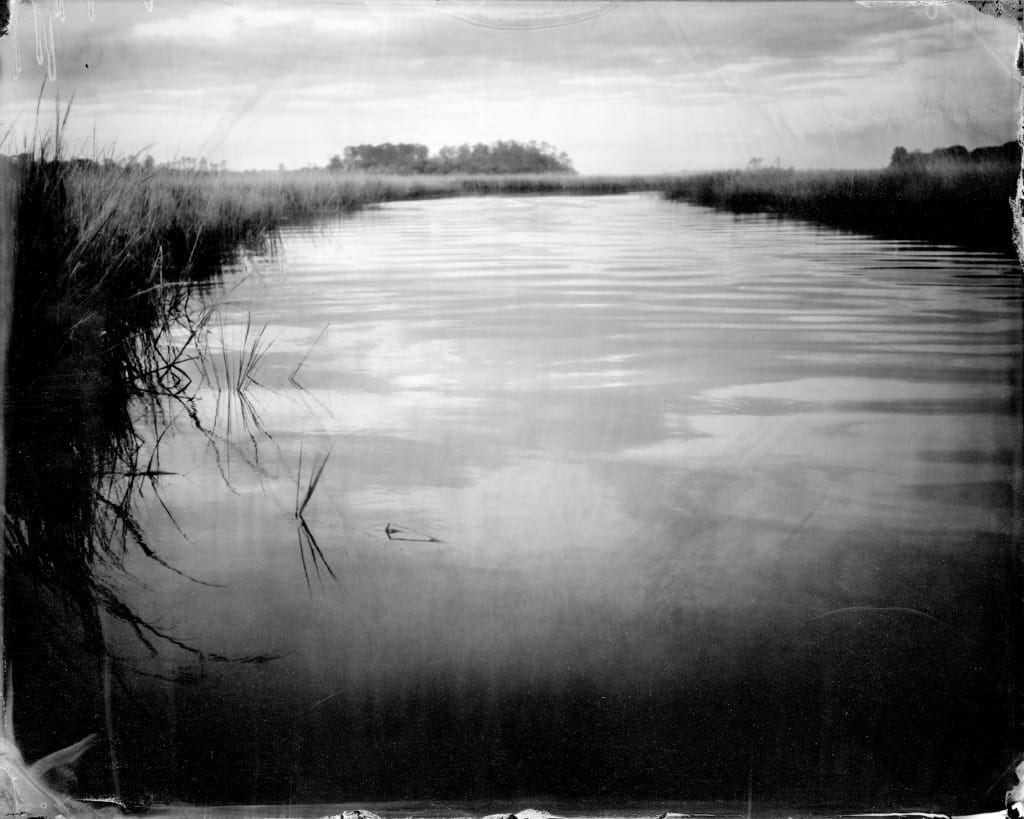
In the South Carolina Lowcountry, there is a little-known waterway that wends through hundreds of miles of marshland, all the way down to St. Augustine, Florida. Centuries old, it is both a natural formation and a man-made marvel, one that once carried goods — and people — in and out of the colonial and antebellum South. Today, the channel feels almost like a living, breathing thing: Its tides rise and fall each night, Spanish moss drapes its edges, and quicksand-like mud threatens to swallow boats whole. It is a landscape of extraordinary beauty.
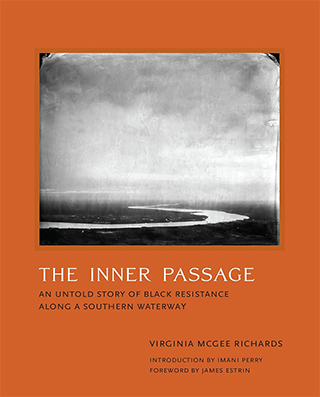
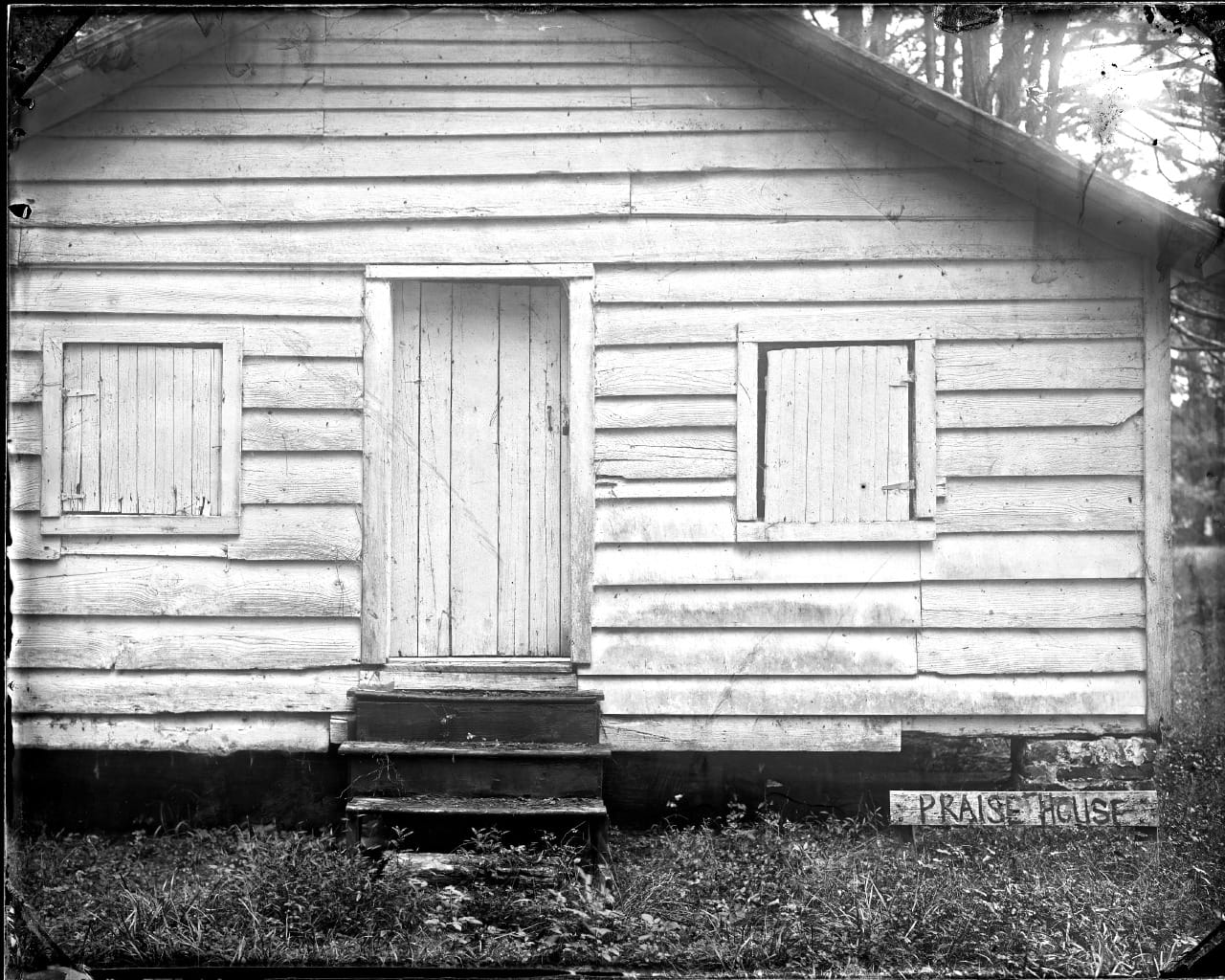
But as Virginia “Ginna” McGee Richards shows, it is also a place haunted by bondage. For her new photo book, the photographer, historian, and environmental lawyer spent a decade traversing what she calls the Inner Passage, capturing luminous images of the waterway and its landmarks, from “witness trees” to praise houses to the people whose ancestors shaped the region itself. In the process, she also discovered a dark history — that of the enslaved laborers who built its hand-dug canals, or “cuts,” that threaded through the terrain and were later used as routes toward self-emancipation. The result of her work is a rich compendium of images and history that unearths a chapter of American slavery long buried from public view. “My hope,” Richards writes, “is that [these] images can convey a landscape scarred with secrets.”
In an interview — edited for length and clarity — Richards discusses the origins of her project; the slow, tactile nature of her photographic process; and America’s “tendency to ignore the importance of Black labor to the infrastructure of our entire country.” She argues, “It’s important to be willing to look at things that make you feel uncomfortable.”
Your obsession with the Inner Passage began when you were swimming in New Cut. What was it about that place that first pulled you in?
Ginna: I was swimming near South Carolina’s Wadmalaw River with a friend, and we were discussing how to get into the channel safely. So I just asked her, “Do you know the name of this little channel coming in?” She said, “Oh yes, that’s called New Cut.” And as I was swimming in the channel, I noticed it didn’t look like any of the other Lowcountry rivers that we know of — they are very circuitous. I sort of sat up and thought, New Cut is an odd name for a Southern river; it’s such odd geography, too.
But it took me a while to find any reference to New Cut in the library at all. I started poring through largely unindexed wills, estates, and property records. The process was sort of cyclical: I would be in the library researching or combing through documents and maps, then back out on the land. And, through this cycle, I began to identify from the documents trees, roads, and other things that were still extant. So I felt like I was moving between past and present pretty fluidly. That was really interesting to me.
Eventually, I got into statute books and realized that New Cut was originally built by enslaved men between the ages of 16 and 60. This mile-long canal was hollowed out of this dense marsh mud, which is like quicksand. It was an incredible excavation effort in the 1700s, and it has required maintenance for 150 years. After all, it’s not as if you just excavate it and you’re done. So, that’s when I really began looking around and thinking that New Cut is not a one-off; it’s part of a broader transportation network — involving dozens of canals — built in early colonial South Carolina before 1720. It was all created by enslaved people. I realized the enormity of what was there.
I’m sure you felt like you were on very fertile ground, academically. Why do you think that the Inner Passage has been so marginal in the broader historical canon around American slavery?
Ginna: Yes, I was kind of astounded that there wasn’t a book I could just go to and read about this.
I think, honestly, the reason is that all the archival documents are written by white men, and they believed the laborers who created these canals weren’t even worthy of having their names written down. Initially, I really wanted to find a list. I thought, This is such a big project. Surely, I can find a list of the names of people who worked for weeks at a time in one of these locations. But I couldn’t. And I really, really looked. They might still be in someone’s private papers somewhere, but I couldn’t find them in any public sources.
I also think, in the South, there is sort of a code of silence around enslavement and the brutal side of our land’s history. There’s a reluctance to wade into that at all. There’s been a tendency to ignore the importance of Black labor to the infrastructure of our entire country. Yet this canal project provided the basic infrastructure for Charleston to become an economic and export center.
There’s this hyper-locality to your project: Many of the sites in the book that are pictured — praise houses, ferry landings, rice mill ruins — feel far outside the public history of the South. How did you locate them?
Ginna: Yes, getting access to the sites and being able to photograph them took years. I made a lot of requests that weren’t acknowledged or granted. There are many places I would still love to photograph that I was never able to access. And I would hear about some of them through word of mouth.
For example, someone told me about this amazing boat that was pulled up from the bottom of the Cooper River, which is part of the Inner Passage. The boat was discovered, I think, in the ’90s, but it dates from 1720. And so I’m thinking, Eureka, this is amazing. It was one of these old wooden boats used to bring goods into Charleston for export. They’re not very big — about 20 to 30 feet long. They have pretty shallow hulls. So, I drove up to the Georgetown Rice Museum, where this boat was, and the hull was there; it had been preserved in this anaerobic pluff mud at the bottom of the river for centuries. But when they pulled it up, the weight of the mud and the water kind of broke it apart. I followed leads; sometimes they were good, and sometimes they were a bust.
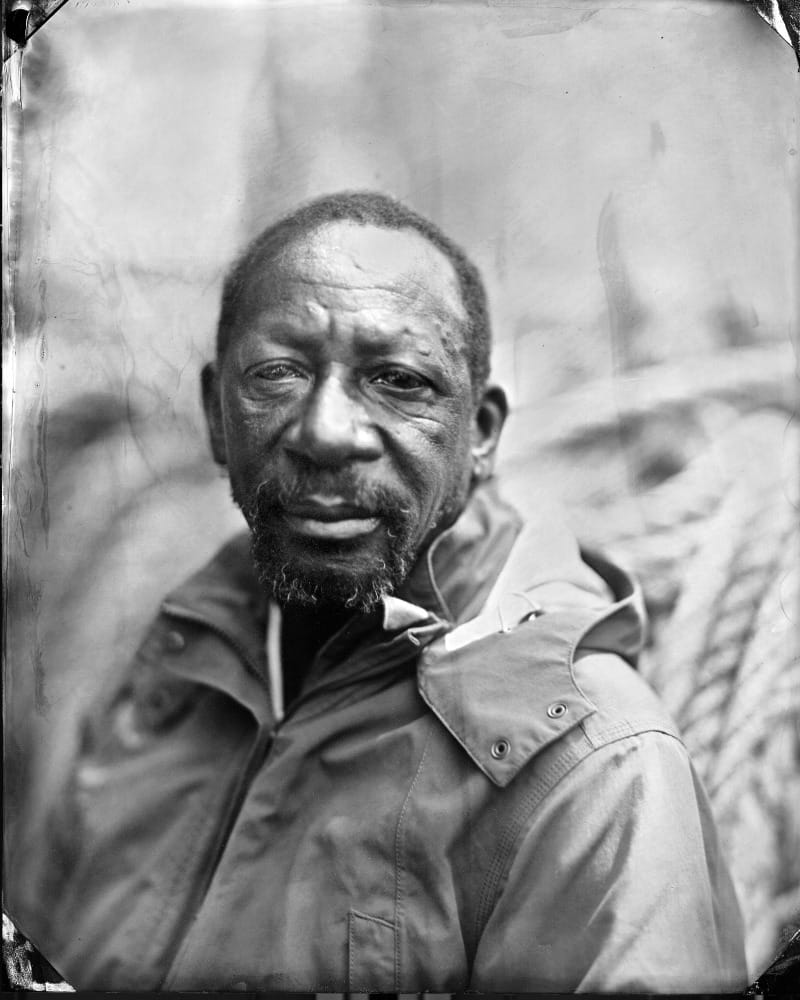
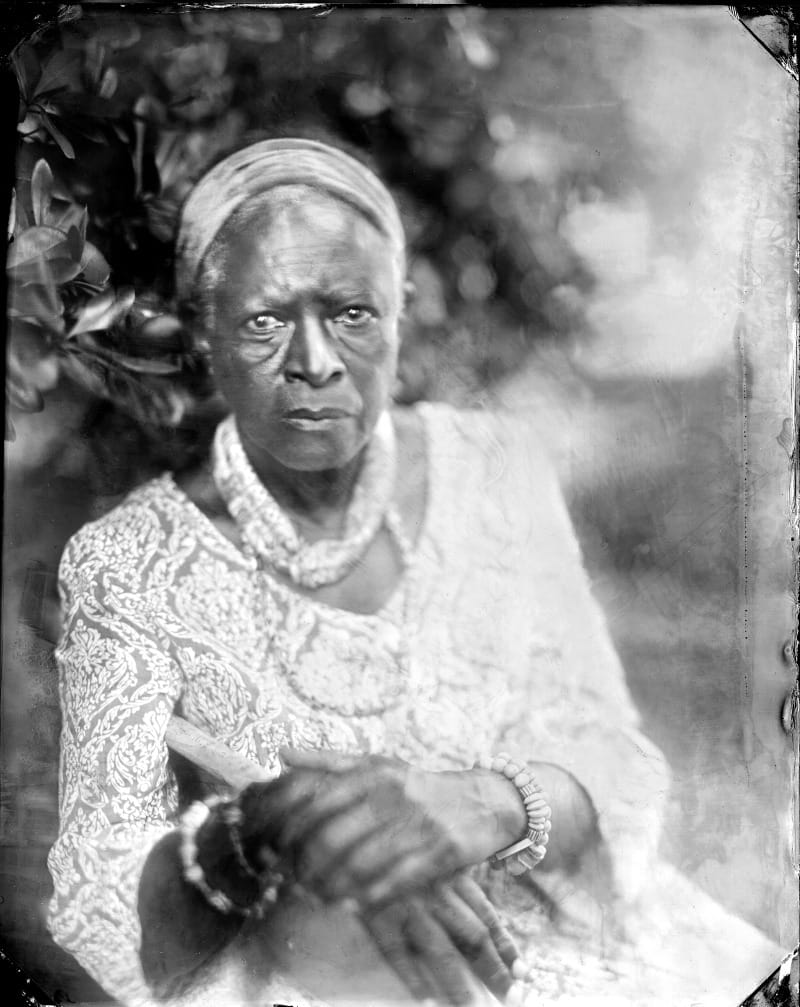
The mechanical process of taking these photos feels essential to the project, not just stylistically but philosophically. You were working with a 10-pound, 90-year-old camera. You also had to develop each photograph in just 15 minutes using a portable darkroom in your truck. What about that process allowed you to see or feel something that a faster, digital workflow wouldn’t?
Ginna: When I started this project, I actually told myself I’d use digital. I wanted to take images at the boundary between darkness and light — the first seven minutes of the morning and the last seven minutes of the evening. Digital allows you to do that, to take photographs in almost total darkness. But when I sat down with my portfolio of these images, I realized that the project still wasn’t there. Meanwhile, I had seen a friend’s work, Tomas van Houtryve, who made wet-plate collodion still photographs. I looked at that process and thought, These images are so imperfect: There’s so much patina, and there’s chemical marks on them, and there’s something very tactile about them, and the blacks are very inky.
So, I learned the wet-plate process. I started getting all of this equipment and making these plates. I was certainly slowing everything down, spending time on the land getting set up. You basically have to create a whole darkroom for every single image and wait; sometimes, I’d have to get up at 4:30 in the morning to set everything up and just wait on the land for two hours for the light to be exactly right. But the chemical process of wet-plate collodion felt like I was letting the land breathe and speak to the plate. The process is so sensitive that changes in humidity, wind, or temperature can affect the resulting image. And all of that gets recorded on the plate.
That’s really interesting. It’s like the environment is speaking through the development of the photograph. How long did it take for you to realize that this was the process you wanted to go with?
Ginna: I just shot digital for a year.
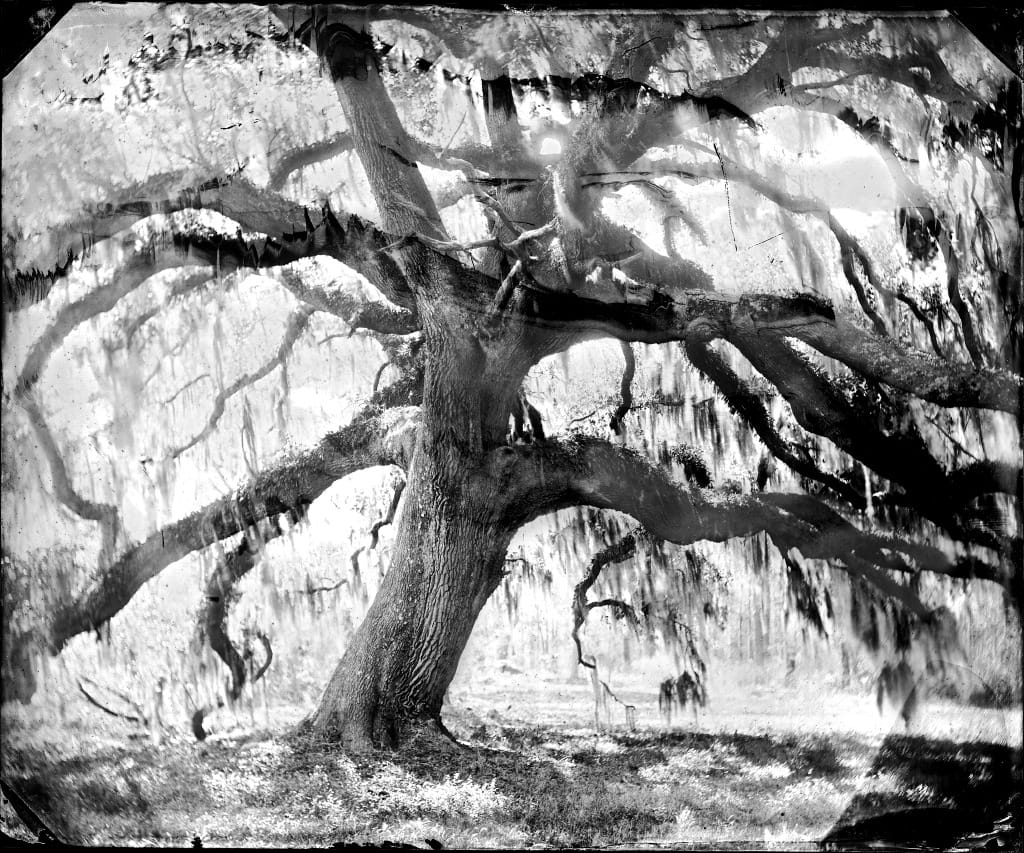
You mentioned that during your research, you felt kind of suspended between historical eras, which I think comes through in the ethereal quality of many of the images. There’s a really shallow depth of field, and the Spanish moss and the oaks almost seem to dissolve into the atmosphere. Was that dreamlike quality deliberate?
Ginna: It was because I really wanted viewers to feel like they, too, could pass with me between present and past and feel the movement of the land itself. The South Carolina Lowcountry is a living place — it’s constantly breathing and moving. It’s out of focus at all times. Things are changing really rapidly. You might walk down a dry path by a waterway, and in two hours, it’s wet, so you’d better be sure you know how to get out of there.
Speaking of living land, the first thing you see in the portfolio is the trees, which you call “witness trees,” to personify them as still-living witnesses to enslaved people’s labor, escape, and survival. What made you decide to make them such a central part of the project rather than just background elements of the landscape?
Ginna: Part of that was informed by the fact that the Lowcountry has little to no visible features. It’s flat; there are no rocks, no bluffs, no mountains. I noticed that on these archival maps that I was looking at, I could actually see some trees marked. In fact, they used trees to mark property lines. Along the roadways, I could actually see some of the trees I had pinpointed on the maps.
That’s what first clued me in: These trees are really the static thing here. I kind of stepped back and realized they’ve been here through all of this transformation, through all of this violence. So, as I wandered through the marsh, I used the trees as guides to navigate my way out. They became really central to my psyche and to the research.
You could pick out certain trees and —
Ginna: Yes. I’d tell myself, That’s where I need to turn in. I got to turn back in here. Because as the tide comes in, things look different.
Yes, and there’s a unique character to each tree.
Ginna: These trees are survivors. They’ve survived hurricanes and winds for centuries. While looking at the live oaks, I began thinking about the wooden instruments my family plays in our house — violin, cello, guitar. Wooden instruments hold the tune of the people who have played them before. And so you can tell if someone’s been playing a slightly bass-heavy or slightly treble-heavy sound. Sometimes I wonder: Have these trees also absorbed in their sinews what’s happened around them? Does their wood fiber hold memory?
Combahee River. These rice fields were abandoned after the Civil War, but many of the earthen dikes and rice rows remain visible at low tide.
The Inner Passage has a fascinating duality to it: It was both an instrument of plantation commerce and a product of slavery, but also a means of self-emancipation. How did that inform your artistic approach?
Ginna: As I started researching, I realized that the Inner Passage was essentially a waterway for the entire colony. Everyone was on it all the time. There were a few roads, but they were pretty impassable and totally unreliable.
Eventually, I found more and more accounts of enslaved people who had taken boats and escaped from Charles Town. I learned that they were, in fact, heading southward — many of them to freedom in St. Augustine. While we have accounts of them self-emancipating by boat, it’s very hard to track them all the way to St. Augustine. One professor at Vanderbilt, Jane Landers, has examined Spanish archives and observed that, once enslaved people reached Florida, they were granted freedom if they pledged allegiance to the Crown and the Catholic Church.
What would that journey look like? How many days would it take?
Ginna: Months. It’s incredible. These are people who were escaping in groups of two, four, six, often in shallow wooden boats, and they’re taking very little with them. They have no maps of the area at all. They’re probably traveling just at night, trying to avoid anyone else traveling on the waterway, and they’re being hunted the entire time. It was a really horrifying and brave journey.
Professor Kevin Dawson has written a book, “Undercurrents of Power,” in which he documents that Africans brought to America had strong aquatic skills. They were adept swimmers, boaters, and paddlers. So, many, many people came with those skills, but they used them in a landscape they had never seen before and didn’t know the contours of.
If readers come away from your book with a different understanding of the Lowcountry, of slavery, of American history, what do you hope it is?
Ginna: A deeper understanding of the contributions Black people made to the survival of our early nation. And getting a sense of how massive these infrastructure projects were is important.
But in a larger sense, it’s also important to be willing to look at things that make you feel uncomfortable. To look very hard — instead of looking away — at histories that are conflictual and brutal. We should understand that, and rather than being afraid to look at these histories, we should reckon with their complexity.
Virginia “Ginna” McGee Richards is an award-winning documentary photographer, historian, and environmental lawyer. She is the author of “The Inner Passage.”