Everyday Technology Is Becoming a Black Box. Is There a Cost?
It is difficult to overstate how profoundly humanity has been influenced by the transmission and accumulation of knowledge. But we can begin to appreciate this when we consider cases of individuals attempting to create everyday artifacts “from scratch.” If divisions of cognitive labor are powerful engines of technological growth, what happens to humans when those divisions no longer exist?
This scenario has been repeatedly depicted in novels where a person travels back in time to an earlier era. In Mark Twain’s “A Connecticut Yankee in King Arthur’s Court,” for example, a mechanic named Hank, who works in a 19th-century arms factory in Connecticut (Twain’s present day), is transported into the Arthurian era — specifically, 528 AD. He goes on to easily create devices from his era, such as modern guns and bicycles. In the end, Hank’s technological improvements are rejected by the powerful church hierarchy, which sets out to destroy him. Hank escapes by returning to his own era. Likewise, in Leo Frankowski’s “Conrad Stargard” novels, published in the ’80s, a Polish army engineer is transported back to 1231 AD in Poland and soon helps accelerate his country’s technology to safeguard it from a Mongol invasion. He knows from his history studies that the invasion will come in about 10 years. He succeeds and goes on to create a glorious future for Poland.
Inspiring and enjoyable as Twain’s and Frankowski’s tales may be, they both present highly unrealistic visions of what solo experts could actually achieve in earlier eras. Indeed, both authors, intentionally or not, greatly underestimate the challenges their protagonists would face.
If you want a more accurate picture, one might find it in Thomas Thwaites’s 2011 book “The Toaster Project: Or a Heroic Attempt to Build a Simple Electric Appliance from Scratch.” In it, Thwaites, a British designer, recounts his attempt to build a working toaster from raw materials found in the wild. This is no easy feat. For example, many parts of the toaster are made of metal. To procure those metals, Thwaites returns to the original natural deposits in the Earth’s crust. This initial step alone soon overwhelms him as a solo agent. He must consult with experts who tell him which locations on Earth contain likely metal veins that could be extracted and refined. Without that help, he would have wandered aimlessly through the countryside, sifting through soil and rocks that contained none or only scant traces of the required copper, iron, and nickel.
Thwaites soon “cheats” by consulting with a metallurgy expert. The expert indicates that even if Thwaites goes to the highest-yielding mines in the world, he’d still probably need to sift through a ton of raw materials for each metal to get enough to make the metal parts of a single toaster. Thwaites initially plans to also find the raw materials for the toaster’s plastic parts, but soon learns that producing plastic from raw materials requires complex processing of crude oil, which helps explain why plastics arrived technologically much later than metal artifacts. Undeterred, Thwaites later tries to synthesize plastic as well, albeit unsuccessfully.
Thwaites acts on the expert’s information about good locations for iron ore. He travels north from London to a mine that has yielded high-quality iron for centuries. But here, again, Thwaites must cheat. He cannot extract the necessary rocks from the mine on his own, and he doesn’t even know where to start digging. He commandeers a pickaxe but soon discovers that it is utterly inadequate. He ends up taking another shortcut when a benevolent veteran miner simply gives him 40 kilograms of especially high-yield ore, which Thwaites wheels home in a large suitcase that falls apart en route.
Guided by historical descriptions of early smelting, and after many trial-and-error attempts, Thwaites eventually builds a “furnace” that produces a product resembling usable iron. But the product isn’t of sufficient quality, and Thwaites resorts to a microwave-powered furnace to obtain a usable one. Thus, just to get to the point of having workable iron, Thwaites resorts to many shortcuts, with the help of experts and modern-day devices; yet all these shortcuts are only the first steps in the process of making an operational toaster. The full story is far too long to even summarize, but Thwaites sums it up as follows:
My attempt to make a toaster has shown me just how reliant we all are on everyone else in the world. Though there’s romance in that idea of self-sufficiency and living off the land, there’s also absurdity. There is no turning back the clock to simpler times — not without mass starvation anyway.
Many authors with deep science backgrounds have tried to envision what it would take to rebuild a high-tech society after a disastrous collapse. Here too, the need for groups of specialists embedded in functioning communities is far more intense than is immediately obvious.
Lewis Dartnell, a science writer with a research background in biology, illustrates in his book “The Knowledge” the challenges of rebooting modern technology after a disaster such as an asteroid strike. Even if 1 out of 100 people survived the disaster, after a few generations of trying to live off what was left by those who perished, all technology and supplies at the time of the initial disaster would have deteriorated so badly that the remaining survivors would have to reinvent the technological world from scratch.
Because Dartnell’s analysis envisions communities developing specialists with deep knowledge in specific areas, the challenges posed are fewer than those faced by a single person acting on their own. And because everyone vaguely remembers what once existed and what those things did, they know what goals are plausible. Yet, even with all those advantages over a solo individual, reinventing the modern world is immensely difficult.
Dartnell takes the reader through the details of what it takes to slowly resurrect a modern civilization: He starts with agriculture and the thousands of years it took to artificially select high-yield grain seed. If the international seed banks were not available, people might well starve before they could make enough progress to survive. Even then, the right crop must be chosen for a given location, climate, and season. Appropriate soil is also critical, as are the best ways to prepare, irrigate, and harvest. Just the initial agriculture section of Dartnell’s book quickly reveals how utterly dependent we are on expertise clusters in the present and on the accomplishments of specialists from the past. The convergence of conclusions drawn by authors of disaster recovery scenarios with those drawn by the rapidly growing study of cumulative cultural evolution is striking.
If divisions of cognitive labor are powerful engines of technological growth, what happens to humans when those divisions no longer exist?
After agriculture, a similar enormity of challenges and interdependencies is revealed in storing and cooking food and making useful clothing. Finding and gathering substances such as lime, various oils, and soap ingredients is not much easier. Learning to use the right kinds of woods and clays also presents huge hurdles to a novice. The hurdles become increasingly high as Dartnell discusses restarting medicine, reliable power systems, transportation, and communication systems.
Even larger challenges must be overcome to reach the present day. One is forced to ask how likely it was that humans ever advanced beyond the simplest hunter-gatherer communities. What if 60,000 years ago the first person to make a hafted axe chose the wrong vine, and the stone broke free, killing the group’s leader? In most alternate futures, we might still be hacking away with one-part stone tools. Humans may have been exceptionally lucky to have stumbled into virtuous feedback loops between devices and communities of experts. Wind things back 100,000 years, add a little randomness, and our future may represent only a tiny fraction of all possible futures in which technology vaulted forward rapidly in Homo sapiens rather than settling into a more common, stable early Stone Age equilibrium.
Converging evidence of human propensities to underestimate the paths and partners involved in creating technological revolutions can be found in how badly we underestimate the time it typically takes from first making a working model of a device to arriving at a version that is practical and affordable for everyday use by all members of a culture.
We may assume the invention of the first light bulb and the first steam engine were quickly translated into widely available forms; however, it usually took years to progress from the initial prototypes to commonplace versions. It took decades for the “invention” of commercially viable color photographs, telegraphs, telephones, AM radios, FM radios, transistors, integrated circuits, CPUs, fiber optic cables, and LCD displays, among thousands of other examples. We grossly underestimate the time required, the number of people involved, and the heavy reliance on historical precedents. By favoring mostly mythologized stories of solitary geniuses single-handedly causing technological and scientific revolutions, we divert our attention from the much more ubiquitous and powerful processes of cumulative cultural evolution.
Since prehistory, widespread and relatively abrupt changes in the nature of the artifacts suggest ensuing changes in thought about those artifacts and about the world more generally. The shift from single-component tools to complex tools, such as the hafted axe, spurred an explosion of other complex tools in a relatively short period, a development that may have been unrelated to any changes in the human brain. As humans live longer and healthier lives, grandparents and even great-grandparents are more involved in preserving and transmitting culture to younger generations. Moreover, the increasing ability to communicate with anyone, anywhere on the planet, facilitates cultural transmission between the most relevant experts and novices worldwide.
Artifacts, including toys, have often been critical repositories of expert knowledge and influenced how we understand the world. The introduction of clocks and other self-contained dynamic devices provided new ways of thinking not just about machines but about the human body as having a mechanical interior, as Descartes famously argued. An oft-overlooked revolution occurred with the sudden rise of interchangeable parts in the 19th century. Interchangeable parts enabled people to think about functions and component interactions in new ways.
The introduction of electronic devices and circuits in the late 1800s and early 1900s was at first relatively easy to understand through metaphors arising from hydraulics and simple push/pull relations. In addition, those early electronic components, such as vacuum tubes, capacitors, and resistors, could be seen, touched, isolated, and removed from a device. This, in turn, allowed tinkering and repair. While early electrical devices may have had a massive influence on how people lived, they may not have had such a dramatic impact on how they thought and how their children learned.
If the intelligence of individuals reflects cultural intelligence handed down over successive generations, today’s children may be at risk.
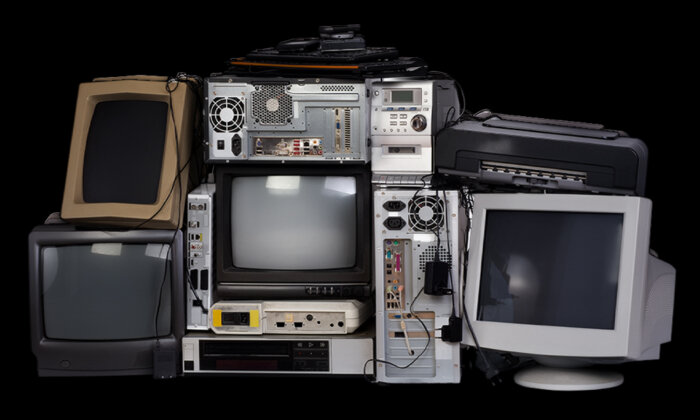
However, with the rise of transistors and, more rapidly, of integrated circuits, this mechanistic transparency vanished. Soon, the number of parts in some transistors reached the millions, then the billions. Not only did this increase overwhelm human reasoning about components and their interactions, but it also led to a transition from thinking about mechanical interactions to focusing on digital operations and functional sequences.
If individuals’ intelligence reflects cultural intelligence passed down through successive generations, today’s children may be at risk. Recent technological changes have occurred so quickly that parents today are often unfamiliar with novel digital devices; they may be ill-equipped to convey the new forms of information needed by the next generation.
This is a particularly important point when it comes to children. Well before they begin schooling, children are driven to look beyond the obvious. They spontaneously explore and uncover hidden parts that provide pleasing insights into the underlying causal machinery governing their visible properties and behavior. This is where some of the most striking development can occur and where guidance by knowledgeable adults may be most powerful.
But today, children are increasingly confined to considering the surfaces of things and their uses or functions. Information that was easily available a few decades ago has largely evaporated, with no other, deeper webs of information becoming available. It would be remarkable if such dramatic changes in children’s exposure to the underlying architectures of devices had no downstream effects on how they think about causal relationships in the world around them. Our job is to understand whether such effects are likely to be negative, positive, or largely inconsequential.
Frank C. Keil is the Charles C. and Dorothea S. Dilley Professor of Psychology, Linguistics, and Cognitive Science at Yale University. He is the author of numerous books, including “Wonder” and “The Disappearance of Insight,” from which this article is adapted.