The False Promise of the First ‘Smart’ Homes
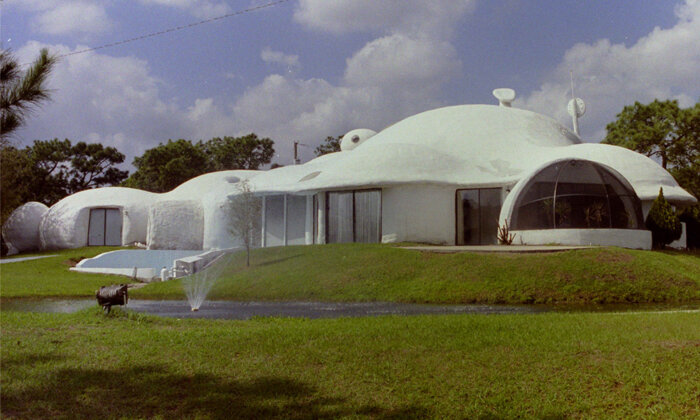
“Imagine a house with a brain — a house you can talk to, a house where every room adjusts automatically to match your changing moods. Imagine a house that is not just a backdrop but an active partner in your work, your family life, and your leisure activities. In short, imagine a house that is also your friend.”
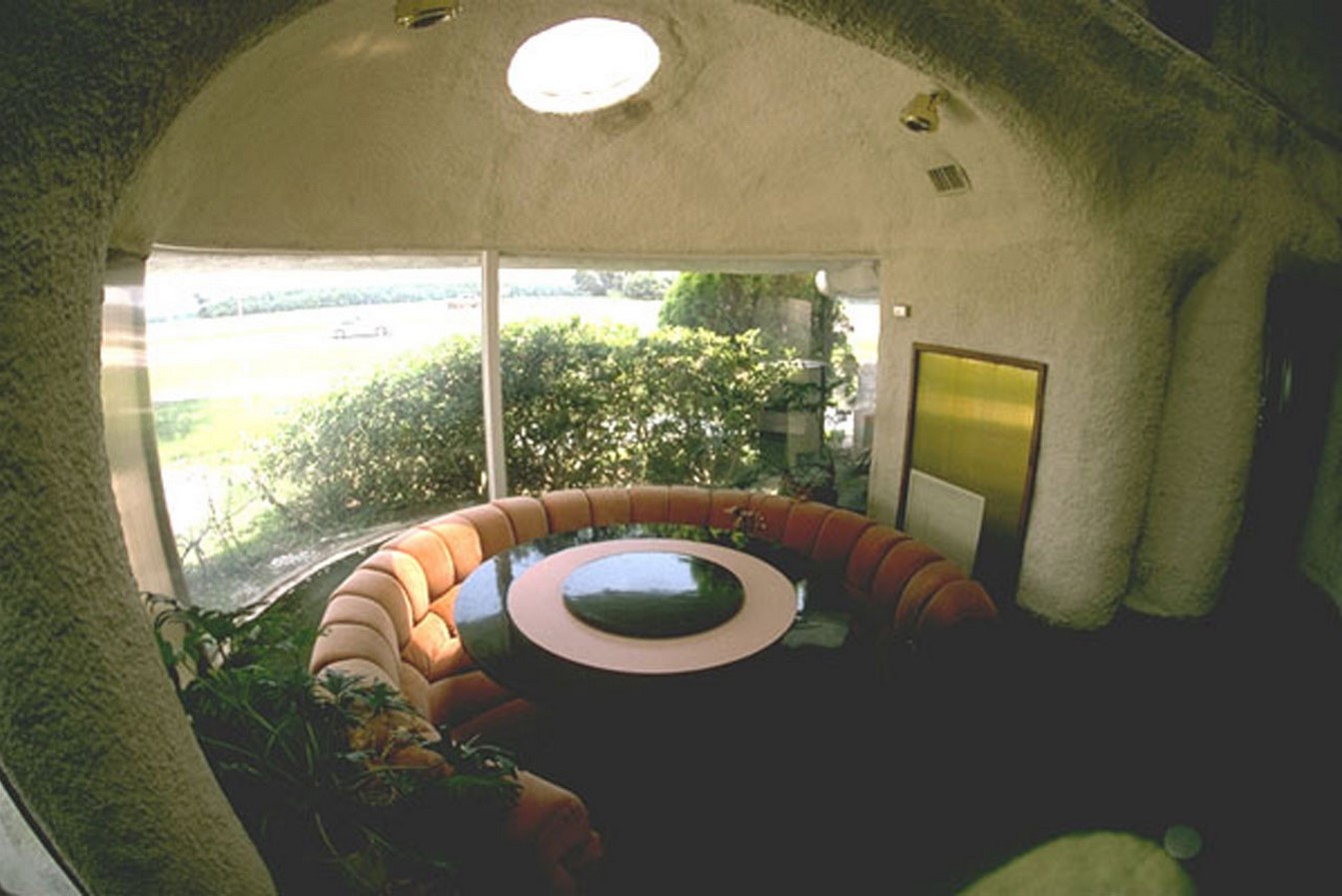
This is Xanadu, the Computerized Home of Tomorrow, which opened its doors in 1983 in Florida, strategically located just a few miles from Disney World’s Epcot Center. Xanadu’s Yale-trained architect, Roy Mason, wanted to create a walk-through instruction manual for building a smart home. Mason saw this blurring of architecture and sociality as the answer to the many problems of the American family: loneliness, boredom, frustration, parent-child conflict, and general depression. The result proposed automation as remedy and liberation.
Much like the techno-pessimistic nightmare imagined by Ray Bradbury’s short story “The Veldt,” in which housekeeping and child-rearing are ceded to automated homes, Xanadu’s “electric hearth” was run by a “House Brain” to control life support functions. (The House Brain is, in a way, another term for mother.) Staffed by a robot dubbed Robutler that remediated paid servant labor, the house aimed to take over a wide variety of tasks — but only as the owners wished. The Brain, meanwhile, was a personal assistant, presaging the integration of Alexa and Siri into smart home systems. It was designed to provide customizability in managing various aspects of middle-class life. It could call local plumbers and neighbors, offer telemedicine, menu planning, and even outfit selection via an automated clothes-retrieval closet.
Xanadu was not the first of its kind. In 1957, Disney unveiled the House of the Future in collaboration with MIT and Monsanto, which sought to showcase the engineering and design versatility of plastics. Visitors of Tomorrowland walked through the attraction and marveled at its features — microwave ovens, wall-mounted TVs, adjustable sinks, modular bedrooms — which would, of course, become commonplace in the decades to come. Likewise, Xanadu invited thousands of guests each day to see a possible home of tomorrow, augmented by technology that could be customized to conform to the changing needs and shapes of American families.
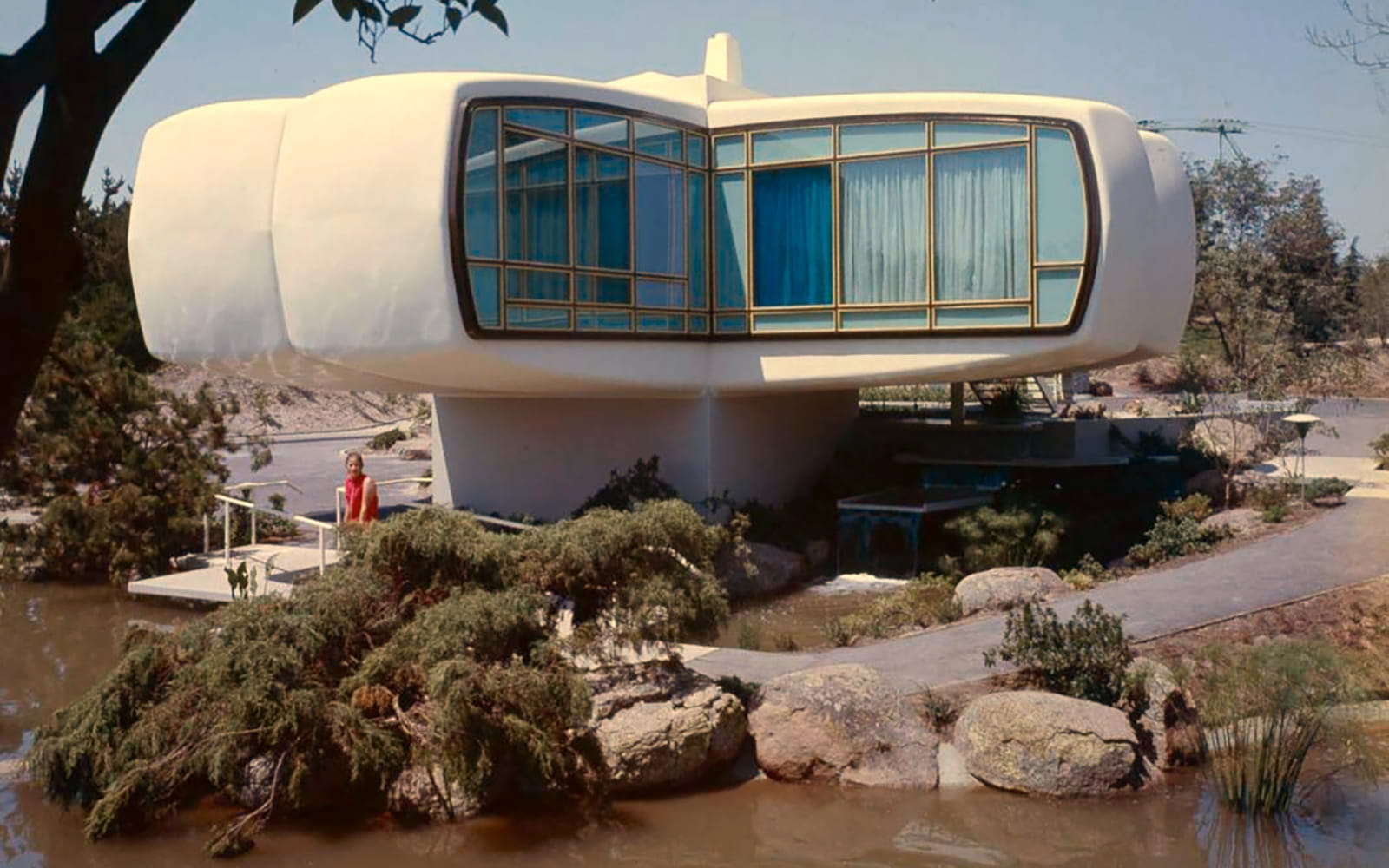
Unlike Disneyland’s House of the Future, which was more of an entertaining model than a functional domicile, Xanadu sought to address critical systemic problem areas in domestic life, from population to urban planning to gender to ecology. Indeed, it was a material thinking-through of the differences between generations. Xanadu’s materials indicated an awareness that parents were now, by and large, both employed full-time outside the home and were becoming more egalitarian in their division of labor. It also sought to reduce transportation time (an answer to sprawl, traffic, and climate change) by building telework capacity into its foundation.
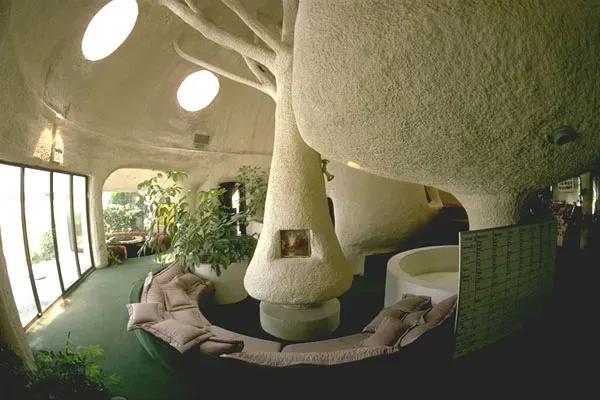
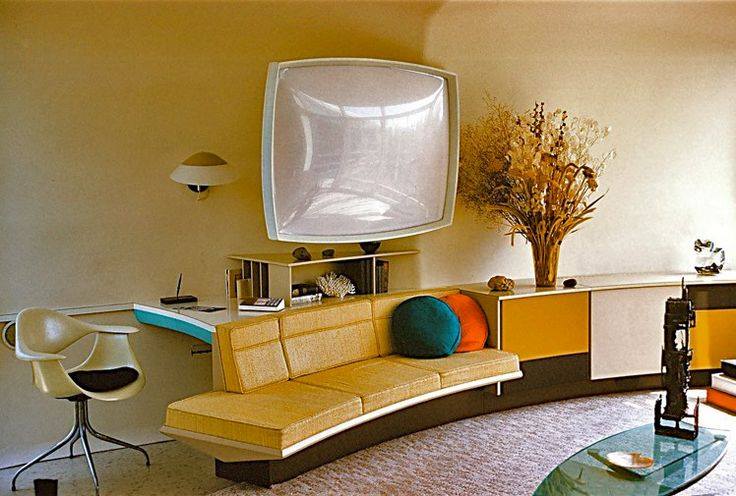
In order to substantiate a functional home of tomorrow, Xanadu’s builders made use of some sleight of hand. As media historian Laine Nooney explains, “Home computers were the first consumer technology since the television to demand a major rearrangement of domestic space; yet Xanadu negotiates this by making the computer disappear. Xanadu did not fake the technology of the times — everything here was an off-the-shelf consumer good — but it did try to use architecture to give the impression that these technologies were seamlessly integrated when they weren’t.”
This mixed temporality is a classic trick of the model home: The space is staged to prompt viewers to imagine bringing these systems into their own lives now, while also presenting a new ideal of futuristic living.
Xanadu pointed to a self-configured flexibility and customization that would become the hallmarks of smart homes in our contemporary moment, including an office that retains a domestic feel. But it also pointed backward to the mid-century notion that a woman is a manager of the automated processes in her own home. If she could manage the domestic more efficiently, she could manage work from there too.
Part of this putative efficiency involves taking the mother out of the car and returning her to home, hence the feminized emphasis on remote activities and possibilities throughout. As historian Ruth Schwartz Cowan reminds us, women of this class and moment spent more time in their cars than anywhere else: “It was the vehicle through which she did her most important work, and the work locale where she could most often be found.”
While this emphasis on telework can be ungendered, flexible hours and commute-free work were often aimed at women in the broader culture. This, according to Northwestern professor Lynn Spigel, allowed women to multitask between work and care, especially to juggle childcare duties alongside waged work. In reality, telework is an impossibility without access to ongoing childcare, and its absence disproportionately harms women’s productivity or forces them to leave the workforce altogether.
If telework was part of the total system of Xanadu, it, much like the domestic computing projects of the 1960s, extended the fantasy of “having it all” under the sign of plasticity, ease, and efficacy of networked life. The children of Xanadu were assumed to be school-aged, far past the point of demanding total attention and care. For older children, the mother’s work and school schedules were understood to overlap, and they might have used a carpool; when the children were home, they would have homework to keep them occupied.
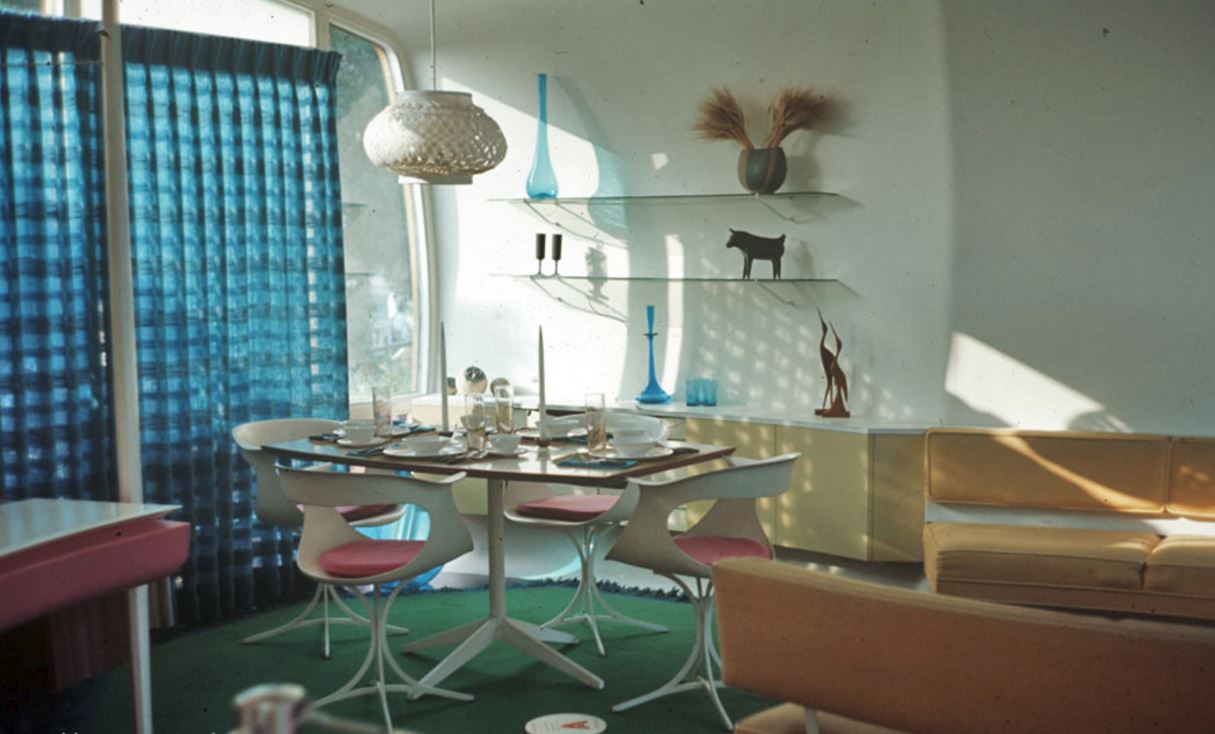
That’s not to say that children were not manifest in the design for Xanadu. The home does explicitly take care of its children and sees its innovations in children’s spaces as planning at its “most imaginative.” Pleasure, care, and control collapse in Xanadu, whose children are no longer just off the kitchen (as in mid-century homes) but granted the status of autonomous occupants of its system, more akin to the prewar nursery. Instead of a nurse of flesh and blood accompanying the children, the home becomes caretaker. The children’s room is a self-contained subsystem meant to nurture and occupy them — a version of Bradbury’s playroom come to life. It features a television monitor that lets children play in any environment they might wish: under the sea, in outer space, or in the wild West. The beds, too, are smart, massaging children to sleep and waking them up when it is time for breakfast.
All told, Xanadu presented itself as something that “can literally grow up with a child” as its sibling, but also as “babysitter, playmate, teacher, and even a counselor to be lived with and loved.” In this way, a smart home finally seemed aware of the multiplicity of care directed toward children historically — from older sisters and grandmothers to waged and unwaged caregivers. Here, dispersed caregiving was not expressed in kin terms, and Xanadu never suggested that it was mother, for mother was in the next room. Rather, the crisis of childcare was addressed directly through child amusement, pacification, and play, allowing a mother to work frictionlessly from home, just one room away, while children were entertained nearby.
Homes and other systems that followed in the lineage of Xanadu and the House of the Future foretold a future in which devices would ease, repair, or redistribute the burdens placed on mothers. Consider, for example, the 2008 Disney remake of the House of the Future: a $15 million project called the Dream Home, designed by Taylor Morrison, chock-full of smart intercoms, cameras, several touchscreens, environmental controls, and a large screen that spans two full walls. Even the home’s own Disney-like jingle points toward the liberation of women from the dreary aspects of family life:
“Step through the door of your new home / Robotically cleaned from floor to dome / Your lawns being trimmed automatically / Now there’s more free time for you and me.”
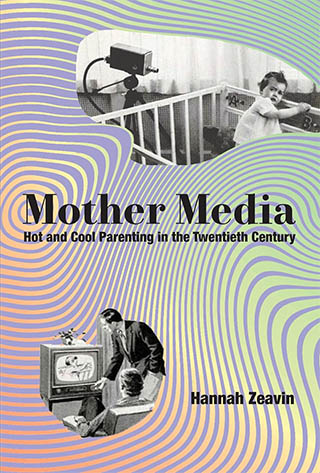
Hannah Zeavin is Associate Professor of the History of Science in the Department of History and the Berkeley Center for New Media at UC Berkeley. She is the author of “The Distance Cure” and “Mother Media,” from which this article is adapted.