The Enslaved South Carolinians Who Rowed to Freedom
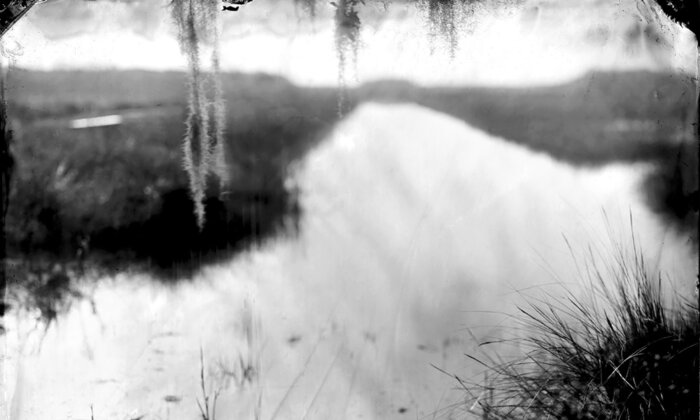
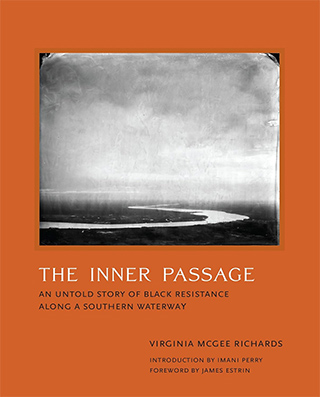
The Inner Passage is a little-known waterway in the South Carolina Lowcountry that snakes through hundreds of miles of marshland. Built by enslaved laborers during the colonial and antebellum South, its hand-dug canals were used to carry goods across the region. But they also served another, more clandestine purpose: as routes to self-emancipation.
One of the earliest documented escapes occurred in 1687, when 11 enslaved people living in South Carolina fled southward by canoe to freedom in Spanish Florida. The refugees included a family: Mingo, his wife, and their three-year-old daughter. They traveled with an unnamed Black woman and seven other Black men: Cambo, Conano, Dique, Grand Domingo, Jacque, Jesse, and Robi. Upon reaching St. Augustine, they became subjects of the Spanish crown and began working as paid ironsmiths, laborers, and domestic workers.
News of the promise of freedom for those reaching Spanish Florida traveled quickly in the Carolina colony. By the mid-1700s, dozens of enslaved people were leaving in boats each week and heading southward. Not all were bound for St. Augustine. Some steered their canoes to maroon communities of Africans hidden deep in the swamps of South Carolina, Georgia, and Florida, while others found refuge with Indigenous communities along the coast. For those freedom-seekers who did make it to Spanish Florida, evidence of their journeys survives in church records of baptisms, births, and marriages, as well as in British and Spanish colonial accounts and reports.
One such account dates to the night of April 17, 1748, when two men enslaved in the Carolina colony, Monvigo and Gomo, decided to self-emancipate. They took a few provisions they had hidden for the journey and headed toward the river. After climbing into a canoe, the two men pushed off and began rowing southward with the strong coastal tide.
Monvigo and Gomo were survivors. They had been kidnapped from their home country, Angola, and shipped in the hull of a slave ship on the Middle Passage to Charleston. After arriving in the British colony of Carolina, they were sold as chattel property to an enslaver, Daniel Bourges, in a local slave market. Monvigo and Gomo were renamed “Moses” and “Sampson” and forced to work as enslaved laborers.
It’s likely that Monvigo and Gomo learned about the route to freedom in Spanish Florida from enslaved Black watermen, dockworkers, and seamen who traveled regularly through Carolina’s rivers. In undertaking their own journey, Monvigo and Gomo plotted their canoe’s course using only celestial navigation; they had no maps or guides to show them the way. They meticulously planned and executed a 300-mile expedition, all the while hiding from slave catchers who hunted them for a bounty. The stakes of discovery and failure were high: If captured, the men could have faced torture and death upon their return to Charleston.
Some details of Monvigo and Gomo’s journey are memorialized in a runaway notice published in a Carolina newspaper, the South Carolina Gazette:
RUNAWAY on the 17th Instant, and supposed to be gone in a Canow [canoe] to the Southward, two Angelo Negro Men, one named Moses, middle siz’d, his Country Name Monvigo, had on a Linnen Jacket, broad Cloth Breeches with silver’d thread Buttons, and a woollen mill’d Ca; the other a tall lusty and elderly Fellow, named Sampson, his Country Name Gomo, had on a blue woollen Jacket and black Breeches. Whoever delivers them to me in Charles-Town, shall have 10 I. [pounds]. Reward for each, besides reasonable Charges. Daniel Bourges.
The list below documents the courage of hundreds of people who emancipated themselves, their families, and their friends from enslavement. Mostly copied verbatim from newspapers, treatises, and other archival records, it is only a partial record of the people who escaped in boats on the Inner Passage; many more names remain in archives, waiting to be discovered.
Together, these names represent a mass southward movement of people in bondage, rowing toward liberation. But each journey was also singular, shaped by its own unique risks, sacrifices, and acts of courage. On this Juneteenth, we remember not only the history of the Inner Passage but also the individual lives of those who turned its waters into routes of radical resistance.
1671 — Dennis Mahoon, John Rivers, John Cooke
1672 — John Radcliffe, William Davys, Richard Gardiner; Richard Hicklin, John Rivers
1687 — Conano, Jesse, Jaque, Gran Domingo, Cambo, Mingo, Dique, Robi, two women, one girl-child
1697 — Divers Runaway Slaves, Cyrus
1717 — Several Servts
1724 — Sam, Jamie, Boatswain, Coffey, Coffey branded H. T. on the right Shoulder; Sabina, two year old child, Sarah, London, Hector Markt with: the letter P in his forehead, Augustine
1725 — Escaped slave from Carolina; 23 Negroes belonging to John Bull and others; a large Canoe with several others, but that they were drowned; James Allen, London Jeffers, Botayan Marriner, Robert Pilaot, Samuell Seauseau, Coffee Stone, Coffee Thomas
1732 — Jack, Hercules, Monday, Amoretta, Sarah; Delia with sucking Child, Clarinda
1733 — William Merick, Mullarey Gill; James Hewitt, Holemark
1734 — Hector, Peter, Dublin; Francis Burn
1735 — Charles
1737 — Steven; John Seeker, John Watsone
1738 — Canoe going by, wherein were three runaway Negroes from Carolina; nineteen Negroes … and five others … ran away from Port Royal and successfully made it to St. Augustine
1739 — Jace, Will; Billy, Adam, Fortune; Caesar, Allchoy
1741 — a Spaniard, a young Negro Boy, of thin Visage
1742 — Casar
1743 — Richard Edwards, Henry Jarvis, Michael Miller, William Thompson, an old Woman, her daughter; two Negroes near Savannah caught in a Small Boat making their Escape from their Master in Carolina
1744 — Negro Fellow; Three Negro Men, Negro Fellow taken up at Stono; two Runaway Negroes from Carolina
1746 — Chamberlain, having been use to go in a Pettianugs; two Negro Men, a new Cypres Canow, about 20 Feet long, and 3 Feet and 10 Inches wide, rows with 4 Oars, parpentin’d without and within
1748 — James Hale, Thomas Eddy, Mark Matthews, John Jenkins; Moses … his Country Name Monvigo …, Sampson … his Country Name Gomo
1749 — Six Negroes belonging to Mr. Joseph Butler and one belonging to Mrs. Sarah Woodward ran away with a boat belonging to Mr. Alexander McPherson; group of Negroes … stole a large Canoe and were seen on the Way to the Southward; 21 Negroes … at Port-Royal went off from thence in a boat they stole; Casar; Cato … Assisting in Stealing a Boat and sundry goods and running away to St. Augustine
1751 — London, Hereford
1752 — Paul, Issac
1754 — Quacee
1758 — a short, well-set Angela Negro Man, branded on one Shoulder T.W.; Jack, Galway, Fortune, Samson, One Negro Wench, Dabar, Sabina, Rabel, one negro boy named They
1761 — negro goes by the names of Nantz, Lance, and Anson; some runaway negroes, at Mr. Rantowle’s point; Christopher … in an iron with three prongs on one of his legs; Peter … having procured a Boat, Arms, Ammunition and provisions and therewith attempted to Go to St. Augustine
1762 — Crack, free Indian Wench, wife to the fellow Crack, child … about two years of age, his mother Pegg, Harry, white man; two … run away negroes
1763 — Alice
1765 — George
1766 — some run-away Negroes
1767 — Cupid; Tom; Some run-away Negroes; Cato
1768 — John; Tom, Peter, Pompey, Arabella, Castilla (son)
1769 — … carried off with them a good many cloaths, three blankets, and two hats, and went off in a canoe belonging to Mr. John Holmes, the canoe rows with four oars, and has been new bottomed with two cypress planks joining together, her upper rudder iron goes across her stern …, Boston, Toney, Marcellus
1772 — … small CYPRESS CANOW, about Fourteen and Half Feet long, and Three and One-Fourteen Feet wide, marked with brown Paint on the out-Side of her Stern, something resembling thus and having a small Fourteen Feet long Chain and Staple, at her Head …, Negro Man; … a small YAWL, about 12 or 13 Feet-long, and between 4 and 5 Feet wide, has two Ring bolts, the one in the Head, and the other in the Stern, rows with three Oars, and is made for one Sail forward …, Negro, supposed to be Run-away; … open Boat …, Monday; … small CYPRESS CANOE, about 15 feet long, and about 2 feet 3 inches wide, with a piece put in her head, and having a small chain about 7 feet long, with a staple in her head, and a small pad-lock …, 2 negro men, supposed to be run-away
1773 — Will; Saul, Jack, They are both stout well-made Fellows, and had heavy Irons on their Legs when they went away … They were formerly Free, and are well known in Georgia by the Names of Saul and John Winners. They were born in Bermuda …
1775 — … went off from Wando this Day in a Schooner’s Canoe …, Bob, Bill, Billy
1787 — Lewis, Chicheum, Peter, Dembo, Cupid, Fortune, Betty, Juliett, Peggy, Little Coke, Frank, Dick, Joe, Sharper called Captain Cudjoe, Jemmy, Joe
1800 — Cyrus, Hercules, Tom
1821 — Jack, Joe called Forest, Wife of Joe, Mistress of Joe, Anderson, wife of Anderson, three-year old child, Isam, Stephon
1824–1826 — Will, Newton
Virginia “Ginna” McGee Richards is an award-winning documentary photographer, historian, and environmental lawyer. She is the author of “The Inner Passage.”