Benjamin Bratton on Planetary Computation’s Next Phase
In November 2016, roughly 10 months after “The Stack” was first published, the then newly elected President of the United States, Donald Trump, faced reporters shouting questions about the potential role of foreign actors manipulating American social media to ensure his election. The new executive, who famously does not use a computer himself, looked unsure as to what he was being asked exactly. Like a child suddenly and unexpectedly uttering a profound truth, he replied, “The Whole Age of Computer [sic] has made it where nobody knows exactly what’s going on.” Indeed, little could better verify this claim than the circumstances in which he made it.
“The Stack” was written mostly between 2011 and 2014, a relatively innocent time compared, of course, to when this 10th-anniversary edition will appear: Google had pulled out of China only a few years before. The Obama administration was promoting an anodyne “digital democracy” foreign policy based on the precious idea that greater global internet connectivity would inevitably lead to the collapse of autocratic regimes.
Then, as now, “The Stack” was an attempt to formulate a comprehensive “total” figure of what I termed “planetary-scale computation” (sometimes simply “planetary computation”). And it did so against the sentiments of the time, when all the intellectual energy in the humanities and social sciences was trained on local, particular contexts and, to the extent that technology was a concern, often on revitalizing discredited forms of social constructivism.
The alternative that the book offers is a holistic but necessarily fluid picture of the whole. It is less a map than a heuristic framework: a scaffold for pattern recognition and interpretation. By design, what occupies any layer of a modular Stack architecture is meant to be replaced by something new in the future while keeping the integrity of the whole intact. So too for the theory of The Stack.
Broadly speaking, there have been two fundamental transformations since “The Stack” was first published: one of multiplication and one of replacement.
A core notion is that as software and hardware systems absorb more functions of the state, functional governance (if not necessarily “politics”) is infused into the operations of those technical systems at the expense of legal and legislative institutions. Put directly, the multipolarization of geopolitics over the last decade and the multipolarization of planetary computation over the same period not only track one another; they are the same thing. To build a Stack is to build a society and vice versa, a truth that drives the new adversarial dynamics of world affairs over the competitive access to foundational Stack capacities. The term I coined for this fragmentation is Hemispherical Stacks: a China Stack, a US Stack, an India Stack, an EU Stack, and so forth.
The AI Stack will exist in a different world from ours.
Second, and perhaps even more important, has been the emergence of artificial intelligence from an aspirational proof of concept to a practical technology built into the infrastructures of everyday life. The importance of AI for the future of Stack architecture is hard to overstate. The replacement of the Stack layers built over the last 50 years by new technologies and institutions appropriate to the requirements of AI versus classical computing will be comprehensive. The AI Stack will exist in a different world from ours.
To that end, let me sketch how each layer of The Stack — Earth, Cloud, City, Address, Interface, User — has transformed over the last decade and how it may evolve in the decade to come.
Earth
The Earth layer is that from which the physical substrate of all computational technologies is drawn, including special minerals, metals, energy, and electricity. It is also a critical subject of computational analysis, such as for climate science. I have often made the point that the maturity of climate science is also an epistemological accomplishment of supercomputing simulations of climate past, present, and future. Enormous investments and grand maneuvers are made to secure access to critical supply chains and to frustrate adversaries from doing the same.
Recently, competition between China and the US for access to the minerals and compounds necessary for Stack construction has moved from an obscure policy discourse to the front pages. New computational architectures, from photonic chips to alternative battery materials, could shift things again quickly. In the meantime, the accelerating shift toward an AI Stack has prompted platforms to secure as much electricity as possible to support capacity growth. Some indications suggest that this rush may provide the long-needed economic incentive for the deployment of next-generation nuclear power, a development that would carry numerous historical ironies.
Cloud
One of the central themes of The Stack is how cloud platforms come to take on more of the functions of the Westphalian state and, in doing so, become state-scale actors, but simultaneously how states evolve their technologies of information sensing, modeling, and recursive action in relation to new computational opportunities. States, too, become cloud-based.
Over the last decade, this claim has become far less speculative than it was when the book was published. The multipolarization of both geopolitics and planetary computation has led to an increasing encapsulation of global platforms within the expanded borders of their host hemisphere: service withdrawals, app bans, deeper, direct connections with the state, etc. Ultimately, this is caused by a fundamental shift in the basic relations between data and sovereignty. The AI Stack will evolve amid these uncertain machinations. It is already identified as a primary domain of state security, but it also illustrates how private enterprises, from individual to corporate scale, may operate more independently.
City
I would be reluctant to say that, over the past decade, our cities have gotten smarter, but they certainly have been more deeply infused with computational systems and more decisively structured around the dictates of The Stack. That computational organ, still referred to as a phone, has become even more crucial to the spatial navigation of urban life, both in immediate contexts and in linking multiple experiential spaces and times into a single whole. Landscapes of QR codes have blossomed in response to this new reality, enabling an even more seamless, touchless, and anonymous urban society to take shape, for better or worse.
Zooming out, we see the functional segregation of humans into residential areas while the infrastructures of food, energy, material, and commodity production on which humans depend are cordoned off into other, relatively uninhabited exclusion zones, an arrangement unthinkable without the intricate synchronizations afforded by the city becoming a layer within planetary computation.
Address
Entire subcultures have appeared around new uses for Address-layer technologies to organize and radically decentralize global economies. It sounds unlikely, but avant-garde accounting concepts have become a strong gravitational force on the energies and imaginations of many. That is, blockchains and digital tokens have appeared and disappeared with dizzying pace, producing, storing, verifying, simulating, and often extinguishing value along the way. Key to all of these is the ability to identify discrete entities, physical or virtual, assign them a computational address, and consolidate them into a public registry for future auditing.
Ultimately, for all such systems, the specific structure of addressability often determines what is made into data, how it is produced, and thus what can be addressed. As for AI, the next decade will see intense interest not just in training on yet more existing data but in producing new data about the world for the calibrated purpose of training (and for whatever techniques come after “training” as we know it).
Interface
The Interface layer has always been perhaps the most psychologically rich point of contact between the User peering into The Stack and The Stack peering out at the User. Seemingly every human alive carries a glowing glass rectangle with them, a kind of Turing-complete endosomatic organ, on which each available function is represented as an icon. Meanwhile, virtual, augmented, and mixed reality are becoming embryonic consumer technologies, generating programmable illusions, while at the same time every computationally demanding science — from astronomy to genomics — makes extensive use of model simulations to access reality in ways otherwise impossible.
What your parents called “the Internet” will evolve into cognitive infrastructures.
The line between the two is blurred by Toy Worlds in which AI agents train, honing their navigational skills before slipping out into the real world with us. Intriguingly, the agent itself is not only an Interface but also becomes a semiautonomous User, and so with agentic AI, the boundary between Interface and User layers is blurred, perhaps forever.
User
In this and other ways, the User layer has arguably seen the most transformation over the past decade in both the kind and quantities of actors that occupy this layer. In “The Stack,” I defined the User not simply as a kind of needs-having human, as is often portrayed in “human-centered design,” but as an active function within the larger system. The User is any agent that can manipulate the Interface layer to send and receive purposeful signals up and down Stack layers. The User can be animal, vegetable, or mineral — a human, an algorithm, a robot, a tree with a sensor on it, etc.
Today, robotics runs multimodal models that navigate complex spatial environments, completing tasks with intricate dexterity. It is all but certain that human-level minds will be far outnumbered by nonhuman human-level minds in the form of agentic AI. Agentic AI will co-occupy the User layer with us, but sometimes we ourselves occupy these other Users. For example, as you are driven around the City layer in a “driverless car” (horseless carriage), you are physically embedded inside another User that is sending and receiving open-world navigational signals as surely as you or I would. This anomie encourages reactionary anxiety and subcultures of backlash — a Copernican trauma that will take years to mourn.
Looking forward to the next decade, it will be composed of and with a different Stack, one built by and for AI. What your parents called “the Internet” will evolve into cognitive infrastructures. These not only transmit and circulate information; they themselves are generative of intelligence and participate in society accordingly.
This decadal shift will hinge on how energy is sourced; how platforms centralize and decentralize services; how cities are rearranged to suit new spatial habits; how entities and events are turned into addressable data; how users visualize, comprehend, and create through interfacial semiotics; and finally, who and what counts as a User and what that affords them. If, as the man once said, “everything’s computer!” then planetary computation is not out there; it is interwoven with our most visceral realities.
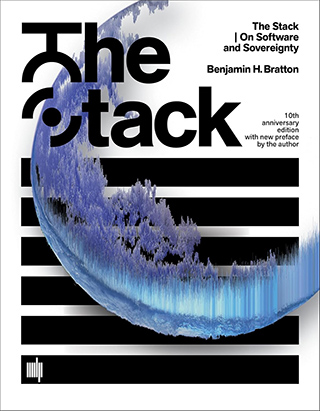
Benjamin H. Bratton is Professor of Philosophy of Technology and Speculative Design at the University of California, San Diego. He is also the Director of “Antikythera,” a think tank, journal, and book series exploring the future of planetary computation. He is the author of several books, including the 10th-anniversary edition of “The Stack,” from which this article is adapted.