What the Crabapples Are Telling Us
This article is part of our Footnotes series, in which authors reflect on a person, study, or curiosity — whether obscure, well-known, recent, or historical — that sparked or challenged their thinking, or never quite made it into their work.
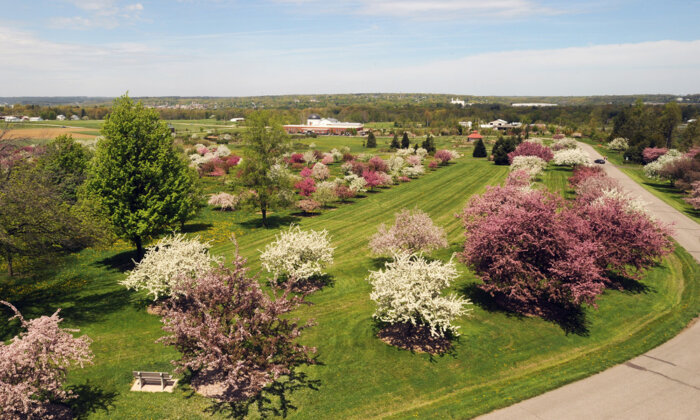
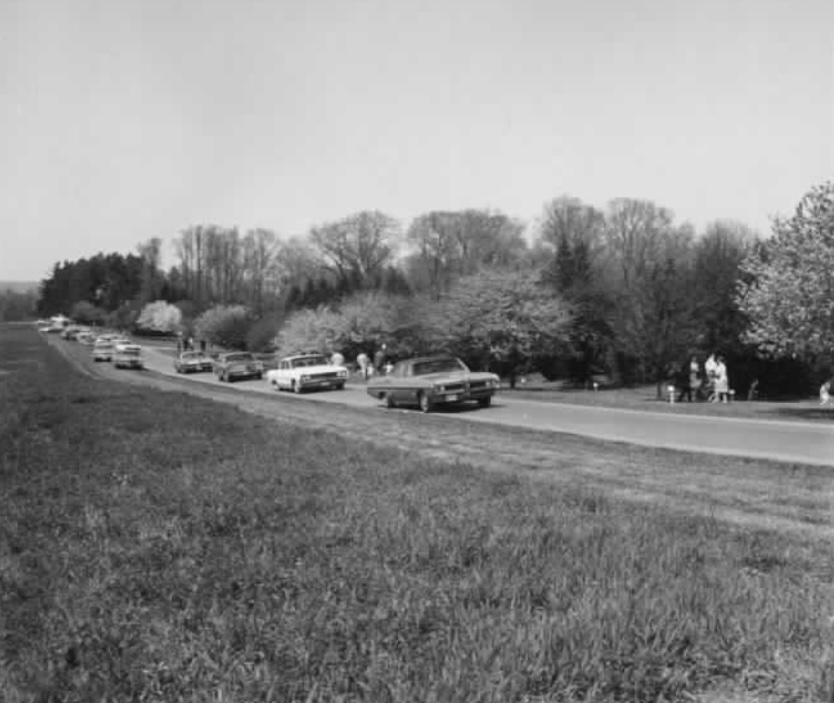
When Mindy McCartney and her husband pulled up to what would become their home in Akron, Ohio, in early May 1987, she was smitten: The flowering crabapple trees in the front yard were in glorious full bloom. Fortunately, the rest of the house was a good fit for her family, because Mindy had fallen for those trees, their canopies packed with delicate pink flowers. Closely related to cherry trees, crabapples flower before leafing out, opening their canopies nearly all once in a display reminiscent of Japan’s famous blossoms — a scene worthy of stopping the car to gaze.
Mindy can recall the date they toured the home – and the explosions of pink blossoms – with both accuracy and precision because it fell on Mother’s Day. Things are different now.
In recent years, Mindy has seen the trees flower earlier and less predictably. In the early 2000s, when Mindy took a Master Gardener course, she noted the trees starting to flower in April.

Mindy’s recollections are verified by The Ohio State University, which maintains nearly 400 flowering crabapple trees representing 80 varieties at the Secrest Arboretum in nearby Wooster, about 40 miles southwest of Mindy’s house. Researchers at the arboretum planted the trees to better understand apple scab and other common diseases of apple trees; the plot is one of several situated across North America that are part of the National Crabapple Evaluation Project.
The trees offer a great deal more to the surrounding community, providing incredible displays of bloom in shades varying from magenta to blush to white over a period of several weeks in the spring. Drone footage on the Arboretum’s website shows acres of trees exploding in the delicate blossoms. Secrest Arbortem has advertised the event as Crablandia — the team’s nickname for the grove — for decades, inviting the public to visit and experience the magic of the stunning but ephemeral event.
Since the arboretum began celebrating crabapple tree flowering, the timing has crept noticeably earlier. In 2012, arboretum staff warned would-be visitors to adjust their plans, as flowering was occurring in the first week of April — nearly two weeks earlier than they had previously experienced in previous decades. And in recent years, even that early bloom now seems “normal”: In 2024, peak bloom occurred the third week of April, and last year, peak bloom took place in late April.
It’s tempting to treat these shifts as minor curiosities, but timing is everything in ecological systems. A shift in the timing of blooms without an attendant shift in when their pollinators are active reduces how many flowers can produce fruit as well as crucial food resources for the pollinators. Earlier flowering also puts tender blooms at greater risk of damage from later-season freeze events. And finally, earlier bloom typically also means a longer allergy season.
Mindy and I chatted over Zoom on a winter day in January, and I delighted in watching squirrels zip up and down the trunk of a massive oak tree out the window behind her as we talked. The sunshine reflecting off the blanket of snow on the ground triggered a wave of homesickness for the distinct seasons that I experienced growing up in Michigan. But while the wintry scene behind Mindy evoked memories of winter months characterized by days off school, endless mornings scraping frost from car windshields, and the danger of slip and fall accidents on patches of black ice, the thin blanket of snow in Mindy’s yard would be short-lived. Winter is the most rapidly changing season around the globe. In the U.S., winter-like conditions begin later and end earlier than in the recent past; “winter” is now more than a week shorter than just a few decades ago. These changes are visible, tangible, and troubling. For Mindy, the crabapples that first made the house feel like home now also mark how quickly the seasons are changing.
Theresa Crimmins is Associate Professor in the School of Natural Resources and the Environment at the University of Arizona and Director of the USA National Phenology Network. She is the author of “Phenology.”