Pigs Could End the Transplant Waiting List
My phone rang at 2 am. I was mostly awake; I never really sleep on call. As I rubbed my eyes, I tried to focus on the voice coming through the phone. One of our coordinators was telling me about a kidney offer, and she launched right into it: “68-year-old donor, diabetes and high blood pressure, died of a stroke, kidney function normal, biopsy with some scarring and inflammation. Do you want to hear more?”
We evaluate offers like this all the time. The transplant waiting list is so long, with so many patients who will never receive an offer for a healthier organ. Do we take a risk and transplant a kidney like this? How long could it possibly last? It seems likely my patient might get a few years, but then return to dialysis for what might be the rest of their life. Perhaps that is worth it to them, just to get some respite from the horrible experience of getting plugged into a machine three days a week to filter their blood. Maybe during the years that the kidney works, they will be able to travel, spend time with family, and enjoy normal meals before they return to the dreaded machine.
I accepted the donor organ and brought the recipient into the hospital. He was in his 60s with diabetes and high blood pressure, and had been on dialysis for a few years. As we talked about the transplant, he told me some version of the story I had heard so many times — that dialysis kept him alive, but it was no way to live. He was very excited about getting this transplant, and make no mistake, I was honored to play a role. But at the same time, I also wished I could give him something better.
It’s been 30 years since I witnessed my first organ transplantation surgery as a third-year medical student. I remember it like yesterday, watching this kidney, which looked to me like a lump of fat, fill with blood, turn pink, and moments later, squirt urine across the operative field. At that moment, I knew I wanted to spend my life in the miraculous field of transplantation. Thirty years into chasing this dream, I still remain mystified by the magic of the procedure, whose success has only been realized over the last four decades.
At the beginning of the 20th century, transplantation was more science fiction than science. This was true through the 1950s, when recipients suffered almost universally miserable deaths. By the ’60s, there were a few reported successes, but they were quickly overshadowed by the parade of failures. Transplantation finally emerged as the modern life-saving discipline that it is now in the mid-’80s, with the advent of the immunosuppressive drug cyclosporine.
When the procedure first became a reality, the waiting lists were short and primarily filled with young patients who were healthy other than the specific organ that was failing. It was conceivable that enough organs would be available to save a majority of patients on the list. But today, with transplantation outcomes more favorable than ever, the waitlist has exploded, in large part because it now includes older, sicker patients whose organs have failed from chronic illnesses like diabetes and high blood pressure.
I remain mystified by the magic of the procedure.
All in, more than 100,000 patients are currently waiting for organ transplants in the United States, with kidney-seekers representing the majority. At the same time, about 600,000 patients in the U.S. are on dialysis; a similar number of patients are suffering from end-stage liver disease. About 1.5 million people need supplemental oxygen to breathe, and more than 6 million people suffer from heart failure. Needless to say, the current state of affairs is tragic.
On the one hand, we don’t have enough organs to go around, forcing us to transplant organs that are already diseased. This often leads to poor outcomes and eventually puts patients right back on the waiting list. On the other hand, there are so many other patients that could benefit from transplantation that we don’t place on the list, knowing we will never find them an organ before they get too sick to consider.
Some of them never get referred because their care team assumes they would be bad candidates, or because they don’t have access to the health care system in the first place. Others we decide not to place on the list, either because we don’t think they will live long enough for an organ to become available, or because their outcomes after transplant will be poor. Since organ donations are limited, we can only embark on a transplant if we predict that we can achieve at least a 90 percent chance of one-year survival. If a program has a high rate of waiting-list death or poor outcomes after transplant, it will be placed on probation and ultimately shut down.
Ultimately, the sad truth is that the vast majority of patients in dire need of new organs will never make it to the transplant list, and likely will never even be referred for evaluation. But what if things were different? What if we could somehow develop an unlimited supply of organs? What if we could save every patient in need?
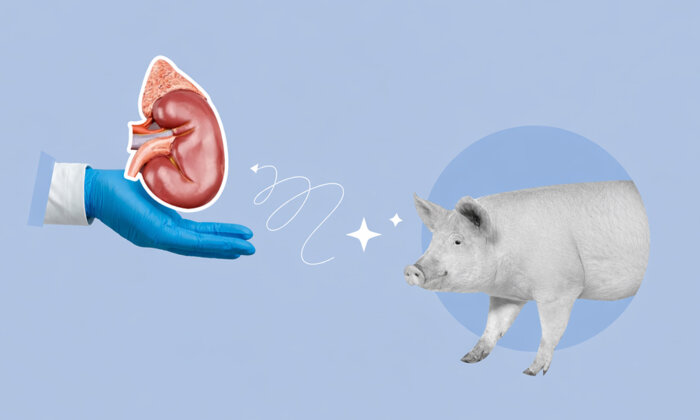
Xenotransplantation — or transplanting organs between members of different species — may sound unthinkable to most readers, much like transplantation was not long ago. But as you read this article, there are, in fact, people walking around with genetically modified pig kidneys inside them, keeping them alive. Two clinical trials using pig kidneys are ongoing, and an additional trial using genetically modified pig livers to temporarily filter the blood of patients with liver failure is about to enroll participants. Meanwhile, trials with pig heart transplants are soon to follow.
You might wonder why pigs, of all animals, are the universal donor of choice — especially when chimpanzees and other primates are much more genetically compatible with humans. In fact, primates served as early organ donors until the late ’80s. But researchers realized years ago that they present several problems. First, they breed like humans, with long gestation periods and one offspring at a time, making gene editing and scaling difficult. They are similar to humans in terms of appearance and intelligence, making it emotionally and ethically hard to utilize them as organ donors, highlighted by the massive protests following the transplantation of a baboon heart into Baby Fae in California in 1984. Third, most primates are too small to serve as ideal donors for humans. And finally, concerns about infection risk, highlighted by the HIV virus that originated in chimpanzees, were a major deterrent.
How about dogs? We like dogs too much. Cows? Too big. Cats? Too small, not to mention they are too intelligent and devious, and would probably outsmart us and end up taking our organs. But pigs: They are about the right size, have large litters (six to 12 piglets), and have a gestation period of three to four months. They are cheap to house, and ethically, there doesn’t seem to be a problem, considering we already slaughter about 120 million pigs per year in this country for food.
Of course, no animal is perfect. The main problem with pigs was already clear in the 1960s: if a pig organ was sewn into a primate (or, likely, a human), it would be rapidly rejected within minutes. The reason is that pig organs have a sugar molecule on the surface of most cells that humans lack. Our natural antibodies cause our immune system to react to these sugars and destroy the organs immediately after transplant. In the ’80s and ’90s, efforts were made to attenuate the immune response to these sugars, with limited success. But the cloning of Dolly the sheep in 1996 represented a quantum leap in the potential of making xeno a reality. Even with the relatively primitive and painstaking gene editing techniques available (homologous recombination) in the ’90s, it would be possible to knock out the gene for this sugar in pig cells in a culture, and then clone a “knockout pig” that didn’t express these sugars.
The first of these pigs was generated in 2002. Pharmaceutical companies like Novartis poured billions of dollars into the technology. However, labs were stymied by animal protests and the discovery of a virus that resides in the cells of virtually all pigs, raising the specter of a xeno-fueled pandemic. This was all too much for investors, who withdrew funding xeno in the early 2000s.
All of this changed in the last decade with the advent of CRISPR-Cas9, a gene-editing system borrowed from microbes that enables the generation of genetically manipulated transgenic animals in a matter of months rather than years. Rather than modify one or two targets, the potential to modify dozens of genes to make the pig organs resemble human organs — and then throw in some modifications to downregulate immune responses in the organs themselves — became technically simple.
This second stride in genetics has made clinical trials a reality, thanks in part to the combined efforts of modern pioneers in this field. That includes Martine Rothblatt, the founder of Sirius Satellite Radio who founded the pharmaceutical company United Therapeutics when her daughter was diagnosed with a rare lung disease and may someday need a transplant; and George Church, the brilliant geneticist who was part of the Human Genome Project and one of the founders of CRISPR gene editing, who has generated a pig with 69 gene edits. They are just two of a long list of brilliant and courageous pioneers convinced that the future of xeno is now.
Right now, the million-dollar question is: When will waiting for an organ donor no longer be necessary? The current iteration of transgenic pig organs will likely sustain life for six months to a year, with some lasting longer. But the need for intense immunosuppression to prevent rejection limits their utility.
My prediction is that in just a few years, more complex pigs will be generated — ones that will dramatically improve outcomes of xenotransplantation, reduce the need for extensive immunosuppression, and improve the longevity of these organs. Some future gene edits will knock out targets that our immune system might recognize. Others will be immunomodulatory, meaning they’ll suppress immune cell responses when they do recognize the pig organs.
What if we could develop an unlimited supply of organs?
I predict that the second generation of transgenic pigs will make conventional immunosuppression sufficient after xenotransplantation, and at that point, pig organs will rival human organs. These organs will function as well as human organs, but will still require at least some immunosuppression, and recipients will suffer many of the side effects our patients experience today. At this point, we will be able to transplant everyone on our waiting list, but the scope of transplantation won’t be significantly different from what it is now. We will still limit the types of patients that can truly tolerate and benefit from transplants.
I also expect that the field of xenotransplantation will become personalized, with pigs matched to the genetics of specific recipients. When a patient is found to have a failing organ, we will send some of their blood to a lab for genetic analysis. Edits will be performed in a pig cell, and then that cell will be used to clone a novel pig for that recipient. Six months after that pig is born, the organs will be ready for transplant. Less than a year after the diagnosis, a bespoke organ will be ready for transplant. All in all, minimal immunosuppression will be required.
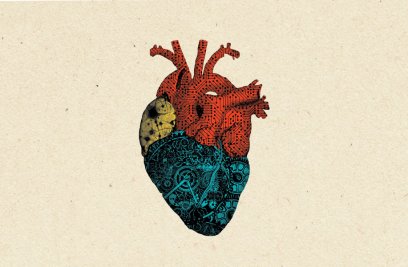
Finally, I envision that the emphasis of xenotransplantation will gradually shift from immediate survival to longevity. Replacement parts will be available for those who need them when they need them. We’ll be able to design organs that last longer, resist cancer, tolerate extreme temperatures and pressures, beat infection, require minimal nutrition, and have improved blood flow. These organs will be perfect if and when we relocate to Mars.
I know, this sounds like science fiction. But as recently as the 1950s, so did human-to-human organ transplantation. Medical revolutions have a way of arriving much faster than skeptics expect.
Joshua D. Mezrich is Professor of Surgery in the Division of Transplantation and a practicing transplant surgeon at the University of Wisconsin School of Medicine and Public Health. He holds the Mark A. Fischer Chair in Transplantation and is the surgical director of kidney transplantation. He is the author of “When Death Becomes Life” (HarperCollins) and “Every Living Creature.”