Daydreamers and Sleepwalkers: Crossing the Borderlands of the Unconscious

Not long after being elected president of the French Republic, in February 1920, Paul Deschanel found himself wandering at night along the railway line near the town of Montargis, 70 or so miles south of Paris. Not knowing where he was, the bloody-faced president, dressed in pajamas and socks, followed the tracks and was soon discovered by a railway worker, to whom he proceeded to explain that his last memory was of boarding the Orient Express at the Gare de Lyon.
President Deschanel’s much-lampooned exit from a moving train may well have been precipitated by a dose of chloral hydrate, a longstanding treatment for insomnia; or it might equally have been an episode of somnambulism, or confusional arousal, which a later generation of sleep scientists would classify as a non-rapid eye movement parasomnia. In either case, it confirmed that the borderlands between sleep and wakefulness remained ripe for clinical and experimental investigation, highlighting what little attention had been given to the drowsy and partial states of consciousness that lay at the flickering borders of sleep.
A century earlier, Henry Holland, physician extraordinary to Queen Victoria, had lamented that it was remarkable how little was known about sleep, despite “the perpetual experiment that life affords upon the subject.” Over the latter decades of the 19th century, a rising preoccupation with sleeplessness and cerebral fatigue brought new researchers into this virgin field, but for sleep to come within the purview of laboratory science required the development of instruments that permitted the physiology of the sleeping brain to be observed and recorded. And in 1878, the Turin-born physiologist Angelo Mosso did exactly this.
Even in deep sleep, the brain was at some level awake to external stimuli.
Using a specially devised “human circulation balance,” Mosso was able to record the brain pulsations in a patient with a recent head wound, providing the first-ever graphic illustration of brain activity during sleep. In the course of establishing that deep sleep was an active state, Mosso made a second important discovery: “At the slightest noise a wave of blood disturbed the surface of the brain. If the hospital clock struck the hour, or someone walked along the terrace, if I moved my chair, or wound up my watch, or if a patient coughed in the next room — everything, the slightest sound was accompanied by a marked alteration in the circulation of the brain, all immediately traced by the pen which the brain guided on the paper of my registering apparatus.” Even in deep sleep, the brain was at some level awake to external stimuli.
The discontinuities of sleep had, of course, long been attested outside the laboratory and clinic, and Mosso’s experiment confirmed something that Aristotle, famed in his own lifetime as “the man who knew everything,” had observed in his essays on sleep. There were, according to Aristotle, at least three ways in which consciousness might slip through the veil of sleep and create a state of half-somnolence. First, the sleeper could become aware of the fact that they were dreaming. Second, they might register external sights and sounds, such as the barking of dogs or crowing of cocks. Thirdly, and most dramatically, sleepers were known to “move in their sleep, and perform many waking acts” of which they retained no knowledge.
Somnambulism would go on to become a widely debated legal and philosophical conundrum, the sleepwalker’s “slumbery agitation” appearing to suggest the existence of a nocturnal self that could act independently of its daytime watchman. Most of the early encyclopedias included some mention of somnambulism — probably the most cited of all cases being that of a young ecclesiastic who fell into the habit of composing sermons and music while still asleep — but it is doubtful that all liminal antics purportedly undertaken by sleepwalkers arose within sleep. Almost any actions undertaken without apparent awareness, and without subsequent recall, were in this period described as instances of somnambulism, meaning that episodes of epilepsy, fugue, and hysterical automatism helped swell its conceptual ranks. Somnambulism could, moreover, be feigned by “sleeping preachers” whose impromptu sermons sometimes attracted the attention of pious followers.
A similar ambivalence surrounded daydreams and reveries, known principally as “abstraction,” “fancy,” and “wool-gathering” in the Anglophone world before the end of the seventeenth century. As Guy Claxton observes in “The Wayward Mind,” the medieval scholastics knew this drifting train of thought as “cogitation.” Though regarded with suspicion by those who feared that its unbidden transports opened a doorway to the Devil, cogitation was often actively pursued by some monastics through the strategic use of half-sleep. “Thomas Aquinas, for instance, would have himself roused after a short sleep. And while still in that muzzy, in-between mode that modern psychologists called ‘hypnagogia,’ would lie prone on the ground to pray, and it would come to him what he was to write or dictate the following day.”
Over the coming centuries, the threshold between sleep and wakefulness continued to rouse fear and fascination. As the shadow of pathology slowly encroached upon the waking dreamer — framing their retreat into private fantasy as a symptom of monomania, or an analogue of insanity writ large — reverie’s floating polyphony of thought became a full-blown literary motif, rebounding through the work of Montaigne, Rousseau, and De Quincey before surfacing in “psychological” novels which, in the words of Virginia Woolf, sought to capture “the flickerings of that innermost flame which flashes its messages through the brain.” And as novelists sought to capture this flame-flickering world, daydreaming began to be framed by educationalists, psychiatrists, and industrial psychologists as a form of mental absenteeism, a barrier to learning, mental health, and productivity.
The borderlands of sleep were still patrolled by poets, novelists, psychologists, and psychoanalysts.
In the meantime, sleep scientists were able to shed light on the brain activity associated with daydreaming and other so-called parasomnias, demonstrating the variegated nature of sleep itself. Arguably, the greatest breakthrough was down to the work of Alfred Lee Loomis, a Wall Street banker and science aficionado. An early adopter of the EEG machine at his private laboratory in Tuxedo Park, Loomis undertook a series of experiments in the 1930s that led to the identification of five sleep states, each with its own signature EEG patterns.
Over the following decades, sleep researchers further explored the complex, cyclical nature of sleep using more sophisticated EEG technology to investigate its REM and non-REM stages. After Eugene Aserinsky and Nathaniel Kleitman’s landmark research, four stages of quiescent non-REM sleep were found to account for around 80 percent of an average night’s sleep, and it was within non-REM sleep that most disorders of arousal, such as sleepwalking and confusional awakening, appeared to occur. Yet even when supplemented by new brain imaging data, the sleep laboratory’s neuroscientific paradigm still offered only a tiny glimpse of the biochemistry of sleep, and a still more glancing insight into the rich psychology of these borderland states of consciousness.
Thankfully, the borderlands of sleep were still patrolled by poets, novelists, psychologists, and psychoanalysts, all of whom were very much alive to the ways in which sleep and insomnia could, as Samuel Johnson put it, carry us into “a kind of twilight existence” somewhere “between dreaming and reasoning.” And while the telltale recordings of sleep spindles, K-complexes, and other micro-events promised to bring this hinterland into plain sight, there can be no denying that the microelectrode was still no match for a notebook or diary in probing the reveries, daydreams, half-awakenings, and other dimly lit vestibules through which we pass as we commute between sleep and wakefulness.
A century before the word “reverie” fell into popular usage, the French philosopher Michel de Montaigne (1533-1592) reflected on the fugitive thoughts that visited him, most often, in solitude.
But I am displeased with my mind for ordinarily producing its most profound and maddest fancies, and those I like the best, unexpectedly and when I am least looking for them; which suddenly vanish, having nothing to attach themselves to on the spot; on horseback, at table, in bed, but most only horseback, when my thoughts range most widely. In speech I am rather sensitively jealous of attention and silence if I am speaking in earnest; whoever interrupts me stops me. When I travel, the very necessity of the road cuts conversation short; besides I most often travel without company fit for these protracted discourses, whereby I get full leisure to commune with myself.
It turns out as with my dreams. While dreaming I recommend them to my memory (for I am apt to dream that I am dreaming); but the very next day I may well call to mind their coloring just as it was, whether gay, or sad, or strange, but as to what they were besides, the more I strain to find out, the more I plunge into oblivion. So of these chance thoughts that drop into my mind there remains in my memory only a vain notion, only as much as I need to make me rack my brains and fret in quest of them to no purpose.
— Michel de Montaigne, “On Some Verses of Virgil” (1580)
The Enlightenment philosopher Jean-Jacques Rousseau (1712-1778) found immeasurable delight in the purdah of reverie.
Even in our keenest pleasures there is scarcely a single moment of which the heart could truthfully say: ‘Would that this moment could last for ever!’ And how can we give the name of happiness to a fleeting state which leaves our hearts still empty and anxious, either regretting something that is past or desiring something that is yet to come? But if there is a state where the soul can find a resting place secure enough to establish itself and concentrate its entire being there, with no need to remember the past or reach into the future, where time is nothing to it, where the present runs on indefinitely but this duration goes unnoticed, with no sign of the passing of time, and no other feeling of deprivation or enjoyment, pleasure or pain, desire or fear than the simple feeling of existence, a feeling that fills our soul entirely, as long as this state lasts, we can call ourselves happy, not with a poor, incomplete and relative happiness such as we find in the pleasures of life, but with a sufficient, complete and perfect happiness which leaves no emptiness to be filled in the soul. Such is the state which I often experienced on the Island of Saint-Pierre in my solitary reveries, whether I lay in a boat and drifted where the water carried me, or sat by the shores of the stormy lake, or elsewhere, on the banks of a lovely river or a stream murmuring over the stones. What is the source of our happiness in such a state? Nothing external to us, nothing apart from ourselves and our own existence; as long as this state lasts we are self-sufficient like God.
— Jean-Jacques Rousseau, “Reveries of the Solitary Walker” (1782)
Romanian-born French philosopher Emil Cioran (1911-1995) spent much of his life estranged from sleep. Insomnia was, he contended, “so full and so vacant that it suggests itself as a rival of time.”
Whoever said that sleep is the equivalent of hope had a penetrating intuition of the frightening importance not only of sleep but also of insomnia! The importance of insomnia is so colossal that I am tempted to define man as the animal who cannot sleep. Why call him a rational animal when other animals are equally reasonable? But there is not another animal in the entire creation that wants to sleep yet cannot. Sleep is forgetfulness: life’s drama, its complications and obsessions vanish completely, and every awakening is a new beginning, a new hope. Life thus maintains a pleasant discontinuity, the illusion of permanent regeneration. Insomnia, on the other hand, gives birth to a feeling of irrevocable sadness, despair, and agony. The healthy man — the animal — only dabbles in insomnia: he knows nothing of those who would give a kingdom for an hour of unconscious sleep, those as terrified by the sight of a bed as they would be of a torture rack. There is a close link between insomnia and despair. The loss of hope comes with the loss of sleep. The difference between paradise and hell: you can always sleep in paradise, never in hell. God punished man by taking away sleep and giving him knowledge. Isn’t deprivation of sleep one of the most cruel tortures practiced in prisons? Madmen suffer a lot from insomnia; hence their depressions, their disgust with life, and their suicidal impulses. Isn’t the sensation, typical of wakeful hallucinations, of diving into an abyss, a form of madness? Those who commit suicide by throwing themselves from bridges into rivers or from high rooftops onto pavements must be motivated by a blind desire to fall and the dizzying attraction of abysmal depths.
— E. M. Cioran, “On the Heights of Despair” (1934)
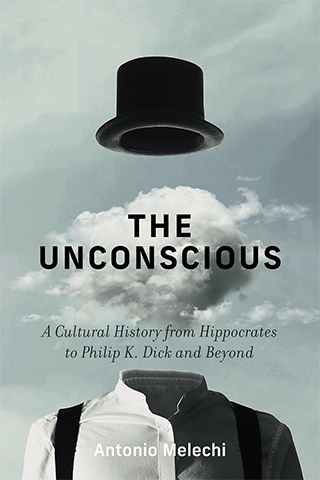
Antonio Melechi is a historian of medicine and psychology, specializing in the cultural history of the unconscious. His essays and reviews have appeared in the Times Literary Supplement, Granta, New Statesman, Prospect, and Aeon. He is also the author of “The Unconscious: A Cultural History from Hippocrates to Phillip K. Dick and Beyond,” from which this excerpt is adapted.