Bioethics Was Forged in Horror. It Can Be Lost the Same Way.
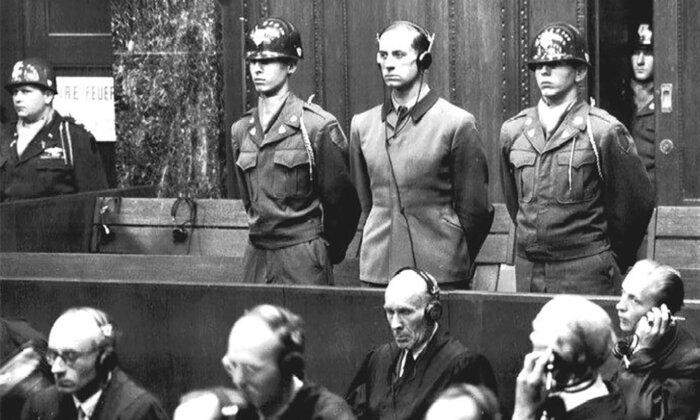
Informed consent — the idea that a patient or research subject understands the risks of a procedure or experiment before agreeing to it — might seem like a no-brainer in bioethics. Yet the concept itself was only formally codified roughly 80 years ago, after the Nuremberg trials brought to light the horrific human experiments carried out by the Nazis during World War II.
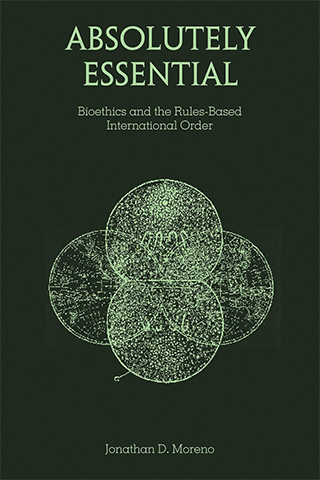
In fact, much of modern bioethics, as we know it, emerged not from “human goodness, but from prudence in light of harsh experience,” writes Jonathan Moreno in his new book “Absolutely Essential.” A professor of medical ethics and health policy at the University of Pennsylvania and a member of the National Academy of Medicine, Moreno chronicles the field’s evolution from post–World War I treaties to the ethical upheavals of the COVID-19 pandemic.
The picture that emerges is a fragile global ecosystem — an interlocking patchwork of governments, professional organizations, NGOs, and individual leaders tasked with defending principles such as consent, autonomy, non-maleficence, and justice. Yet Moreno warns that this system depends on political will just as much as moral consensus. And as the so-called “rules-based order” supporting that consensus is increasingly undermined by world leaders like Donald Trump, those safeguards may be in far more peril than they appear.
In an interview edited for length and clarity, Moreno unpacks the history of bioethical principles, why they’re being eroded in real time, and how the rising tide of ethnonationalism harkens back to darker eras. “History doesn’t repeat; it rhymes,” he says. “It’s hard to see how the path we’re on leads to a happier future.”
I want to start with some of the history you discuss in the book. You write, “International law has not emerged from human goodness, but from prudence in light of harsh experience.” What are some of the key historical experiences that you think animate the bioethics we observe internationally today?
Jonathan: You can start with the Revolutionary War. For instance, before vaccination for smallpox, George Washington insisted that all of his soldiers in the Continental Army get variolated for smallpox, meaning you actually had to put a slit in somebody’s arm and put actual smallpox into it. He feared that, unlike the British, his people didn’t have herd immunity, so he, in great secrecy, got everybody variolated, which he said was one of the most important decisions he made for what would today be called “force protection.” So, as weapons become more powerful, the instruments of medicine gradually become more potent, but they were always falling behind.
Later on, sterile techniques during the Civil War, when guys were getting amputated in the field, weren’t really up to par. But much was learned. During the Civil War, a general order on the treatment of prisoners of war implicitly required that they be given decent medical care.
Then there are international agreements on these matters — the Geneva and Hague Conventions. And there’s this growing sense that the cruelty and horror of modern warfare needs some kind of regulation. The League of Nations is proposed. The scale of human suffering becomes so intense that there is a feeling that medicine needs to organize in the military setting — which, by the way, is often ahead of the civilian setting — around a set of ethical principles. Nowhere is that need more vivid than in human experiments (which have always been going on; we know that Hippocrates, for instance, advocated experimentation when you couldn’t figure out what else to do).
There’s no algorithm that’s going to tell you the answer to every ethical dilemma.
By the time the world was faced with 23 Nazi doctors and medical bureaucrats being tried for crimes against humanity in the Nuremberg trials, it seemed — and certainly the trial concluded — that there needed to be some more recognized rules around doing human experiments. And gradually, those rules became generalized in the public mind to human experiments more broadly.
What were the existing norms, rules, and customs around human experimentation prior to the Nuremberg trials? Are you saying the field of bioethics was largely unarticulated before then?
Jonathan: The Nuremberg Code was articulated in various forms before then. For instance, in the 1820s, U.S. Army surgeon William Beaumont was in northern Michigan when a man who worked for a fur company, Alexis St. Martin, shot himself with a duck shot in the stomach. This is a very famous case. The wound never healed; a fistula formed, and Beaumont wanted to answer the question that was raging in gastroenterology at the time: whether digestion was a mechanical or a chemical process. Beaumont had this hole in St. Martin’s stomach and had him sign a contract. Then Beaumont paid him to be his servant, and he put food in, thermometers in, and took it out, and sure enough, the surgeon discovered it’s mostly a chemical process after you masticate. There was also a whole series of syphilis experiments starting in the early 19th century involving sex workers and people who were not in a position necessarily to say no.
So, it’s not as though there were never any consents or agreements to be in experiments. And what counted as an experiment wasn’t so clear either, because who knows what’s going on in the consulting room? There weren’t scientific settings where there was a lot of scrutiny.
By 1931, the Weimar Republic had bioethics guidelines that were really good, but they were ignored by the Nazis. You might say the world — at least in the West — became “flat” in bioethics by the 1960s and 1970s, and that, after the Cold War, there was gradually more respect for autonomy and so forth in the East and the Global South.
The big point is that, in the past, you did not need to have the requirements for informed consent for human experiments. That’s a decision that humanity has made. And it’s founded on a notion of universal human equality, which was not well recognized in international humanitarian law until after World War II. With today’s collapsing rules-based order, what else do we lose? It’s a very particularized way of seeing what is lost, but it is also a very global way of seeing it.
You go to pretty great lengths to stress that so much of bioethics is not formalized — that it’s a baroque patchwork of commissions and advisory bodies and NGOs and professional organizations operating through shared norms. There’s no real enforcement mechanism beyond moral opprobrium. Do you see that as a weakness, a strength, or maybe both?
Jonathan: I think there needs to be some flexibility with these things. There’s no algorithm that’s going to tell you the answer to every ethical dilemma. There’s no black box that’s going to give you the magic answer all the time. We don’t even have an international criminal court that functions in cases of genocide. I think a lot of solving bioethical dilemmas comes down to whatever culture is.
For instance, the Hippocratic Oath might be the oldest code of ethics we have. Yet it’s wildly imperfect; it often doesn’t apply to anything we do anymore, but once you give that up, there’s not much left. So, aspirational ideals are still important. But back to your question: There is no prospect of a formal mechanism to get this right all the time.
The COVID-19 crisis altered the landscape of bioethics in many ways. You mentioned global vaccine equity as one of the big ones: The pandemic exposed the failure of the Global North to deliver vaccines widely to the Global South. What are some of the big bioethics lessons that you think we could take away from the pandemic?
Jonathan: The field of bioethics emerged in an era when everyone was worried about human experimentation, not a public health catastrophe. Consider the HIV/AIDS crisis — I worked in, at Downstate in Brooklyn, in the late ’80s and through the ’90s, and it was absolutely a public health catastrophe, but not on the scale of the COVID pandemic.
In the HIV/AIDS era, the main argument that groups like ACT UP and so forth often made was that doing experiments to get to the HIV/AIDS therapies we have now was a matter of personal autonomy. That is to say, “We, as adult people, have the right to have a voice in how the studies are being done,” as opposed to the very anal-retentive ways that the FDA was asking for clean data at the time. So, alternative pathways for drug approval were created based on arguments about personal autonomy, not only public health. Today, the argument for personal autonomy is being used as a trump card against public health interventions like vaccination, which is a very unfortunate turn of events.
History doesn’t repeat; it rhymes.
Now, we live in a post-pandemic world. And as I’ve talked about in the book, there were different ways, depending on where you were, that governments dealt with lockdowns and made deals with different companies, and officials took bribes to get a certain vaccine into one country rather than another. Now, we’ve got to think about bioethics in terms of forefronting the ethics of public health, because respect for personal autonomy only goes so far in a post-pandemic world. People were not thinking of it in those terms in the ’70s and ’80s, in the early field of bioethics — because, again, bioethics was oriented toward human experiments, not toward the ethics of public health.
I want to zoom in on the bioethics of America’s domestic politics. You reference abortion and IVF. More recently, there have been credible reports of human rights abuses in immigration detention facilities. For instance, facilities like Alligator Island are black boxes. What’s going through your mind when you think about all this as a bioethicist?
Jonathan: I mean, being a Jew who grew up in the ’50s and ’60s, I felt even as a kid that we were in a kind of golden age because the world shrank back in horror at the Holocaust. But how long does that last? People have short memories.
Walker Connor, considered one of the founders of nationalism studies, basically says, we’ve got this term, “nation state,” which glosses over the difference between being a nation and being a state. Being a state is a legal status. Being a nation is psychological. Why do you identify with some group of people rather than others? If you’re, say, a Jew, does it start with the destruction of the Second Temple? Maybe, maybe not. Do you identify with any previous generation that was killed in the Holocaust? Do you identify with the people who go to Chinese restaurants for, you know, Christmas Eve? I mean, how do you decide what nation you’re a part of?
Cultures are organisms, and you can’t separate one thing, like bioethics, from other things. Today, there are three wars going on — in Gaza, Ukraine, and Sudan; Amnesty International has said that the moral norms around trying to minimize death are at risk. Steven Pinker has argued that we are actually better off now than we were hundreds of years ago because the chances of dying by violence have decreased in the last hundred years. But I fear our recent progress is being eroded, and those calculations don’t include psychological harms —
And spiritual fulfillment.
Jonathan: — and I don’t know how you would do that in fairness, you know. But he goes as far as to say that we’re so much more civilized now than we were. And that’s true in some ways and not true in others. But it’s hard to see how the path we’re on leads to a happier future. There’s been a general shift back toward ethnic nationalism that I think liberals like me have underappreciated. History doesn’t repeat; it rhymes.
Jonathan D. Moreno is the David and Lyn Silfen University Professor Emeritus at the University of Pennsylvania. He has served as a staff member or adviser to many governmental and nongovernmental organizations, including three US presidential commissions, the Howard Hughes Medical Institute, the Bill and Melinda Gates Foundation, and the UNESCO International Bioethics Committee. He is the author of several books, including “Absolutely Essential.”