How Japan Turned Department Stores Into Dreamworlds
Very few experiences in life match the childlike wonder of walking through a department store. I have long known the feeling.
Growing up in Tokyo, where entire neighborhoods can feel like shopping corridors, my grandparents sometimes took me to Mitsukoshi, one of Japan’s largest retail emporiums. The store was a veritable monument to beauty and abundance, stocked with everything from fine silks to sweet treats and plush sofas. As we walked from floor to floor, they would buy me “proper” clothes and take me to the fruit parlor on the top floor to eat strawberry parfaits while overlooking the entire city.
As I got older, I grew more curious about how these stores evolved into the grandiose institutions they are today, particularly in Japan. What I found as an academic surprised me: They have a very long and rich lineage, starting as comparatively humble enterprises hundreds of years ago.
We can trace many of Japan’s most prominent department stores, such as Mitsukoshi, Takashimaya, Shirokiya, Matsuzakaya, and Daimaru, back to the premodern Edo period (1603–1868).
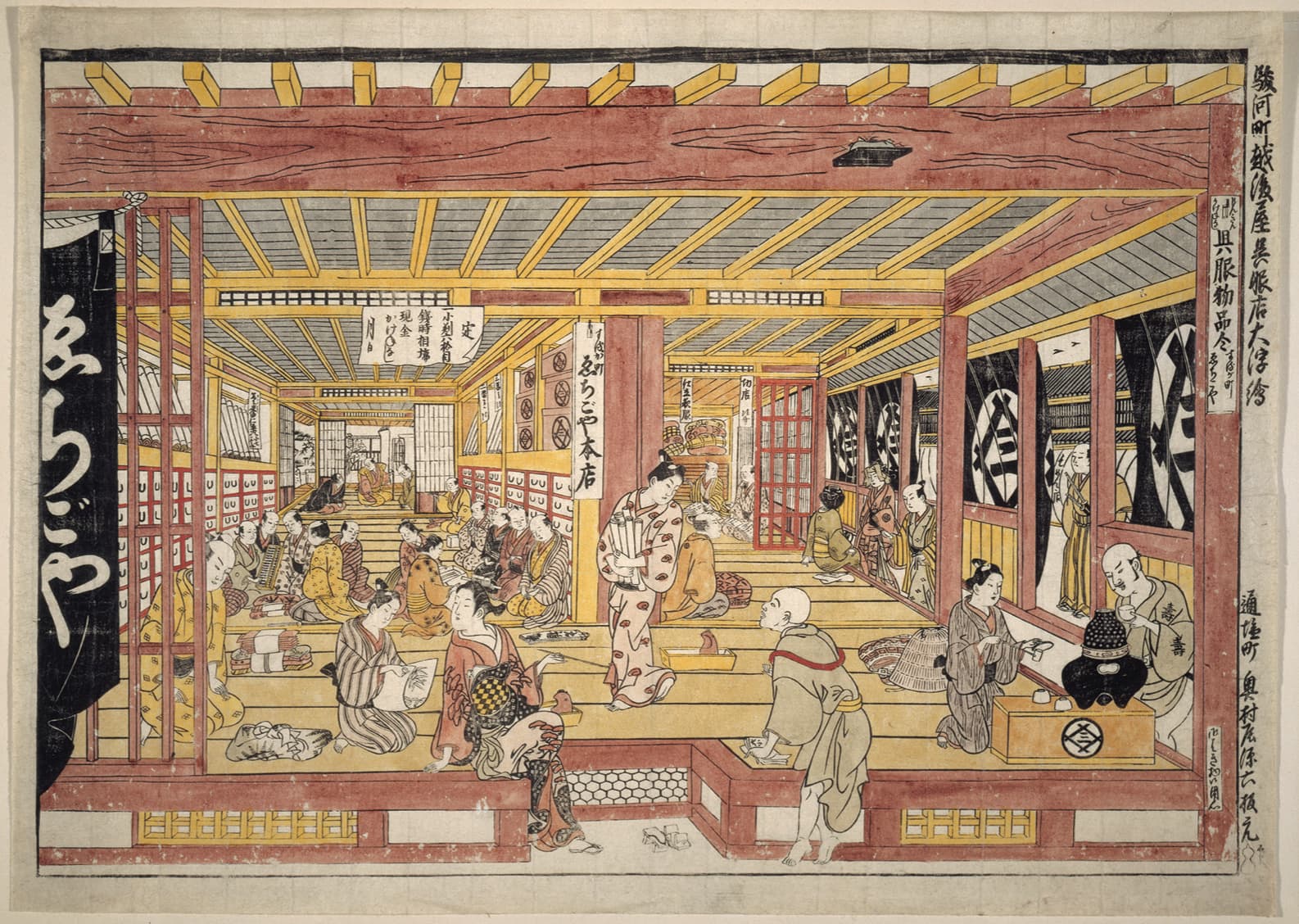
Mitsukoshi, for example, started off as an expansive kimono fabric store (gofukuten) in 1673 in Edo (today’s Tokyo). Inside the establishment, originally called “Echigoya,” well-off customers shopped while seated on tatami mats, selecting designs from fabric pattern books (hinagatabon). In the premodern print below by Okumura Masanobu, one can see attendants presenting several bolts of fabric to a group of customers, while other patrons are being served tea. The seated figure in the foreground smokes a pipe while shop attendants bundle her purchases. The shopping experience was meant to be both leisurely and luxurious, reserved mostly for wealthier customers.
Other stores served different kinds of customers. Takashimaya, established in Kyoto in 1831, served members of the imperial family; Matsuzakaya, founded in Nagoya in 1611, dominated the market for religious robes for Buddhist temples and Shinto shrines; and Tokyo’s Shirokiya predominantly took commissions from feudal lords (daimyo) as far back as 1662. Meanwhile, 18th-century shops like Daimaru catered to the less privileged general public, including residents of the older neighborhoods in Tokyo’s “low city” (shitamachi).
The 20th century, however, ushered in a major shift. As the feudal system collapsed in the 19th century, displacing the old aristocracy, and as Japan transitioned from an agrarian to an industrial society, these stores modernized rapidly and transformed into very different-looking enterprises. Waves of Western influence also helped to incorporate a wider range of customers from different economic and geographic backgrounds.
Japanese stores still catered specifically to a Japanese audience and produced designs, advertisements, and posters that visualized and created a modern, Japan-specific space within their stores. However, they also looked to Western models as inspiration — Le Bon Marché in Paris, Harrods in London, Marshall Field’s and Wanamaker’s in the United States — and adopted new marketing strategies and display methods, as well as an architectural grandeur that consistently left shoppers speechless.
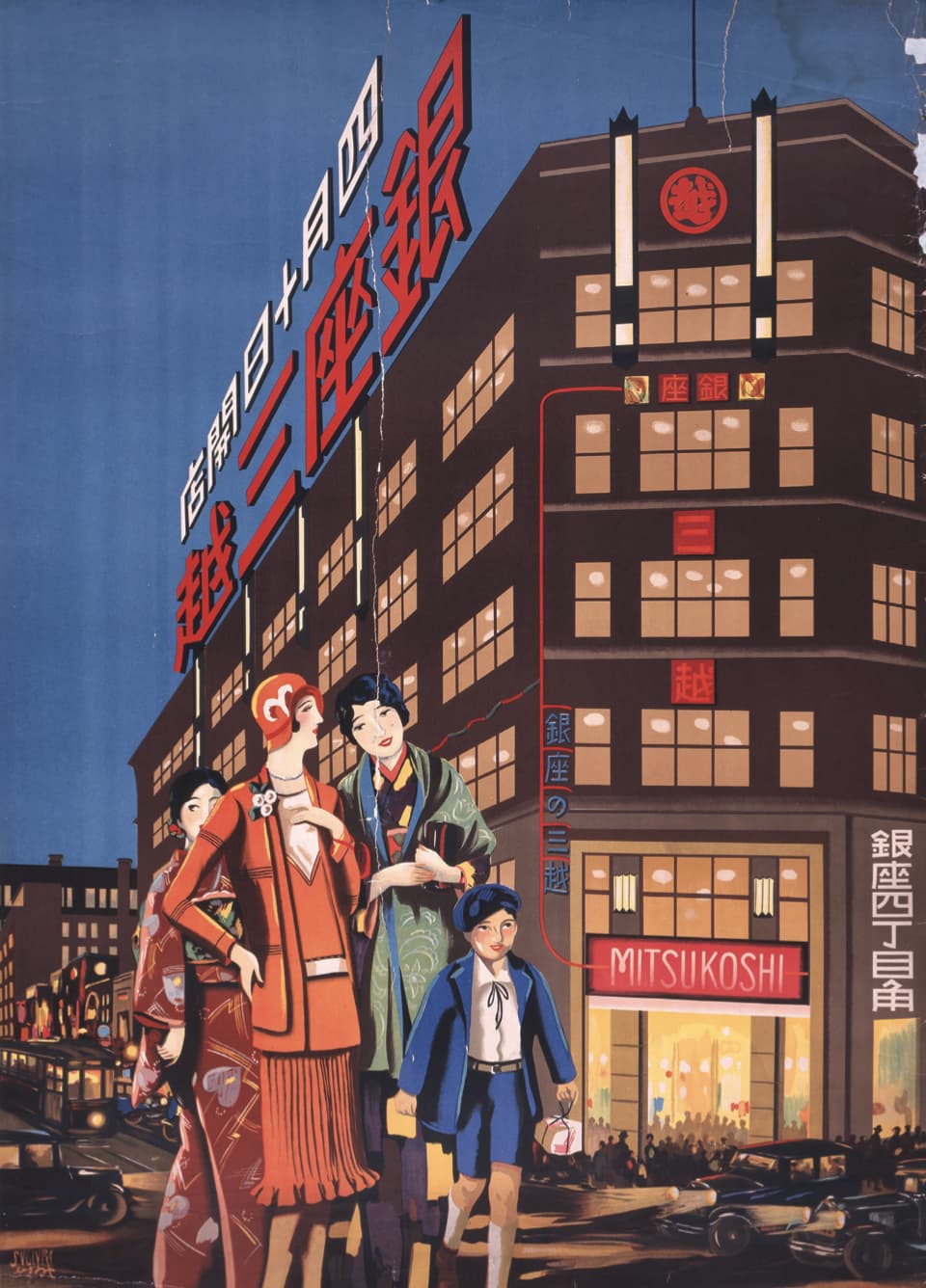
Consider Mitsukoshi’s main branch in Nihonbashi, Tokyo, completed in 1935 and designated in 2016 as an Important Cultural Property. When its expanded flagship building opened its doors in 1935, customers were greeted by two regal bronze recumbent lions at the entrance. They then walked into an imposing entrance hall, climbing a staircase through a five-story atrium with 10 marble columns supporting neo-Renaissance arches. The exterior lighting that illuminated the architecture at night was also a novelty for its time.
The actual shopping experience — from merchandise selection to technology and customer service — was completely revolutionized as well.
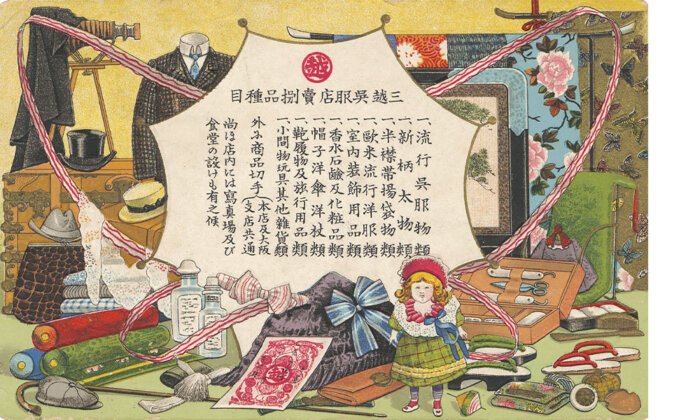
Stores such as Mitsukoshi, Takashimaya, Matsuzakaya, Shirokiya, and Matsuya were replete with amenities, including dining halls, elevators (and elevator attendants), escalators, electric lighting, modern plate-glass display windows, and climate control. Sales floors were often crowded, their glass display cases offering up a seemingly infinite array of products. “Register girls” in uniform handled the checkout. There was a family appeal: Children were wowed by a diverse assortment of the latest toys — model airplanes, toy trains, dolls, bicycles, and toy cars. Rooftops went above and beyond, boasting zoos, botanical gardens, water fountains, telescopes, roller-skating rinks, sports facilities, and even cable cars for sightseeing.
As department stores transitioned into dreamworlds of mass consumption for the middle and upper classes, modern advertising underwent a major revolution.
In the premodern Edo period, the first glimpse of advertising for such stores appears in woodblock prints (ukiyo-e). One popular genre of these prints was bijinga, or “images of beauties,” which often depicted courtesans. One common practice, known as nyugin mono, was for stores like Echigoya to pay a deposit to have their names/items included in the prints next to a beauty’s face or figure. Interestingly, there was rarely any connection between the product and the women pictured; it was simply an association with beauty that the brands sought.
In the modern era, Japanese advertisers preserved this combination of brands and beauties. However, with the development of new reproductive technologies in the early 20th century, lithographic posters and magazine covers — as opposed to woodblocks — became the dominant new media. Many of the earliest posters were adapted from paintings by artists such as Okada Saburōsuke, Shimazaki Ryūu, and Hahakabe Kinshū, who did not make use of the unique visual language that posters allowed for.
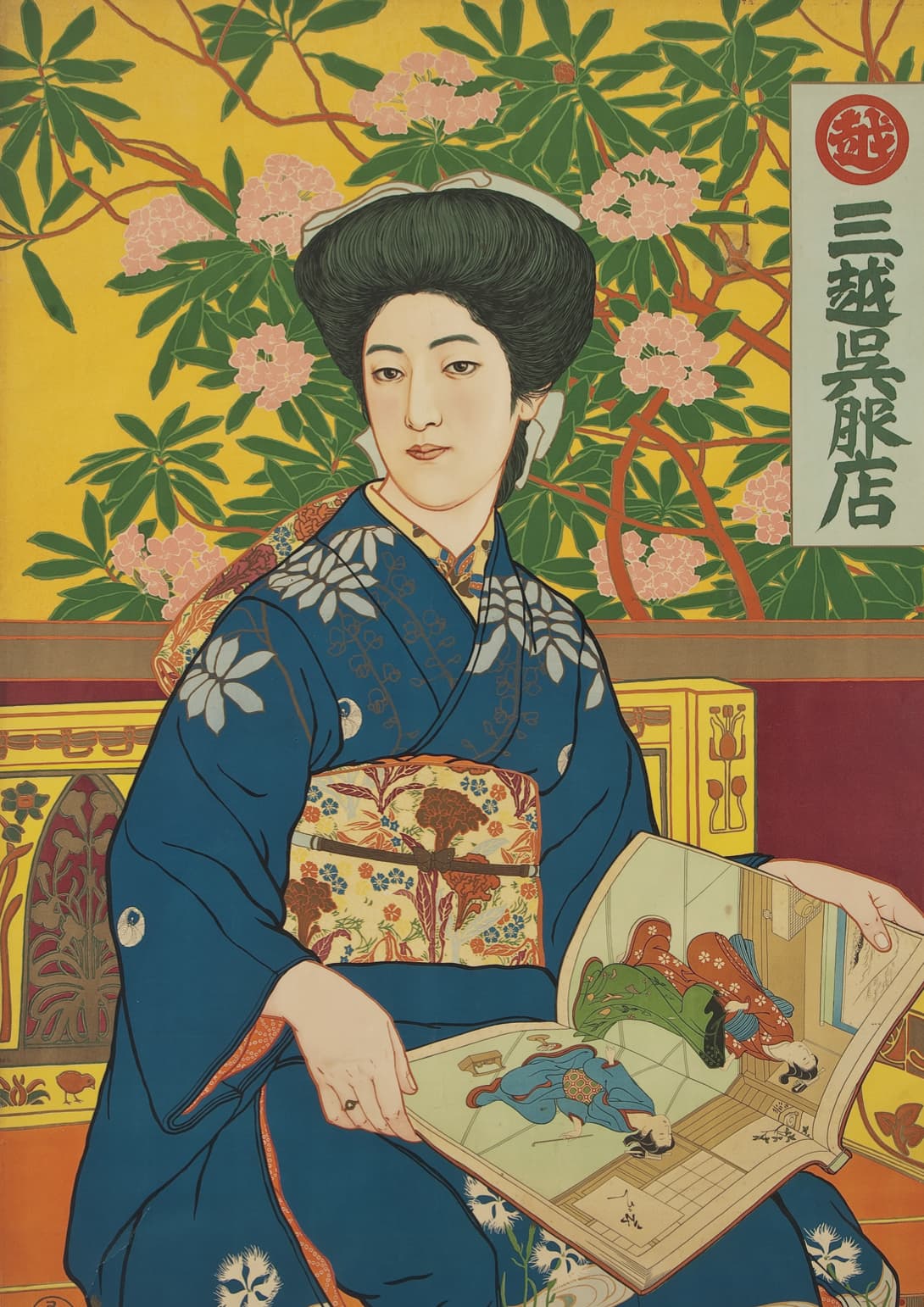
But that changed with Mitsukoshi’s 1911 poster contest, a sensational event in which the company offered a 1,000-yen prize for a design specifically made for the medium. Hashiguchi Goyō, best known for his shin-hanga prints of beautiful women, won the first prize from 301 submissions with his image of a kimono-clad beauty sitting on a long Art Nouveau-style chair, looking out at the viewer as she peruses a book set on her lap. The book, which included ukiyo-e-style imagery of people changing their wardrobes for the new season (koromogae), paid homage to Mitsukoshi’s roots as a kimono fabric store.
These early posters were the result of labor-intensive work by skilled craftspeople, much like woodblock printing, and were costly to make. They were meant to be viewed indoors and were frequently handled like paintings, sometimes even framed for long-term display in barbershops, bathhouses, Japanese-style inns, and restaurants.
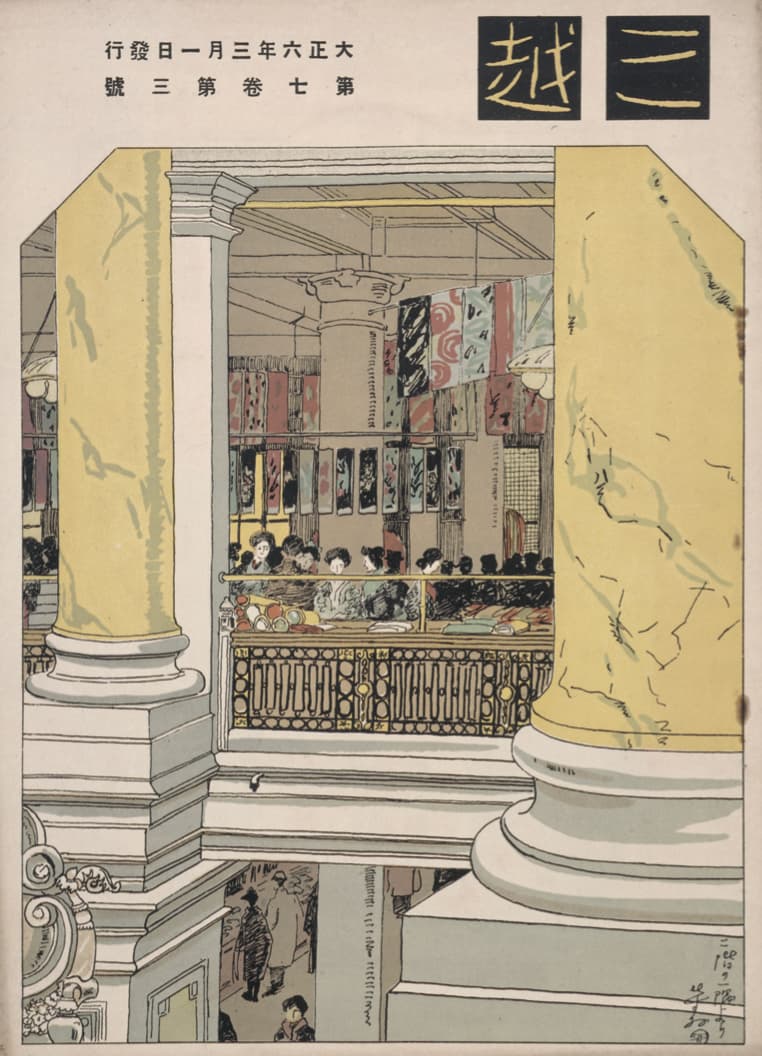
After Mitsukoshi’s in-house designer Sugiura Hisui (1876–1965) held further contests, the poster became a highly popular advertising medium. Soon, they became a sensation in the art world, prompting artists and businesses, including other department stores, to recognize the importance of inventive poster designs. Department stores not only pioneered such creations but also became important training grounds for commercial artists looking for employment, helping establish commercial design even as the very profession of “designer” was still taking shape in the early 20th century.
In Japan, department stores and their advertising used design and messaging to address a difficult question: “What did modern life look like?” In asking that question, the stores served as more than just a place to shop; they became social spaces, art institutions, and national sites where consumers could acquire new social identities.
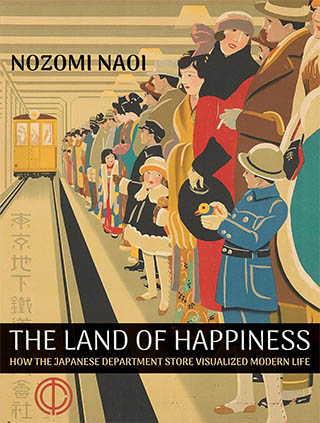
Nozomi Naoi is Associate Professor of Art History in the Department of Japanese Studies at the National University of Singapore. She is the author of several books, including “The Land of Happiness.”