The Strange Melancholy of Slaying Monsters
During my playthrough of “Bloodborne,” a 2015 action role-playing game praised for its monster design, I entered a darkened and spacious cave that felt like a boss arena — a part of the game world where my character would fight one of her many battles with special “boss” monsters. I kept my guard up, but nobody attacked me. I ran forward, only to find a huge monster curled up sleeping. Basking in moonlight, it looked quite otherworldly, with coral-like tentacles fluttering around its head and giant wings with a floral texture.
Up to this point, I had met hundreds of monsters and killed them all. I had learned how to dispose of them efficiently — and looked up their weak spots online if I was struggling too much. But now, I hesitated. This creature looked too wonderful and, at the same time, too powerful. I ended up watching it for a couple of minutes before leaving the cave. I did not take a screenshot, and I did not even see the creature’s name because “Bloodborne” only displays a boss’s name when you enter combat; only later did I discover that its name was Ebrietas, “Daughter of the Cosmos.”
This non-battle turned out to be a powerful experience, but its power stemmed mostly from the contrast between this and my other monster encounters. To me, it represented a tension in many monster narratives across video games and other media: There is a mysterious monster we are supposed to fear and a hero who, using strength, skill, and wits, defeats it — a typical scenario in so-called player-versus-environment games. But what if the hero doesn’t want to slay the monster? What if the monster should be left alone because killing it would bring more shame upon the hero than glory?
In the Western tradition, this line of thinking predates the Anthropocene and can be traced to early Christianity. One of its most famous formulations appeared in J. R. R. Tolkien’s essay “Beowulf: The Monsters and the Critics,” which argues that monsters are critical to understanding the poetic qualities of “Beowulf” in that they provide a perspective that “surpasses the dates and limits of historical periods,” evoking a feeling of the sublime. He also makes it clear that killing monsters should not be understood as inherently virtuous. Tolkien sides with the poet of “Beowulf” in rejecting the notion of “martial heroism as its own end.” Despite his ever more difficult exploits, the poem’s proud protagonist faces the “tragedy of inevitable ruin” that no earthly fame or fortune can prevent. Although the warrior kills the dragon — the poem’s final “boss” — he is mortally wounded and dies soon afterward.
Tragically portrayed monster killers are not uncommon. As the games scholar Tanya Krzywinska points out, the theme of a “false hero,” handed down from Gothic literature and film, is typical of horror and fantasy video games. A somber, elegiac tone colors many titles that employ the “player-versus-environment” model while simultaneously questioning it.
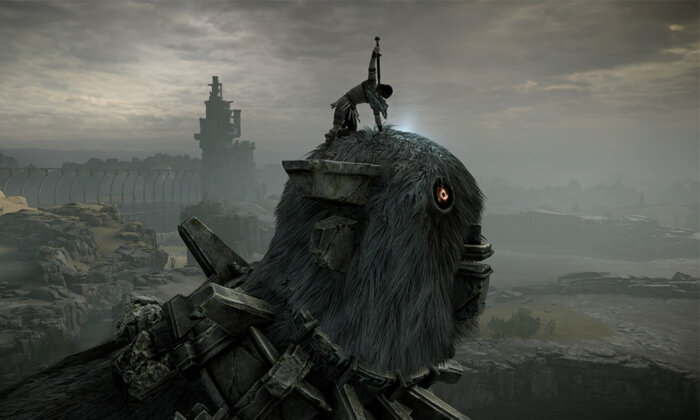
A prime example of such a game is “Shadow of the Colossus,” widely acknowledged as a milestone in enemy design and ethical gameplay. Its story follows a young man named Wander who travels into a forbidden land to bring his dead lover back to life. An unseen, mysterious entity tells Wander that in exchange, he must slay 16 colossi — gigantic creatures that inhabit various corners of the land. To defeat them, Wander must identify and reach one or more of their weak points (or “vitals”). Unsurprisingly for an action-adventure game, each colossus poses a unique puzzle, inspired by the bosses of the “Legend of Zelda” series. “Shadow of the Colossus,” however, departs from the formula in at least three aspects.
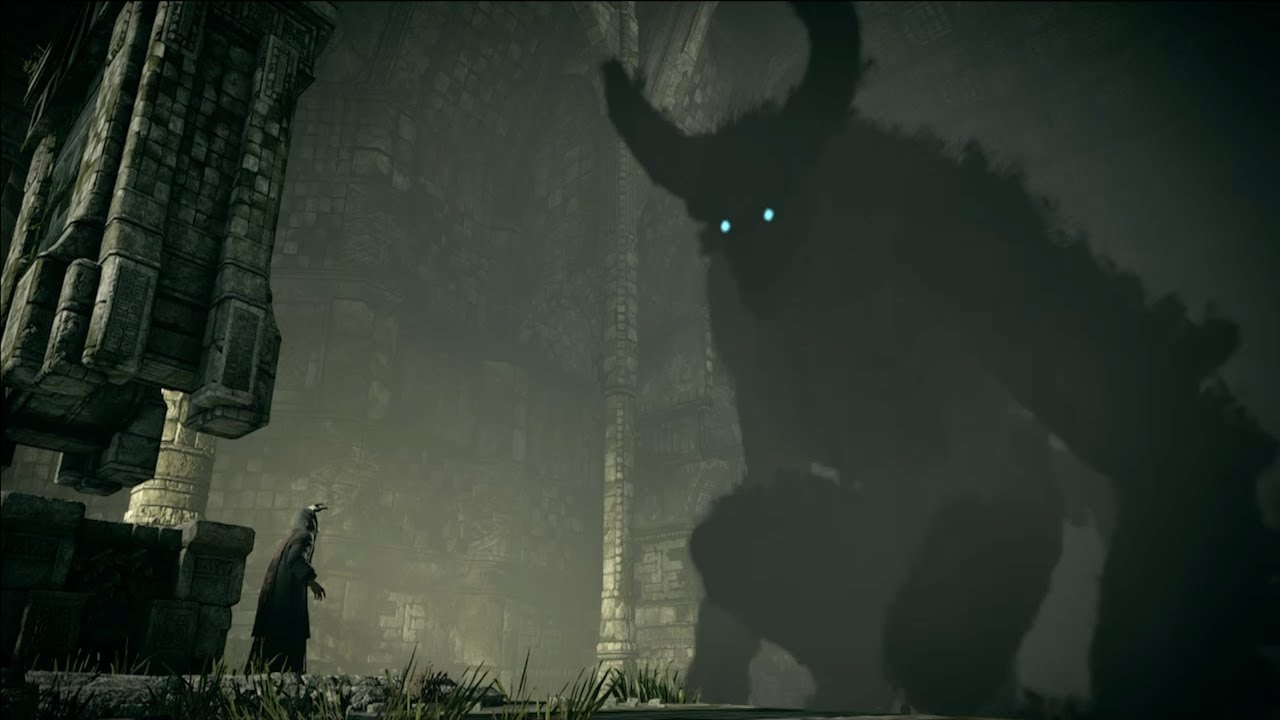
First, there are no mobs in the game. The reasoning behind this decision was both practical and artistic. As the game’s producer, Kenji Kaido, said in an interview, they did it “so the team’s resources could be concentrated on the [colossi],” but also to underline the “contrast between the quietness of traveling and the fighting.” As a result, the game offers no easy satisfaction of hacking and slashing through weaker opponents.
Second, Wander can — and often must — scale, balance on, and hold onto the monsters, often by grabbing onto their fur. As Kaido pointed out, “they are part building, and part living creatures.” A colossus is not merely an opponent the protagonist fights, but it is also the ground on which he stands. When the colossi try to shake him off, Wander becomes quite literally an unstable subject — he spends long minutes pressed against the monsters, temporarily merging with their body mass before stabbing them with his magic sword.
Finally, the destruction of colossi is framed as ethically questionable. In a retrospective interview, the game’s director, Fumito Ueda, reminisced that throughout the production of the game, he “started having doubts about simply ‘feeling good by beating monsters’ and ‘getting [a] sense of accomplishment.’” The colossi are largely peaceful until Wander attacks them. Although the player may feel triumphant upon beating them, the game’s audiovisual design suggests the opposite. When stabbed by Wander’s sword, they roar and writhe in pain as black blood sprays from their wounds, and their eventual demise is accompanied by melancholic music. To illustrate how unusual this was at the time, Ueda recounted that when he first showed the music to his staff, “they thought it was a bug and laughed because they were so used to games that would play a fanfare after defeating a monster.”
What if the monster should be left alone because killing it would bring more shame upon the hero than glory?
From the outset, Wander’s nightmarish quest is portrayed as futile and senseless. The anthropologist Miguel César situates the game’s narrative in a longer history of representations of what he calls “essential boundary transgressions” between life and death in Japanese folk and popular culture. In his view, “all its mechanics, the design choices and narrative work in that direction: to convince the players of how wrong and dangerous the [transgression] is, even if the game is forcing them to do it.” Wander’s boundary transgression is shown as an “immoral selfish act,” but the player has no choice but to push on and witness Wander’s inevitable ruin.
While “Shadow of the Colossus” is deeply rooted in Japanese rather than Western Christian culture, it aligns with Tolkien’s observation about the inherent tragedy of monster killers whose motivations are selfish rather than morally just. It also sends an environmental message, casting doubt on the need to tame and neutralize the forces of nature, represented by the colossi.
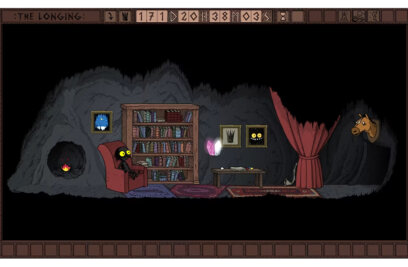
“Shadow of the Colossus,” of course, is not the only game to question the conduct of the monster killer. “Bloodborne” (2015) and “Dark Souls” (2011) — whose spectacular monsters are likely inspired by the colossi — also present fighting monsters as a dreadful, melancholy affair, equally tragic for everyone involved. In a telling anecdote, the games’ director, Hidetaka Miyazaki, well-known for creating “sad” monsters, asked a concept artist to redo a gross-out design for an undead dragon with the instruction: “Can’t you instead try to convey the deep sorrow of a magnificent beast doomed to a slow and possibly endless descent into ruin?”
All three games suggest that the plight of the monster killer is inseparable from the plight of the monsters, an observation famously summed up in Friedrich Nietzsche’s aphorism: “Whoever fights with monsters should see to it that he does not become one himself. And when you stare for a long time into an abyss, the abyss stares back into you.”
This realization resonates with the experience of learning the monsters’ mechanics to defeat them, a common element in many player-versus-environment video games. As video game designer Denny Yeh has noted about the monster design for “God of War,” designing an enemy also means designing what it can “make the player do.” If enemy moves are designed as complementary to those of the protagonist, then the hero is inevitably tainted with the monstrosity of their foes.
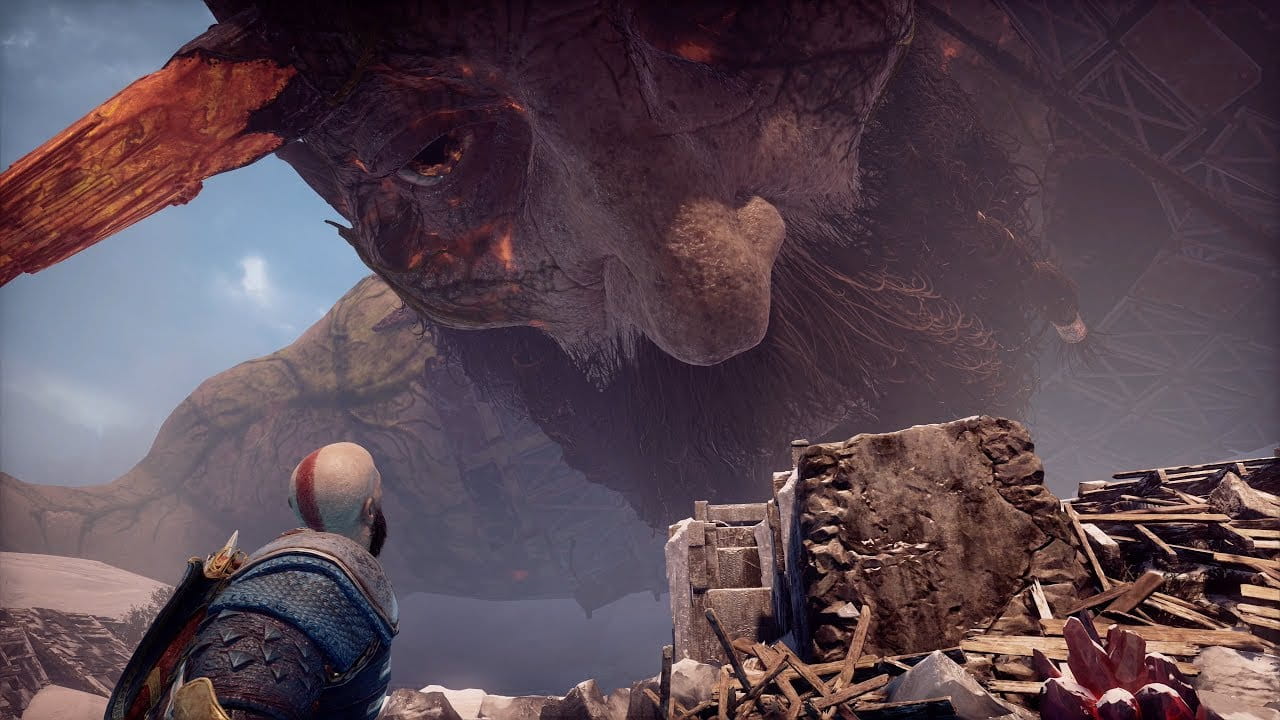
The “false hero” theme and distrust of what the game asks us to do have become common elements in mainstream game storytelling. Titles such as “BioShock” or “Spec Ops: The Line” contain plot twists that likewise reveal the protagonist has committed abhorrent deeds and that the player is complicit. Even the reboot of “God of War” preempts the question of whether one must kill humanoid monsters. Before the encounter with the first Troll, the dumbfounded mythical character, Atreus, asks: “We’re going to fight that?!?” Kratos, the main character, answers: “We have no choice,” in a matter-of-fact, almost resigned way, as if shruggingly accepting the design conventions of the game itself.
While “Shadow of the Colossus” is a somber game with a desaturated color palette and wistful music, the player-versus-environment model can just as well be subverted through humor and parody.
Few games have reframed the role of monsters as effectively as 2015’s “Undertale.” Written almost single-handedly by the then-emerging American developer Toby Fox, it soon became one of the most beloved indie games of its time. Its story follows a child protagonist who falls down a hole into underground ruins inhabited by monsters and seeks a way back to the surface. The game follows “Dungeons and Dragons”–like conventions, such as random encounters, hit points, experience points (EXP), and character levels (LV, alternatively spelled as LOVE). The combat mechanics draw inspiration from “Space Invaders” and its descendants, featuring “bullet hell” sequences in which the player must avoid myriad enemy projectiles.
Unlike early “D&D” and “Space Invaders,” however, “Undertale” portrays monsters as deserving of empathy. As Fox himself put it in an interview:
I feel that it’s important to make every monster feel like an individual. If you think about it, basically all monsters in RPGs like “Final Fantasy” are the same, save for the graphics. They attack you, you heal, you attack them, they die. There’s no meaning to that.
The inhabitants of the underground are all called “monsters,” and meeting many of them will bring up a familiar-looking combat interface. However, when “checking” monsters with a designated command, or simply by observing their behavior, one finds that they have quirks and concerns that are not monstrous at all. Of a frog named Froggit — perhaps the weakest foe in the game — we can read that “life is difficult for this enemy.” A monster called Snowdrake is not only a drake (male duck) shaped like a snowflake but also an aspiring teen comedian with many bad puns up his sleeve. It is difficult to distance oneself from these creatures and treat them as just enemies.
The game’s encounter system was inspired by “Shin Megami Tensei,” whose 1992 first installment allowed players to negotiate with demons. The monsters in “Undertale” can be defeated in combat — by dealing damage and surviving the bullet hell sequences — but other options are also available, including sparing the monsters instead of killing them. To spare Snowdrake, for example, one must either laugh at his puns or repeatedly heckle him.
Most monsters are shown as simple, black-and-white bitmaps, and the interactions are mostly described in text. By avoiding the dictate of photorealism, the game can grant its monsters strange, elusive qualities, which might not be sublime but can be easily read as queer — both in the sense of strangeness and of nonnormative gender identity. Accordingly, Bo Ruberg views “Undertale” as a queer video game that shows “a genuine fascination with questioning and … queering bodies,” pointing out that many characters (including the protagonist) have indeterminate gender identities or “express queer romantic interests.” In “Undertale,” the hero can experiment with a range of nonviolent interactions and probe their own identity.
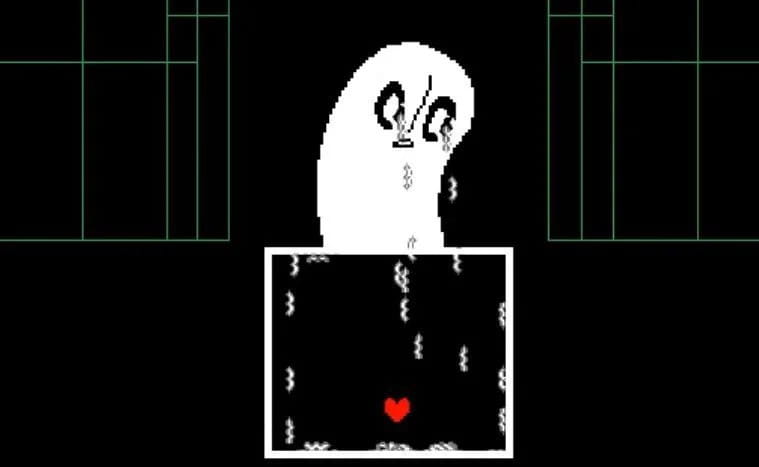
To be sure, the fact that killing in “Undertale” is avoidable does not mean that the game lacks a villain. In “Shadow of the Colossus,” the true antagonist is the entity that tasks Wander with killing colossi. In “Undertale,” the role of the deceitful guide belongs to Flowey the Flower. At the beginning, Flowey offers a tutorial of the battle mechanics and asserts his belief that “in this world, it’s kill or be killed” — a clear expression of the player-versus-environment formula. Contrary to Flowey’s advice, the game can be finished without a single kill, leading to a special ending, but this pacifist route is markedly more difficult. Although the player must still avoid the monsters’ attacks, sparing them earns no EXP, and the protagonist therefore gains neither LV/LOVE nor additional hit points. This makes the player character increasingly vulnerable as the game progresses.
Given the difficulty of the game, it is understandable that the player would resort to killing at least some monsters to gain EXP and LV/LOVE. Right before the end, however, one of the recurring non-player characters reveals the lie at the heart of these mechanics: EXP actually stands for “execution points” and LV/LOVE for “level of violence.”
This twist is not just a subversion of Flowey’s sinister advice but an ontological challenge to the very category of the “monster” itself. The beings in “Undertale,” the player comes to learn, are tormented, vulnerable, and capable of joy, laughter, and pain — much like humans. Perhaps true malice, then, resides not in the monsters themselves but in the systems that classify them as enemies and invite players to sacrifice them at the altar of stats, progress, and a fleeting sense of triumph.
Jaroslav Švelch is Associate Professor in the Department of Media Studies at Charles University, Prague, and Lecturer in the Department of Game Design at the Film and TV School of the Academy of Performing Arts in Prague. He is the author of “Gaming the Iron Curtain” and “Player vs. Monster,” from which this article is adapted.